You do not need to be a pest control expert to tell when something is off in the kitchen. A weird smell, a surprise scurry when you flip on the light, or a roach near the sink is usually enough to make your stomach drop. The problem is that not all cockroaches are the same, and that matters more than most people realize.
German cockroaches and American roaches may both end up in your home, but they behave differently, hide in different places, and need different control tactics. If you know which one you are dealing with, you can stop guessing and start fixing the real problem. That is what this guide is here to do in plain language.
Also Read: Do Mothballs Keep Roaches Away Permanently? Here’s the Reality
German Cockroaches vs American Roaches: The Fastest Way to Tell Them Apart
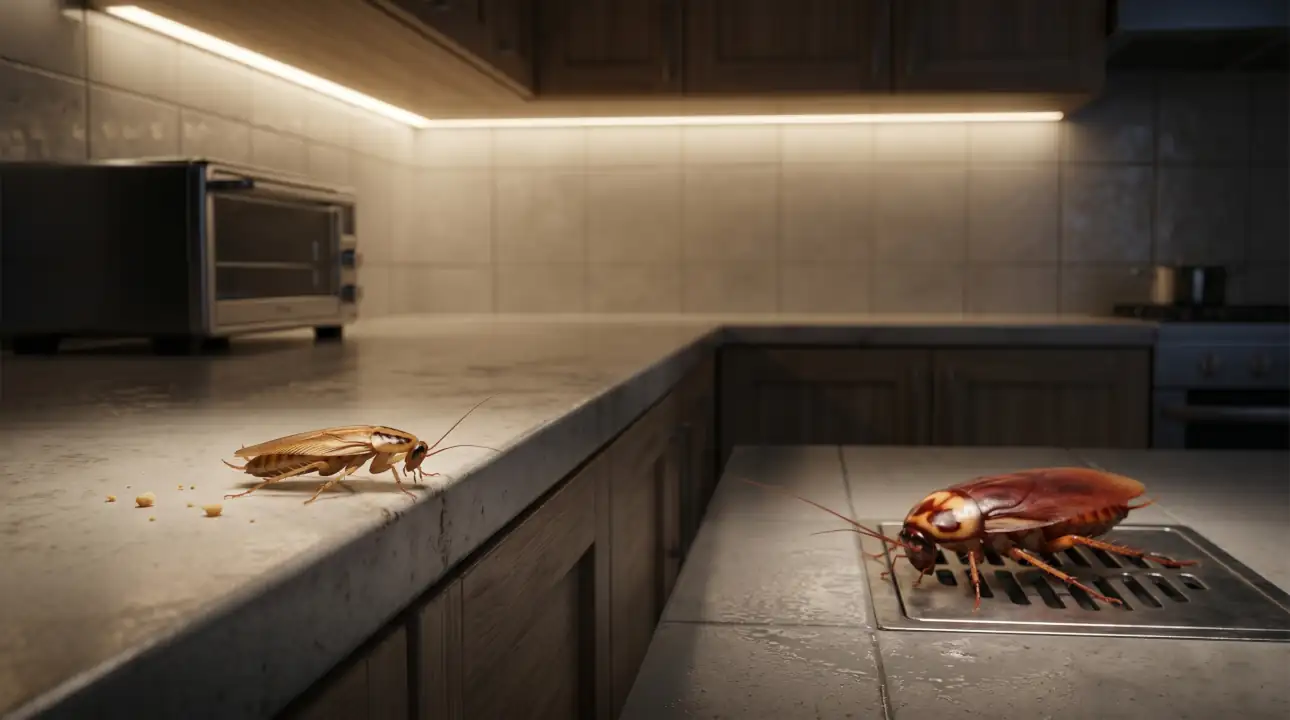
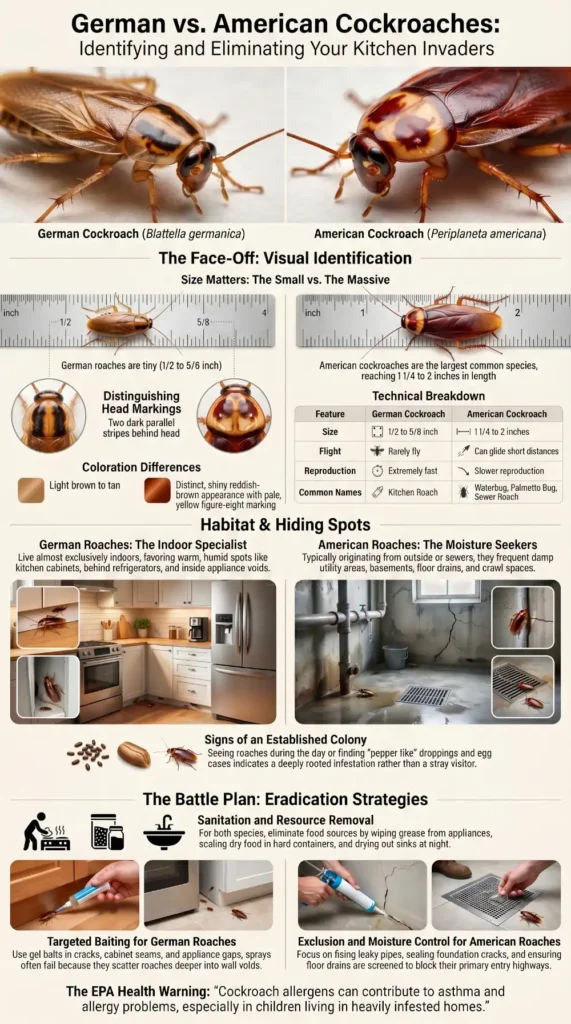
If you only remember one thing, remember this: German cockroaches are the smaller, more likely kitchen invaders, while American roaches are the larger, moisture-loving roaches that usually come from basements, drains, crawl spaces, or other damp areas. German roaches spread quickly indoors and are usually the harder infestation to eliminate. American roaches are much larger and more alarming to see, but they are often tied to plumbing, moisture, or entry-point issues rather than a deeply established kitchen infestation.
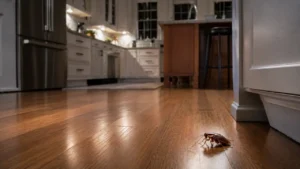
If the roach you found was small, tan or light brown, and hiding near cabinets or appliances, it is probably a German cockroach. If it was large, reddish-brown, and appeared near a drain, basement, garage, or utility area, it is more likely an American cockroach.
German Cockroach vs American Roach at a Glance
- German cockroaches are smaller, lighter brown, and strongly associated with kitchens and indoor infestations.
- American cockroaches are much larger, reddish-brown, and usually connected to damp areas like basements, drains, and crawl spaces.
- German roaches reproduce faster and are usually harder to eliminate completely indoors.
- American roaches are more likely to wander inside from sewer systems or exterior moisture zones.
German Cockroaches vs American Roaches: Quick Comparison
| Feature | German Cockroach | American Cockroach |
| Size | 1/2 to 5/8 inch | 1 1/4 to 2 inches |
| Color | Light brown to tan | Reddish-brown |
| Key Markings | Two dark stripes behind head | Yellow figure-eight marking behind head |
| Habitat | Indoor kitchens and bathrooms | Basements, drains, sewers |
| Reproduction | Extremely fast | Slower than German roaches |
| Common Hiding Spots | Cabinets, appliances, cracks | Basements, drains, garages |
| Flight Ability | Rarely fly | Can glide short distances |
| Infestation Severity | Very difficult to eliminate | Easier to control if caught early |
Quick Take: German cockroaches are smaller, reproduce much faster, and almost always live indoors. American cockroaches are much larger and usually enter homes from outside or through plumbing systems.
American Cockroaches
Appearance
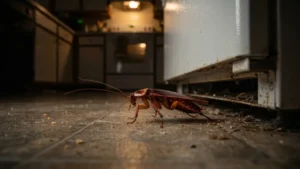
American cockroaches are the ones that tend to make people step back. They are the largest roaches many homeowners ever see indoors, and that size alone makes them hard to miss. Adults are reddish-brown and usually have a pale or yellowish edge behind the head.
Many homeowners casually call American cockroaches “sewer roaches” because they are commonly associated with drains, sewer systems, and damp utility spaces. They are also frequently called waterbugs or palmetto bugs in some regions, even though those names are often used loosely for several large roach species.
Their bodies are long, flat, and built for slipping through tight spaces. Like other insects, this species of cockroach has six legs, and those legs help them move quickly across floors, walls, and plumbing areas. Their antennae are long too, which is part of why they seem to know you are there before you fully spot them.
Even though they are big, American roaches are not graceful flyers in the way people imagine. They can glide or flutter, especially when startled, but most homeowners identify them by size first. If a roach looks bulky, reddish, and almost shiny under kitchen or bathroom light, that is one of the first signs you may be dealing with an American roach rather than a German one.
Natural Habitat
American cockroaches like warmth and moisture. In the wild, they are comfortable in damp, sheltered environments, and in and around homes they are often tied to sewer systems, basements, crawl spaces, utility rooms, and other humid places.
Penn State Extension also notes that American cockroaches commonly move through sewer systems, basements, crawl spaces, and commercial utility areas before entering homes, which is why moisture-heavy entry points matter so much during inspection.
They are not usually the first roach people think of when they picture a kitchen infestation, but they can absolutely end up there if they have a path from drains, pipes, or nearby moisture sources.
What makes them especially frustrating is that they do not need a perfectly filthy home to show up. All they really need is a warm place, access to moisture, and a few easy entry points. That is why a clean house can still have an American roach problem if there is a plumbing leak, open drain, cracked foundation, or gap around utility lines.
Where To Find Them in Your Home
If you are trying to locate American roaches, start with the damp and dark zones. Check around floor drains, utility sinks, sump pump areas, water heaters, laundry rooms, basement corners, and the spaces under or behind appliances that generate heat or collect moisture. In many homes, they also show up in bathrooms because the plumbing creates the exact kind of humid environment they like.
In the kitchen, American roaches often appear near sinks, dishwasher lines, cabinet gaps, and the space where pipes enter the wall. They may not live right in the middle of the kitchen the way German roaches often do, but they will wander in if the area connects to moisture or food crumbs.
Quick Tip: If you only see a big roach once in a while, do not stop at the floor. Check the hidden edges of the room too. A flashlight aimed at the back of a cabinet, under the sink, or around the drain can reveal the real entry point.
How To Get Rid of Them
Getting rid of American roaches starts with cutting off the conditions they love. Fix leaks, dry out damp areas, seal cracks, and make sure drains are not becoming a nightly highway into the house. Sticky traps can help you confirm where activity is strongest, especially near basements, bathrooms, and utility areas. If you see them regularly, that usually means there is a hiding place or moisture source nearby that needs attention.
For actual control, use a mix of sanitation, exclusion, and targeted baiting. Clean up food residue, store pet food in sealed containers, vacuum hidden corners, and reduce clutter around pipes, cardboard, and damp storage spots. If the roaches are entering from a drain or crawl space, sealing gaps and repairing moisture problems matters just as much as killing the roaches you can see. Sprays may help knock down a few visible insects, but they rarely solve the whole problem by themselves.
In more persistent infestations, some homeowners also use residual insecticides around entry points and utility areas to reduce repeat activity.
The honest truth is that American roaches can be stubborn when a home gives them easy access to water. That is why the fix is not just about killing bugs. It is about making the home less useful to them in the first place.
German Cockroaches
Appearance
German cockroaches are much smaller than American roaches, and that tiny size is part of the reason they become such a headache so quickly. They are usually light brown or tan, and many have two dark, parallel stripes behind the head. If you see a small roach skittering around the kitchen at night, especially near warm appliances or cabinets, German cockroaches should be high on your list.
They are quick, narrow, and very good at slipping into cracks you barely notice. They are also the kind of pest that can make a home feel occupied even when you only catch one or two at first. German roaches rarely need much room to hide, which is why a tiny gap behind a stove or a loose space near a cabinet can be enough for them to settle in.
Younger German cockroach nymphs are often darker in color and easier to miss inside cabinet seams and appliance gaps.
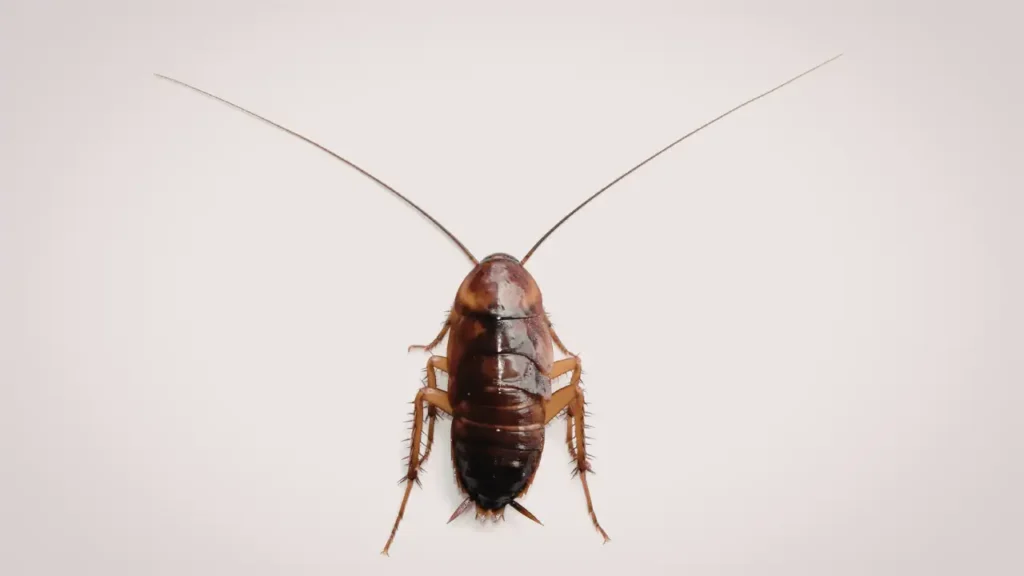
Quick Tip: If you are not sure whether it is a German cockroach, look at the size and the stripes before anything else. Small body, light brown color, and two dark lines behind the head is the classic combination.
Natural Habitat
German cockroaches are indoor specialists. They prefer warm, humid, human-made spaces, which is why kitchens, bathrooms, restaurants, apartments, and food-handling areas are such common trouble spots. Unlike American roaches, which often connect to outdoor moisture and sewer-type environments, German roaches are especially comfortable living right next to people.
They are not usually wandering in from the yard just to visit. They are usually already established somewhere inside or very close to the home. That is what makes them so difficult. Once they find food, water, warmth, and a tight hiding place, they do not need much encouragement to stay. They can breed fast enough that a small issue can turn into a stubborn infestation before a homeowner realizes what is happening.
German cockroaches are not just a nuisance pest. According to the United States Environmental Protection Agency EPA, cockroach allergens can contribute to asthma and allergy problems, especially in children living in heavily infested homes. That is one reason German roach infestations tend to become more serious the longer they are ignored.
Where To Find Them in Your Home
German cockroaches are most often found in kitchens and bathrooms, especially in the hidden spaces where heat, food, and moisture come together. Look under sinks, behind refrigerators, around dishwashers, inside cabinet joints, near pantry shelves, and in wall voids around plumbing. They also like the backs of drawers, gaps in backsplash tile, and the tiny spaces around baseboards.
One of the reasons people miss them for so long is that they do not like being out in the open. They live close to activity but stay hidden unless the population is growing, food is scarce, or they are disturbed. If you see them in daylight, that often suggests the infestation is already larger than it first appeared.
The kitchen is usually the main battlefield because German roaches can find crumbs, grease, water, and warmth all in one place. The bathroom is close behind because of moisture and plumbing access.
During professional inspections, one of the most common hidden hotspots is the narrow void underneath kitchen sinks where plumbing penetrations meet cabinet walls. Those tight, dark spaces often collect enough warmth and moisture to support long-term German roach activity without homeowners noticing immediately. Hidden plumbing voids like these are one reason infestations often seem to move back and forth between kitchens and bathrooms.
How To Get Rid of Them
German cockroaches are the harder species to ignore because they multiply quickly and live so close to food and water. The first step is to stop giving them easy resources. Clean up grease around appliances, wipe down counters, empty trash often, and keep dry food sealed in hard containers. Then focus on moisture. Even a slow leak under a sink can keep a colony going.
In apartment kitchens, it is common to find German roaches nesting behind refrigerators where heat from the compressor combines with tiny food debris and condensation. Even homeowners who clean carefully often miss those hidden conditions until the infestation spreads outward.
Bait is one of the best tools for German roaches because it reaches the hidden ones, not just the ones running across the floor. Place bait where they travel, not where you think they “should” be. Cracks, edges, cabinet seams, and the back corners of appliances are usually better than open areas. You can also use sticky traps to track activity and see whether one part of the kitchen is worse than the rest.
In heavier infestations, German roaches often establish multiple harborages throughout the kitchen instead of staying in one central nesting area.
Do not rely on one spray and hope for the best. In real kitchen infestations, one of the biggest mistakes homeowners make is spraying visible roaches while ignoring the warm hidden zones behind refrigerators and dishwashers. Those appliance voids often stay humid and dark enough for German roaches to keep breeding even when the rest of the kitchen looks clean.
Spraying alone usually fails because German roaches are too good at hiding inside tight kitchen voids and appliance gaps. The better approach is consistent cleanup, sealing, baiting, and ongoing monitoring. If the problem keeps coming back, there is usually a nest or a hidden moisture source that has not been fully addressed.
Is One Preferable to Another?
If by “preferable” you mean which cockroach is less of a nightmare to deal with, the American roach is usually the easier of the two. That does not mean it is welcome, of course. It just means the German roach tends to be the bigger long-term headache because it lives inside the house more comfortably and reproduces much faster.
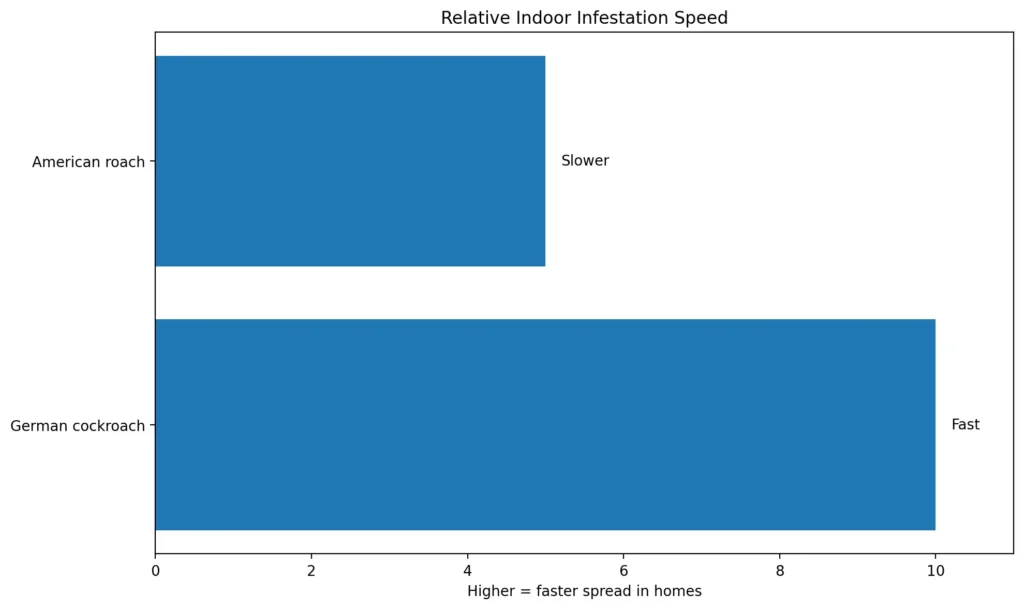
An American roach is often a sign of an entry problem, a moisture problem, or a drain and basement issue. A German roach is often a sign that the kitchen, pantry, or bathroom already has a self-sustaining infestation. One can be dramatic. The other can be quietly relentless.
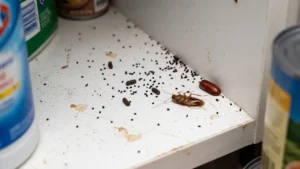
If you ever find droppings near cabinets, drawers, or behind appliances, take that seriously. Droppings usually mean the roaches are not just passing through. They are living there, feeding there, and coming back there. The same goes for shed skins, egg cases, and a strong musty smell. Those clues matter more than whether the roach looks scary or not.
Both species can spread bacteria and other contaminants as they move between drains, garbage areas, food residue, and kitchen surfaces. German cockroaches are especially associated with indoor allergen problems because they spend so much time living close to kitchens, food storage areas, and high-human-activity zones.
So, which one is preferable? Neither is good, but American roaches are usually the simpler problem to solve if you fix moisture and entry points fast. German roaches are the ones that often require a more deliberate, repeated approach because they are already settled into the home.
What Homeowners Usually Get Wrong
A lot of people assume the biggest roach is the worst one. That is not always true. American roaches are bigger and more shocking, so they feel like the main threat. But German roaches are often the more serious indoor infestation because they spread inside homes so efficiently.
Another common mistake is treating every roach sighting the same way. A one-off American roach near a drain and a repeated stream of German roaches around the stove are very different problems. The first usually points to a plumbing, drain, or entry-point issue. The second points to an established indoor colony.
People also waste time overcleaning one area while ignoring the hidden source. A spotless counter will not matter much if a dishwasher leak, a gap in the cabinet, or a damp wall void is feeding the infestation.
In apartments and multi-unit housing, this becomes even more frustrating because the infestation may partially originate from neighboring units through plumbing gaps, shared walls, or utility penetrations. Homeowners often blame themselves when the larger issue is hidden migration between connected spaces. Roaches do not care how nice the kitchen looks. They care about food, water, and shelter.
How To Prevent Both Types From Coming Back
Once you deal with the active infestation, prevention becomes the real win. Keep counters dry at night, wipe grease from appliances, and store food in sealed containers. Fix leaky pipes quickly. Seal cracks around sinks, baseboards, and utility penetrations. Do not leave cardboard piles in damp rooms. Use door sweeps where needed and keep trash tightly covered.
For American roaches, moisture control is a big deal. For German roaches, food control and hidden-space control matter even more. In both cases, the goal is the same: make your home harder to use.
If you use bait products or insecticides, keep them away from children, pets, and food-preparation surfaces. Avoid overapplying sprays around kitchens because excessive pesticide use can actually scatter roaches deeper into wall voids instead of eliminating the infestation.
Signs the Infestation Is Larger Than You Think
One of the biggest mistakes homeowners make is assuming the problem is small just because they only see one or two roaches at a time. Cockroaches are excellent at staying hidden, especially during the early stages of an infestation.
A few warning signs usually suggest the problem is larger than it first appears:
- Roaches appearing during the daytime
- Egg cases near cabinets or appliances
- Pepper-like droppings inside drawers or pantry areas
- A lingering musty or oily odor near hidden spaces
- Repeat sightings near the stove, refrigerator, or dishwasher
- Continued activity even after cleaning or spraying
You may also notice tiny roach nymphs near sinks, cabinet seams, or appliance edges. Seeing younger roaches usually means the infestation is actively reproducing somewhere nearby.
German cockroaches especially tend to stay hidden until the population grows enough to force them into more visible areas. If you are seeing them regularly during the day, there is a good chance the infestation is already established behind walls, cabinets, or appliances.
Also Read: How Many Legs Do Cockroaches Have? Creepy Truth
Conclusion
When people compare German cockroaches vs American cockroaches, they are usually trying to solve one practical problem: “Which one is in my kitchen, and what do I do about it?” The answer comes down to size, color, habitat, and where you found it. German roaches are small, fast-breeding, and strongly tied to kitchens and bathrooms. American roaches are larger, moisture-loving, and often linked to drains, basements, and utility areas. Neither one belongs in your home, but German roaches usually create the more stubborn indoor infestation.
The good news is that identification leads to better control. Once you know which roach you are dealing with, you can stop wasting time on the wrong fix and focus on the right one. That means sealing entry points, removing food and water, baiting in the right places, and checking the hidden spots most people skip.