If you just found out your house may need termite tenting, the first reaction is usually the same: a mix of worry, confusion, and a lot of questions. That is normal. Tenting sounds extreme because it is. But when the infestation is deep, hidden, or spread through wood you cannot easily reach, it is one of the most effective ways to wipe out drywood termites inside the structure.
The key is understanding what it does, what it does not do, and how to prepare without making the whole thing harder than it needs to be. By the time drywood termites are discovered, there may already be hidden termite damage inside walls, attics, trim, or structural wood.
Also Read: Spadepestcontrol Blog
Termite Tenting Quick Answer
Termite tenting is a whole-house fumigation treatment used to eliminate drywood termites throughout a structure. Most termite tenting jobs require homeowners to leave the property temporarily while the home is fumigated, aerated, and cleared for reentry. While highly effective against existing infestations, tenting does not prevent future termite activity and should be combined with ongoing prevention measures.
What Is Termite Tenting?
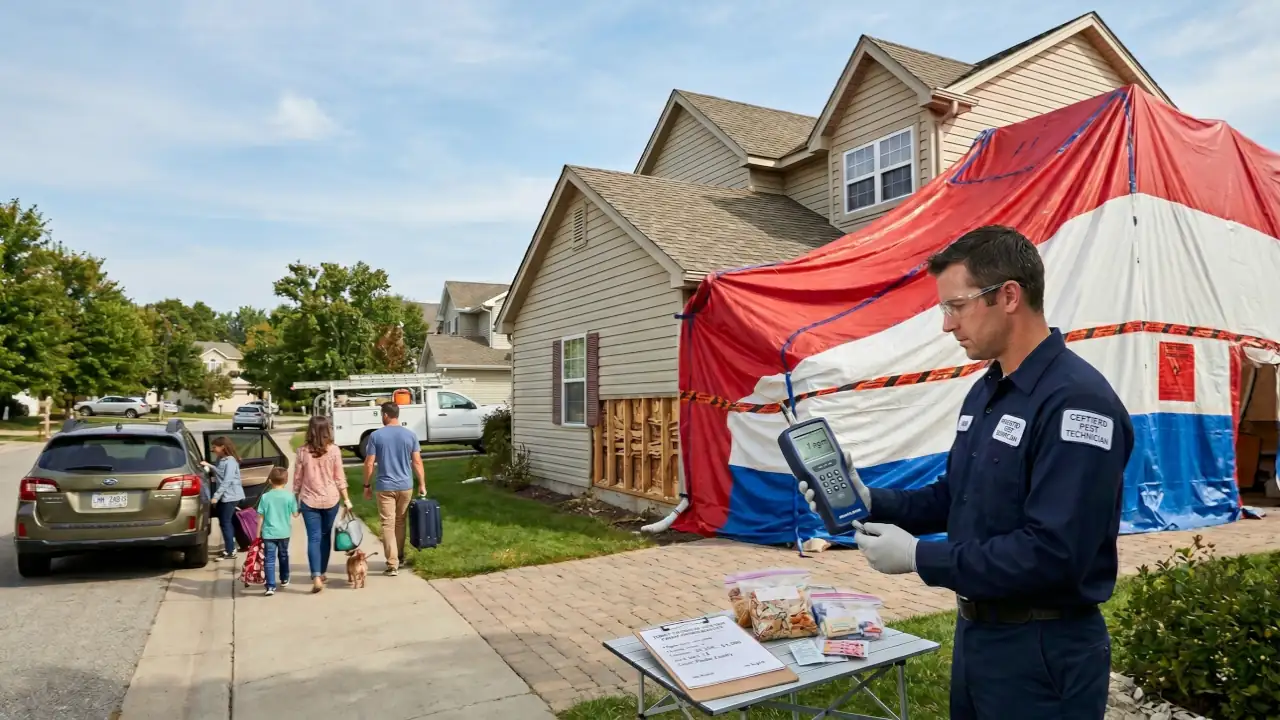
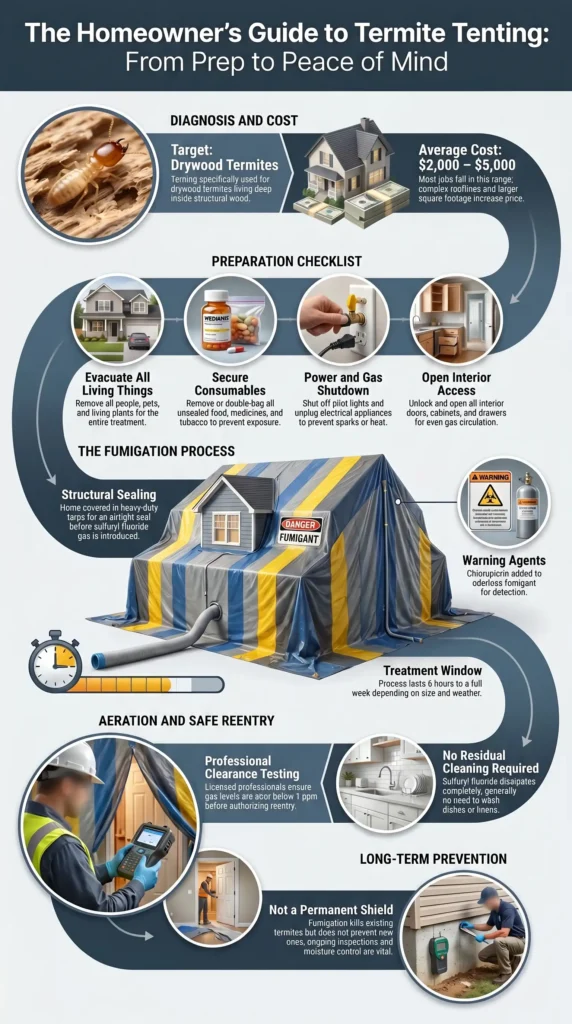
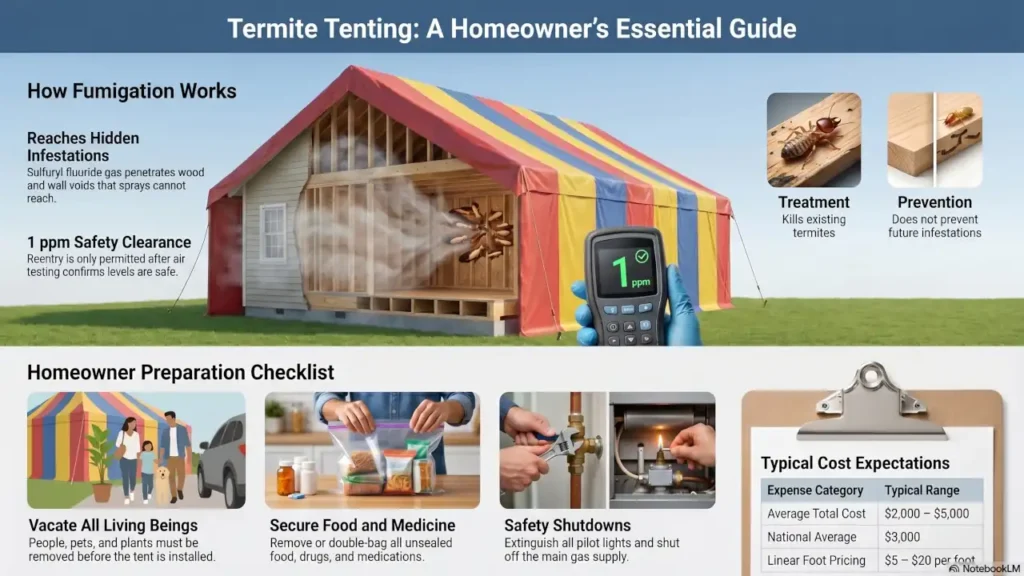
Termite tenting is a whole-house fumigation process. A licensed pest control company covers the structure with a tarp, seals it, and introduces a fumigant gas that penetrates wood, cracks, crevices, and other hidden voids where termites live. California guidance describes this as structural fumigation, and EPA labeling for residential fumigation products shows sulfuryl fluoride is the main gas used for this kind of treatment. A warning agent, usually chloropicrin, is also used so people know the gas is present.
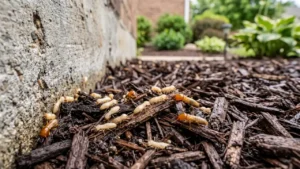
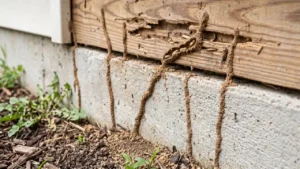
This is usually the kind of treatment homeowners hear about when drywood termites are involved, because drywood termites live inside the wood they infest. Homeowners often first discover drywood termites after finding small piles of pellet-like droppings, known as frass, beneath infested wood. That is different from subterranean termites, which live in soil and are often treated with other methods.
One mistake I see fairly often is homeowners assuming any damaged wood automatically means termites. Termites are not the only pests that target wood, and problems involving carpenter ants can sometimes create similar concerns for homeowners. Several wood-boring insects can leave behind similar evidence, so it’s worth comparing what you’re seeing with the most common signs of termites before deciding what you’re dealing with.
Are There Alternatives to Termite Tenting?
While termite tenting is one of the most effective treatments for widespread drywood termite infestations, it is not the only option. Depending on the location and extent of the infestation, some pest control companies may recommend localized treatments, heat treatments, or other targeted approaches.
Spot treatments can work when termite activity is limited to a small, accessible area. Heat treatments are another option in some situations because high temperatures can kill termites without using a structural fumigant.
For small, localized termite activity: Some homeowners use foam termite treatments to reach cracks, voids, and other areas where termites may be active. These products are not a replacement for whole-house fumigation when an infestation is widespread, but they can be useful in situations where termite activity is limited to a specific accessible area.
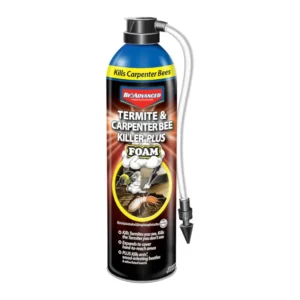
In my experience, the best treatment depends on how widespread the infestation is. Once termites are scattered through multiple wall voids, attic spaces, or structural components, whole-house fumigation often becomes the more reliable solution because it reaches areas that localized treatments may miss.
A professional termite inspection is usually the best way to determine whether tenting is truly necessary or if a less extensive treatment can solve the problem.
How Effective Is It?
When termite tenting is done correctly, it is very effective against the termites inside the structure at the time of treatment. The gas reaches spots that sprays, foams, and spot treatments often miss, which is why fumigation is still used for serious drywood termite problems. In other words, it is not a surface treatment. It is a whole-structure treatment, and that is the real advantage.
Unlike localized treatments that only target specific areas, fumigation is designed to reach termites throughout the structure, including hidden groups that may be spread across wall voids, attic spaces, trim, and other inaccessible areas.
That said, tenting is not magic and it is not a permanent shield. In my experience, one of the biggest misconceptions homeowners have is assuming tenting permanently termite-proofs a house. It does not. Fumigation is designed to eliminate the existing infestation, but long-term protection still depends on regular inspections and addressing conditions that attract termites in the first place.
It kills the termites in the house, but it does not stop a future infestation if new termites find their way back in later. That is why follow-up prevention matters just as much as the fumigation itself. If the home still has moisture issues, wood-to-soil contact, or entry points, termites can come back.
A Real-World Fumigation Example
One of the more memorable drywood termite jobs I dealt with involved a homeowner who had already paid for multiple spot treatments over several years. The termites kept showing up in different areas of the house because the infestation had spread through inaccessible wall voids and roof framing.
After a full inspection, structural fumigation was recommended. The homeowner was hesitant because of the cost and inconvenience, but the tenting process eliminated activity throughout the structure. The important lesson was that spot treatments were only addressing visible symptoms while termites remained hidden elsewhere.
Situations like this are one reason fumigation is still considered one of the most effective options for widespread drywood termite infestations. When termites are scattered through multiple inaccessible areas, localized treatments often become less practical and less reliable.
How To Prepare for Termite Tenting
Preparation is where a lot of people get stressed, but it gets much easier if you break it into simple steps. Start by stopping the “just in case” shopping for a few days. Do not bring home a week’s worth of groceries right before the fumigation. It only creates more food, more containers, and more items to move at the last minute. Keep your kitchen lean for the treatment window so you are not scrambling with a full pantry the night before. This is practical advice, not drama, and it saves time.
Then make living arrangements early. In my experience, the homeowners who have the smoothest fumigation process are usually the ones who start preparing several days in advance rather than trying to do everything the night before. Last-minute preparation often leads to forgotten food, missed medications, or unnecessary stress.
You and your pets will need to be out of the house for the fumigation period, so line up a hotel, a relative’s place, or another safe option before the crew arrives. The more you arrange ahead of time, the less the process feels like an emergency. California’s fumigation guidance is clear that people, pets, and plants must be out before fumigation begins.
Remove Perishable Food and Plants
This is one of the most important parts of prep. Open food, food that is not sealed tightly, medicines, drugs, and similar household items need special attention. EPA fumigant labeling says to remove food, feed, drugs, medicinals, and other vulnerable items unless they are properly protected, and it also says desirable growing plants must be removed from the space to be fumigated. If something cannot be protected correctly, take it out. Do not guess.
Expert tip: Do not wait until the last night to handle perishables. Group refrigerated, frozen, pantry, and countertop food early, then decide what is staying only if the fumigator says it can stay and it is protected the right way. If you are not sure, remove it. That rule saves headaches and protects your food from exposure.
Take Out Linens
Strip the beds and handle linens the way your fumigator instructs you to handle them. In many homes, that means taking bedding off the bed, removing anything the crew needs access to, and making sure fabric items are not blocking drawers, closets, or access points. The goal is not just neatness. It is access. The fumigant has to move freely through the structure, so clutter and piled fabric only slow things down.
Shut Off Gas
Do not treat gas shut-off like an optional detail. Pilot lights, gas appliances, and other ignition sources need attention before tenting starts. Fumigation training materials specifically call out shutting off pilot lights and gas lights, and your fumigator may also ask you to shut off gas at the supply. Follow their directions exactly because this is a safety issue, not just a convenience issue.
Turn Off and Unplug Potentially Dangerous Items
Anything that can spark, heat up, or create a problem while the house is sealed should be switched off or unplugged if your fumigator tells you to do so. That includes items you might not think about at first, like small kitchen appliances, portable heaters, or equipment that can accidentally cycle on while nobody is home. Fumigation prep manuals also advise disconnecting electrical equipment in the treated area.
Unlock Doors and Cabinets
This is a small step that makes a big difference. The fumigator needs access, and EPA-related fumigation instructions say to open doors and drawers inside the treated space so the gas can circulate. If cabinet doors are jammed, locked, or blocked by clutter, the crew may not be able to do the job evenly. Unlock what needs unlocking, clear what needs clearing, and let the fumigator work through the home without fighting the furniture.
What Needs to Be Removed When Tenting for Termites?
The short answer is this: remove people, pets, and plants first. After that, remove or properly protect food, feed, drugs, medicinals, and anything else your fumigator tells you to move. Official guidance also warns homeowners about enclosed spaces, fish tanks, and other items that may need special handling depending on the product label and the structure.
You should also tell the fumigator about anything unusual in or around the house that could let gas move somewhere it should not go, such as ducts, conduits, drains, or connecting lines. California’s fumigation FAQ specifically tells homeowners to disclose construction elements, conduits, drains, or vacuum systems that could allow fumigant to pass to adjacent spaces. That is the kind of detail people forget, and it matters.
Expert tip: Make one last walkthrough with a flashlight before you leave. Check counters, kitchen tables, bathroom shelves, laundry areas, child-level storage, and any room where food, medication, or pets might have access. The most missed items are usually the most ordinary ones. A forgotten bag of snacks, a bottle of medicine, or a pet item tucked behind a door can slow everything down.
How Long Does Termite Tenting Take?
The honest answer is that it depends. California’s structural pest control guidance says a fumigation can take anywhere from six hours to one week, depending on the infestation, dosage, temperature, size of the structure, and other factors. On the chemical side, sulfuryl fluoride generally dissipates quickly after the tent is removed, and NPIC notes that it can drop to very low levels within 24 hours after the tent comes off. But you still do not reenter until clearance testing says it is safe.
In real life, many homeowners should expect to be away for at least part of a day and sometimes longer, especially if the house is large or the weather slows aeration. The exact return time is determined by the fumigator’s clearance process, not by a guess or a timer on the wall. EPA’s sulfuryl fluoride clearance guidance says the home must be cleared to 1 ppm or less before workers and occupants reenter.
Is Termite Tenting Safe?
Termite tenting is safe when it is done by a licensed professional and you follow every preparation and reentry instruction. It is not safe to treat it casually. The gas used for fumigation is toxic, odorless, and designed to penetrate the entire structure.
That is exactly why the crew must seal the home, post warnings, aerate the structure, and test the air before anyone goes back in. The California Department of Public Health notes that sulfuryl fluoride has been detected in some homes for up to 48 hours after clearance, which is a good reminder not to rush the process or assume a home is safe simply because the tent has been removed.
The safety rule is simple: do not reenter until the fumigator says the structure has been cleared. Do not open the tent early. Do not “just check something” inside. I have seen homeowners become tempted to grab medications, paperwork, or pet supplies after the tent is installed. Once fumigation begins, nobody should enter the structure until the licensed fumigator completes clearance testing and authorizes reentry. Do not assume it is fine because the tarp is off. The air has to be tested, and it has to pass clearance standards before it is safe for people, pets, and sensitive items.
How Much Does Termite Tenting Cost?
Most homeowners want a real number, not a vague answer, and the truth is that termite tenting usually lands in the several-thousand-dollar range. Recent cost guides put the average around $3,000, with many jobs falling between $2,000 and $5,000. Bigger homes, difficult rooflines, heavy prep work, or added lodging costs can push the total higher.
Homes with complex roof designs, detached structures, or extensive accessibility challenges often require more labor and materials, which can noticeably increase the final price. Getting multiple estimates is usually worthwhile when fumigation is recommended.
Also Read: 9 Signs of Termites Every Homeowner Should Know
Some sources also estimate whole-house fumigation at roughly $5 to $20 per linear foot, depending on the property and scope.
It is smart to budget for more than just the fumigation itself. If you need a hotel, pet boarding, food replacement, or extra prep time, those costs add up fast. That does not mean tenting is overpriced. It means the whole-home treatment is a bigger job than a normal spot treatment, and the price usually reflects that.
Conclusion
Termite tenting is not the first option for every infestation, but for serious drywood termite problems, it is one of the most complete treatments available. It works because it reaches the places you cannot reach with normal sprays. The tradeoff is that it takes planning, temporary inconvenience, and a serious respect for safety rules. If you prepare the right way, follow the fumigator’s checklist, and do not rush reentry, the process is manageable.
The big takeaway is this: tenting solves the immediate termite problem, but long-term protection still depends on prevention, inspection, and fast action if new signs show up later. Know what termites look like, ask good questions, and keep an eye on the wood around your home. Not every wood problem is caused by termites, and understanding the differences between common wood-damaging pests can help you catch problems earlier. That is how you stay ahead of the next problem before it becomes a bigger one.
After years of dealing with drywood termite infestations, one thing remains consistent: homeowners who address termite activity early almost always spend less money and avoid more extensive damage than those who wait. If you suspect termites, getting a professional inspection sooner rather than later is usually the smartest move.