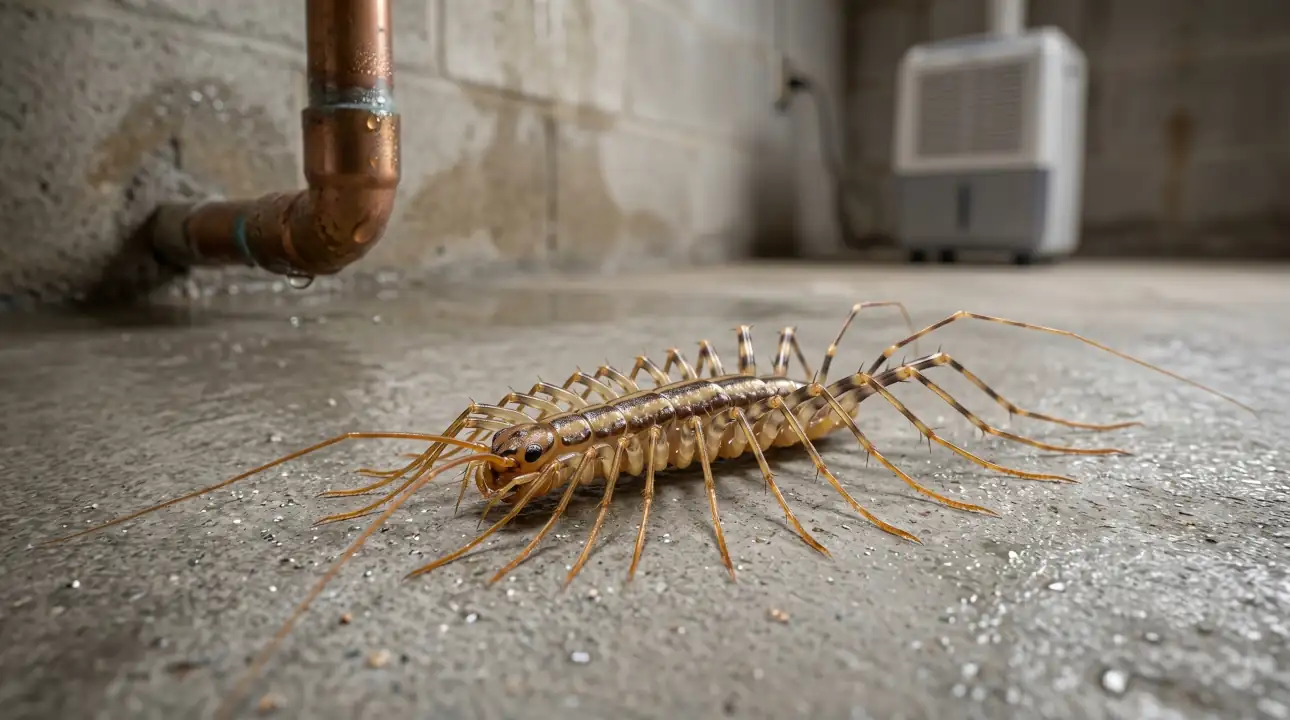
House centipedes can look alarming the first time you see one, and that is exactly why so many homeowners panic. Long legs, fast movement, and a habit of showing up in bathrooms, basements, and closets make them feel worse than they really are. The truth is simpler. House centipedes are usually more of a “creepy visitor” than a true threat, but there are a few things most people still get wrong about their bite risk.
Also Read: How To Get Rid of Centipedes in Your House
Quick Answer: Are House Centipedes Dangerous?
For most people, house centipedes are not dangerous. While they are venomous, their bites are rare and usually cause only mild pain, redness, or swelling. In most homes, the bigger concern is the moisture and insect activity attracting them indoors.
The common house centipede (Scutigera coleoptrata) is the species most homeowners encounter indoors. Despite its intimidating appearance, it is generally considered a nuisance pest rather than a dangerous one.
Why Homeowners Worry About House Centipedes
Most people are not concerned because a house centipede damaged their home or bit someone. They are concerned because the insect looks intimidating. The long legs, fast movements, and sudden appearances make house centipedes seem more dangerous than they actually are. In my experience, the fear they create is usually much greater than the risk they pose.

Do House Centipedes Bite?
Yes, house centipedes can bite, but they usually do not. They are shy, fast, and more interested in hunting prey than in people. Most reported bites occur when a house centipede is trapped, handled, or accidentally pressed against the skin. They do not actively seek out people and will almost always try to escape before resorting to a defensive bite.
Most of the time, they hide in dark, damp places and move away as soon as lights turn on or someone gets close. According to Health Canada’s guidance on centipedes, house centipede bites are uncommon and generally considered minor because they rarely penetrate human skin effectively, which is one reason serious injuries are unusual.
When they do show up, they are often hunting the insects already living in your home. House centipedes feed on pests like spiders, silverfish, ants, cockroaches, bed bugs, carpet beetles, and other small arthropods. That is why some people call them useful hunters, even though they are not exactly welcome guests. If you have ever wondered whether they help with other pests, they can absolutely act as a natural predators of Cockroaches, and they are also a predator of bed bugs in the right setting.
Quick Tip: If you keep seeing house centipedes, do not focus on the centipede alone. Turn your attention to moisture, clutter, and the smaller insects they are feeding on. That is usually where the real fix starts.
What Happens If You Get Bit by One?
Most house centipede bites are mild. Many people who have experienced both describe the discomfort as less severe than a typical bee sting, though sensitivity varies from person to person. People usually report a quick sting or sharp pinch, followed by some localized redness, tenderness, or slight swelling.
In many cases, the discomfort settles down within a few hours, and the skin returns to normal without any special treatment. Canada’s health guidance and poison-center guidance both describe house centipede bites as generally minor, with the main advice being basic cleaning, cold compresses, and watching for unusual reactions.
That said, skin reactions can vary. Some people are more sensitive than others, and any open bite or scratch can become irritated or infected if it is not cleaned properly. If symptoms get worse instead of better, or if you see signs of an allergic reaction like hives, dizziness, swelling in the mouth or throat, or trouble breathing, medical attention is the right move.
In many suspected bite cases, homeowners never actually witness the centipede biting them. Skin irritation can easily be mistaken for an insect bite, which is one reason confirmed house centipede bites are reported far less often than people assume.
Quick Tip: Wash the area with soap and water, apply a cold compress for short intervals, and keep an eye on it for the next day or two. If redness spreads or pain increases, treat it like a wound that needs medical review.
Are House Centipedes Venomous?
Yes, house centipedes are venomous. House centipedes inject venom using specialized appendages called forcipules, which are modified front legs located near the head. These structures allow them to immobilize prey quickly before feeding, which is one reason they are such effective hunters indoors.
That venom helps them hunt, but it is not usually dangerous to people. For most homeowners, the important part is this: venomous does not automatically mean medically serious. The small house centipede species commonly found around homes usually causes only mild effects in humans.
If you have ever heard people mix up venom and poison, this is where the confusion starts. A venomous creature injects toxins through a bite or sting. A poisonous creature is harmful when eaten, touched, or absorbed. House centipedes fall into the venomous category, not the poisonous one. If you want a clearer comparison of similar home pests, here’s a guide on the difference between house centipedes and silverfish.
Are House Centipedes Poisonous?
No, house centipedes are not considered poisonous in the usual homeowner sense. They are not toxic just because they are in your house, and they are not pests that spread poison through touch or contact. Their defensive or hunting chemistry is tied to their venomous bite mechanism, not to being poisonous to the touch. In practical terms, you do not need to worry about casually being near one in the same way you would worry about a toxic substance.
The better question is not “Are house centipedes poisonous?” but “Why are they here?” If they are showing up indoors, it usually means the home has the kind of environment they like. Damp basements, bathrooms, crawlspaces, cracks in the foundation, and the presence of other insects all make a home more attractive to them.
Why House Centipedes Show Up Indoors
House centipedes love dark, damp hiding spots. House centipedes are primarily nocturnal, which is why many homeowners spot them unexpectedly at night when turning on a bathroom, basement, or hallway light. During the day, they typically stay hidden in cracks, voids, and other protected areas.
One detail homeowners often notice is that house centipedes tend to appear suddenly and disappear just as quickly. That behavior is normal. Their speed allows them to hunt insects efficiently and avoid predators. They are among the fastest-moving arthropods commonly found inside homes, which contributes to the surprise and fear they often cause.
In real homes, seeing one sprint across a wall is often what creates concern long before any actual pest-related risk exists.
They are commonly found in basements, bathrooms, crawlspaces, under sinks, behind baseboards, and around areas where moisture builds up. They move quickly, so people often spot them on walls, ceilings, or floors running toward cover.
A single centipede may not mean much, but repeated sightings can be a sign that moisture and prey are both present. While a true house centipede infestation is uncommon, repeated sightings usually indicate conditions that allow centipedes and their prey to thrive indoors.
In many homes I’ve inspected, repeated sightings almost always traced back to a damp basement, crawlspace, or another hidden moisture source.
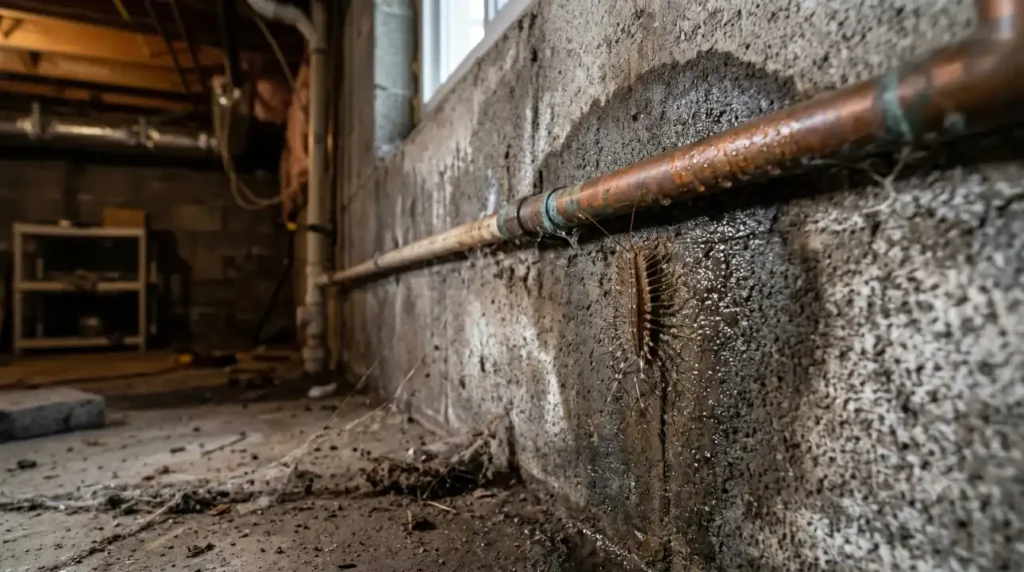
That is why the house centipede problem is often bigger than the bug itself. If the home has excess moisture, then silverfish, roaches, ants, spiders, and other insects often follow. Once those prey insects are present, centipedes have a food source and the cycle continues. In that sense, house centipedes are a symptom of a larger indoor pest environment.
Are House Centipede Bites Dangerous to Humans?
For a healthy adult, the bite risk is usually low and the effects are usually mild. From a practical pest-control standpoint, I consider house centipedes one of the least concerning biting pests commonly found indoors. Homeowners are usually far more likely to experience problems from the moisture conditions or hidden insect populations attracting them than from the centipedes themselves.
That is the honest answer. The bigger concern is not that a house centipede is likely to cause serious harm, but that people may mistake it for something far worse or overreact to the sight of it. In most cases, the bite does not require anything more than basic first aid.
The people who should be more cautious are those with sensitive skin, a history of allergic reactions, or a compromised immune system. Also, any bite that breaks the skin carries some risk of infection if it is not cleaned well. So while most homeowners do not need to view house centipedes as a serious danger, any bite should still be cleaned and monitored.
How to Get Rid of House Centipedes the Right Way
The best control method is not just killing the centipede you see. The real fix is to make your home less inviting. If you’re dealing with recurring sightings, here’s a detailed guide on how to get rid of centipedes in your house that covers long-term prevention and control strategies.

That starts with moisture control. Use dehumidifiers in damp areas, fix leaks, dry out crawlspaces and basements, and improve ventilation in rooms where humidity stays high. If a room smells musty or feels damp, centipedes are more likely to hang around there.
Next, reduce the hiding places. Seal cracks around the foundation, gaps near baseboards, spaces around doors and windows, and other small entry points. Remove clutter from storage areas, since stacked boxes and messy corners give centipedes plenty of cover. Outside the house, clear away leaf litter, woodpiles, and debris close to the foundation so the area is less attractive in the first place.
Then deal with the prey insects. If centipedes are finding food, they are more likely to stay. That means tackling roaches, silverfish, ants, and other pests that keep the food chain going. In practical homeowner terms, fewer insects usually means fewer centipedes.
Because house centipedes feed on a wide range of household pests, reducing populations of insects like cockroaches, silverfish, and bed bugs can significantly reduce centipede activity over time.
Also Read: How To Get Rid of Daddy Long Legs (And Keep Them Out for Good)
When to Call a Pest Control Pro
If you keep seeing centipedes even after cutting moisture and sealing entry points, there is usually another pest source behind the problem. That is when a pro can help identify what is feeding them, where they are entering, and which parts of the home are holding moisture. A recurring centipede issue is often a sign that the home needs a deeper inspection, not just a quick spray.
This matters especially if you see them in multiple rooms, not just one damp area. Repeated sightings in bedrooms, hallways, kitchens, or living areas can point to a broader pest issue. At that stage, a treatment plan that targets moisture, entry points, and the underlying insect population is usually the most effective route.
Conclusion
So, are house centipedes dangerous? For most homeowners, no, not in the way people fear. They can bite, but they rarely do. Their bites are usually minor. They are venomous, not poisonous, and they are far more interested in hunting other insects than in bothering people. The bigger issue is not the centipede itself, but what its presence says about your home. Moisture, cracks, clutter, and other pests are usually part of the story.
If you remember one thing, make it this: house centipedes are usually indicators, not invaders. When they appear indoors, they often point to excess moisture, hidden insect activity, or both. Solving those conditions is almost always more effective than focusing on the centipede itself.