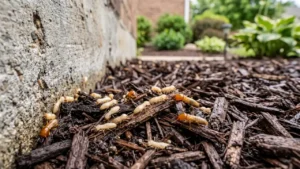
If you’ve got mulch beds around your house and you’ve also spotted signs of termites nearby, it’s natural to wonder if the two are connected. One pattern I’ve noticed after inspecting hundreds of homes is that termite problems are rarely caused by the mulch itself.
Much more often, I find mulch piled against siding, poor drainage, leaking gutters, or wood-to-soil contact creating the conditions that let termites move unnoticed toward the house. Understanding why termites show up around mulch can help you protect your landscaping without putting your home at greater risk. Here’s what I’ve found works in the field.
Also Read: 9 Signs of Termites Every Homeowner Should Know
Does Mulch Attract Termites?
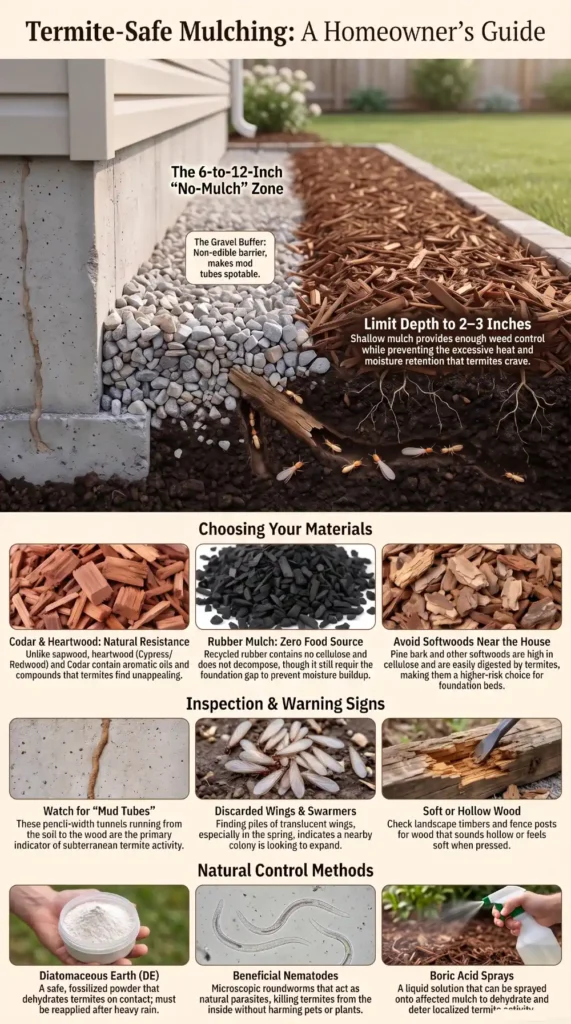
Yes, mulch can attract termite activity, but mostly because it traps moisture and creates sheltered conditions rather than because termites are drawn to the mulch itself. Keeping mulch 6–12 inches away from your foundation, limiting it to 2–3 inches deep, and choosing mulch that’s less attractive to termites can significantly reduce the risk around your home.
Why Mulch Can Attract Termites
While the answer is technically yes, the reason surprises most homeowners. Termites aren’t usually attracted to fresh mulch from a distance. Instead, they take advantage of the moist, protected environment that improperly installed mulch can create around a home’s foundation.
The problem is what a thick layer of mulch does to the ground underneath it. Like most insects, termites depend on warmth and moisture to stay active. A few inches of mulch piled against your foundation creates exactly that kind of pocket. It traps heat, it holds water after every rain or sprinkler cycle, and it shields the soil from direct sun. From a termite’s point of view, that’s prime real estate, food source or not.
And yes, if the mulch happens to be a softwood like pine bark, termites can feed on it. Any wood containing cellulose can become a food source, whether it’s a fence post or a bag of mulch from the garden center. That’s also why termites attack tree roots, wooden landscape edging, cardboard, untreated lumber, and other cellulose-based materials around the yard. But even mulch types that termites don’t particularly enjoy eating can still end up hosting termite activity, simply because of the moisture and shelter it provides.
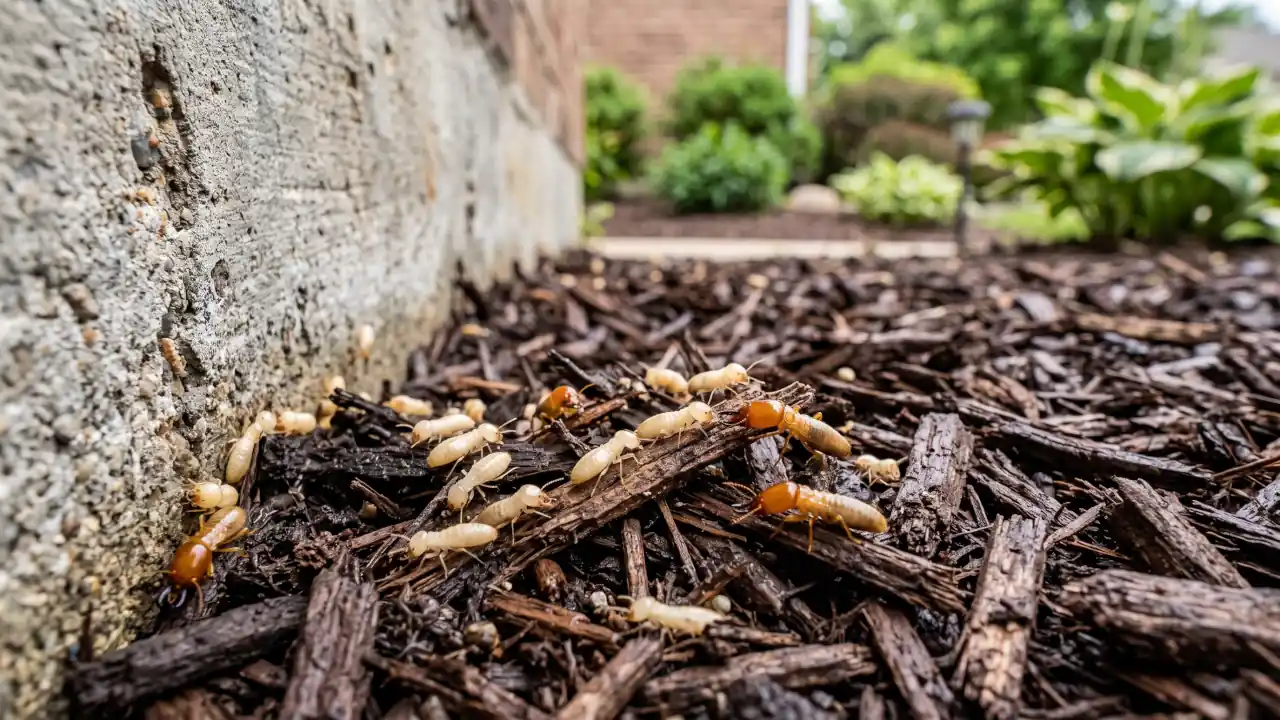
It also helps to understand how termites actually operate. They’re not wandering the surface looking for handouts. Most species build their colonies underground and only come above ground when winged swarmers take off to start new colonies elsewhere. Worker termites are responsible for nearly all of the damage homeowners see. Mulch sitting right up against that foundation can make it easier for them to travel unnoticed, letting these wood-eating insects travel back and forth without ever being exposed to sunlight or predators.
So mulch itself isn’t some termite magnet. It’s more like a sheltered waiting room that happens to sit right next to the buffet, which in this case is your house. This lines up with guidance from the Iowa State University Extension and Outreach, which explains that mulch doesn’t attract termites from a distance but can create moist conditions that make areas around a home’s foundation more favorable for termite activity if it’s applied too heavily or directly against the structure.
It’s also worth noting that different termite species behave a little differently around mulch. Subterranean termites, which cause the vast majority of structural damage in the U.S., are the ones most tied to mulch beds because they live in the soil and need that ground contact to survive.
Drywood termites, on the other hand, don’t need soil contact at all, so mulch has almost nothing to do with how they get into a home. If you’re dealing with drywood termites, the mulch conversation matters a lot less, and the fix usually involves sealing up cracks and gaps in the structure itself rather than adjusting your landscaping. If you live in regions where drywood termites are common, such as parts of the Southeast, Gulf Coast, or coastal California, routine inspections of exposed wood and attic spaces are often more important than changes to landscape mulch.
The Right Way to Use Mulch
These recommendations are intended to reduce conditions that favor termites, but they won’t eliminate an established colony. If you already see mud tubes, swarmers, or damaged wood, treating the infestation should take priority over changing mulch alone.
Here’s the good news: you don’t have to rip out your mulch beds. If you’re wondering how to keep termites out of mulch, the answer comes down to proper placement, moisture control, and choosing the right materials. I’ve inspected plenty of homes where the mulch itself wasn’t the issue. The biggest problems almost always came from mulch piled against siding or flower beds that stayed wet for days after every rain. You just need to be smarter about how you use them.
The single biggest rule is this: mulch should never touch your house. The same idea applies to any wood that’s touching the soil. Deck posts, wooden lattice, fence pickets, stacked firewood, and untreated landscape timbers can all provide termites with an easy path into nearby structures. Keeping these materials off the ground whenever possible reduces another common entry point.
Not the siding, not the foundation, not the door frame, none of it. When mulch is piled right up against the structure, you’re basically building a bridge for termites to walk straight from the soil into your walls without you ever noticing.
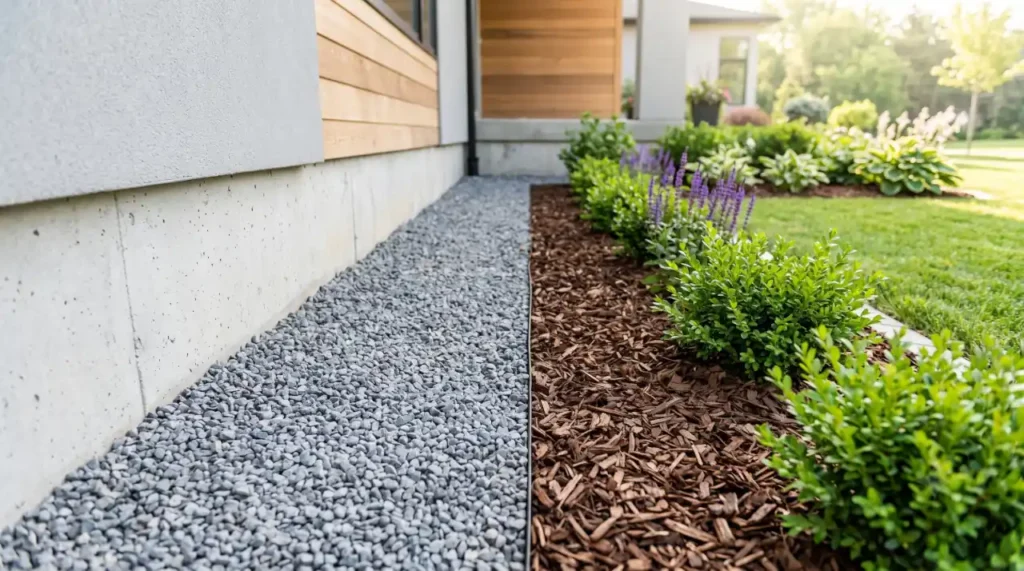
Give yourself some breathing room instead. I usually tell homeowners to leave at least six inches of bare space between the mulch and the foundation, and if you want to be extra cautious, stretch that to a full twelve inches. That gap does two things. It makes it a lot harder for termites to sneak across unnoticed, and it gives you a clear strip to actually inspect for mud tubes when you’re doing your seasonal walk-around.
While you’re at it, fill that gap with something termites can’t eat. Gravel or crushed stone works great here. It also drains well, and gravel doesn’t provide termites with food and leaves the foundation easier to inspect for mud tubes. A lot of professionally landscaped homes already use this trick without homeowners realizing it’s a pest control measure and not just a style choice.
If you’re concerned about termites because of previous activity around your home, consider installing a professionally designed termite baiting system or having the area inspected before relying on landscaping changes alone. Mulch management helps reduce favorable conditions, but it shouldn’t be viewed as a replacement for proper termite prevention where an active colony is present.
One more thing worth mentioning: keep the mulch layer itself shallow. Two to three inches is plenty for weed control and moisture retention. Piling it six or eight inches deep doesn’t help your plants any more than a thin layer does, but it does a much better job of holding heat and moisture right where termites like it. Thick mulch also makes it harder to spot mud tubes during a quick visual check, which is the last thing you want.
Timing matters too. If you’re refreshing your mulch beds every spring, use that opportunity to rake back the old layer and actually look at the soil and foundation underneath before putting fresh mulch down. This is when a lot of homeowners first spot mud tubes or damaged wood, simply because it’s the one time of year they’re getting up close to that part of the house.
Pair that yearly refresh with a quick check after any heavy rain, since that’s when moisture levels spike and termite activity tends to follow. It only takes a few minutes, but catching a problem in its early stages is a lot cheaper and easier to deal with than catching it after it’s spread into the framing. If you live in an area where termites are common, scheduling a professional inspection every year or two can help catch problems long before structural damage becomes obvious.
Mulch That Termites Don’t Like
Not every type of mulch is equally appealing to termites. If you’re starting from scratch, or you’re ready to switch out what’s already in your beds, some materials naturally hold up better than others. If you’re looking for the best mulch to prevent termites, remember that no mulch is completely termite-proof. Some types are simply less attractive and create fewer favorable conditions than others.
California Redwood & Cypress Heartwood
Here’s a detail most people don’t know: cypress sapwood is actually one of the mulches termites go after most. But cypress heartwood, the dense inner part of the tree, is a completely different story. It contains natural compounds that make it less attractive than many softer wood species. California redwood behaves the same way. Both options look attractive in a landscape bed and give you years of use before you need to replace them, which makes the slightly higher price tag easier to swallow.
Cedar
Cedar is one of my go-to recommendations for homeowners who are serious about keeping termites out of their beds. Its naturally occurring aromatic compounds and oils make it less appealing to termites than many other wood mulches. While cedar isn’t termite-proof, it generally resists termite feeding better than softer wood mulches and can be a smart choice when used correctly around a home’s foundation.
Quick Tip: Keep an eye on how cedar mulch breaks down over time. As it ages and starts mixing with soil and organic debris, its natural scent fades and so does its resistance. Refreshing the top layer every year or two keeps that protective smell strong and helps regulate soil temperature for your plants at the same time.
Melaleuca
Melaleuca is a fast-growing, invasive tree that’s taken over large parts of Florida, which actually makes it a pretty sustainable mulch option since removing it helps the local ecosystem. You’ll sometimes see it sold under the name “Florimulch.” University research on termite feeding has actually tested this material directly against other mulch types, and melaleuca has performed well in university feeding studies compared with several common landscape mulches.
The catch is that melaleuca breaks down faster than cedar or cypress, usually lasting two to three years before it needs replacing. It’s also generally cheaper, so a lot of homeowners see that as a fair trade. If you like the idea but want something with a similarly strong scent, eucalyptus mulch is a comparable choice, though it tends to break down even quicker.
Rubber Mulch
Rubber mulch, usually made from recycled tires, doesn’t provide termites with a wood food source, although the moisture underneath it can still support termite activity if it’s installed against the home. There’s no wood cellulose in it at all, so it doesn’t give termites anything to eat, and it doesn’t decompose the way organic mulch does, so you’re not replacing it every couple of years.
Quick Tip: Rubber mulch is great for pest resistance, but it does nothing to enrich your soil the way organic mulch does. If your plants rely on that slow nutrient boost from decomposing wood, consider mixing rubber mulch into high-risk zones near the foundation while keeping organic mulch further out in the beds where soil health matters more.
Treated Mulch
Treated mulch is another route, but it’s worth doing a little homework before you buy. Some products use fairly heavy chemical treatments that do keep termites away but can also mess with your soil quality over time, which isn’t great if you’ve got other plants nearby that depend on healthy soil.
If that concerns you, look for mulch treated with natural oils instead, things like tea tree oil or eucalyptus oil. These give you a similar level of protection without the harsher chemical load, and they tend to be gentler on surrounding plant life.
How to Tell if Termites Are Using Your Mulch
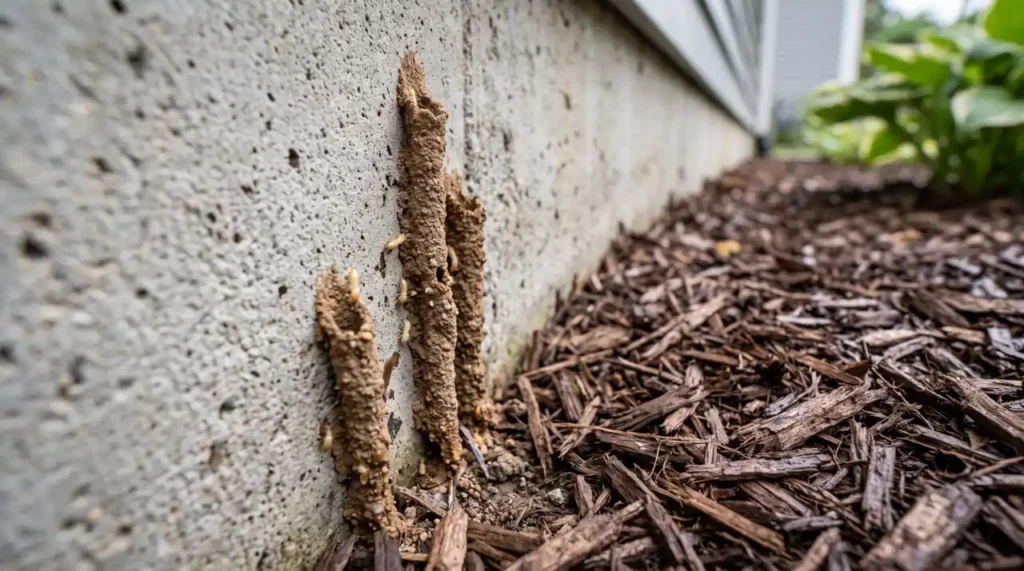
Before treating your mulch, it’s worth making sure termites are actually the problem. I’ve inspected plenty of yards where homeowners assumed they had termites, only to find harmless ants or other insects living in the mulch instead. Looking for a few specific warning signs can save you time and help you decide whether it’s a problem you can monitor or one that needs professional attention.
Here are the signs I tell homeowners to watch for:
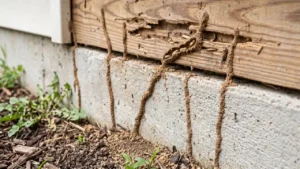
- Mud tubes running from the soil into the mulch, foundation, or nearby wood. These pencil-width tunnels are one of the strongest indicators of subterranean termites.
- Winged swarmers or piles of discarded wings, especially during spring. Swarmers are reproductive termites looking to establish new colonies nearby.
- Soft, hollow, or damaged wood around landscape timbers, fence posts, or the lower portions of your home’s exterior.
- Mulch that stays constantly damp, even several days after rainfall. While moisture alone doesn’t mean termites are present, it creates ideal conditions for them.
- Visible worker termites when you move mulch aside. They’re small, pale, and avoid light, quickly retreating back into the soil or mud tubes when disturbed.
If you notice several of these signs together, especially mud tubes combined with damaged wood, it’s a good idea to arrange a professional termite inspection rather than relying on mulch treatments alone.
Product Recommendation
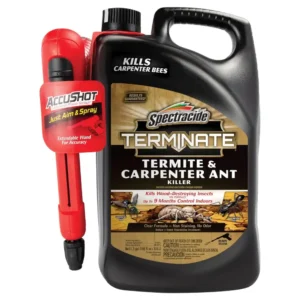
If you’ve found termite activity around your mulch or foundation and want an over-the-counter option to help monitor subterranean termites, Spectracide Terminate Termite Killer creates a protective treatment around areas where termites are active and can be useful as part of an overall termite management plan. Just keep in mind that severe or widespread infestations typically require professional treatment.
Treating Mulch for Termites
If you’re already seeing signs of termites in your mulch, mud tubes running through it, live or dead termites near the surface, or a swarm of winged termites emerging in spring, it’s time to act. The good news is that you don’t need to jump straight to harsh pesticides. Most pest professionals reach for these methods first, since they’re effective without stripping the life out of your soil.
Use Diatomaceous Earth
This is one of my favorite tools in the whole pest control toolbox, and I recommend it constantly. Diatomaceous earth is made from the fossilized remains of tiny aquatic organisms, ground into a fine powder. It’s completely safe to handle with bare hands, but it’s deadly to termites and other insects with exoskeletons. The microscopic sharp edges damage the termite’s protective coating, causing it to lose moisture until it dries out and dies.
Diatomaceous earth works best against termites that come into direct contact with it. While it can reduce activity in localized areas, it shouldn’t be expected to eliminate an established underground colony by itself.
Quick Tip: Sprinkle food-grade diatomaceous earth directly over the affected mulch, then lightly toss the mulch to work it in and add another light dusting on top. Reapply after heavy rain since water washes the powder away, and stick with a few repeat treatments over a couple of weeks for the best results.
Spray Boric Acid
Boric acid works in a similar way to diatomaceous earth. It dehydrates termites and clings to their bodies, so it can affect termites that contact treated surfaces, although it’s generally most effective on localized infestations rather than large established colonies. Mix about a tablespoon of boric acid powder into a cup of hot water, let it dissolve fully, then pour the mixture into a spray bottle. Homeowners often confuse boric acid with borax, even though they’re different products. If you’re dealing with ants as well, here’s how borax works against ant colonies.
Spray it directly onto affected mulch and the soil beneath it. Since it’s applied as a liquid, it seeps down into the ground where a lot of termite activity is actually happening. You’ll likely need a few applications spaced out over a week or two before you see the colony’s activity drop off noticeably. If you’re considering other household products for pest control, it’s also worth understanding why bleach isn’t a reliable insect treatment.
Introduce Nematodes
Nematodes are microscopic roundworms that occur naturally in soil, and certain species are specifically parasitic to termites. They enter the termite’s body and release bacteria that kill it from the inside, which sounds intense but is completely safe for humans, pets, and plants.
You can pick up beneficial nematodes at most garden centers or order them online. Mix them with water according to the package instructions and apply them to the mulch and surrounding soil, ideally in the early morning or evening when the sun won’t kill them before they get to work. Beyond termites, nematodes also help control grubs and other soil pests, so it’s a nice two-for-one.
Use a Natural Deterrent
If you’d rather avoid powders or biological treatments altogether, a handful of natural oils and solutions may help discourage termites temporarily but shouldn’t be relied on as a standalone solution for an established infestation. Tea tree oil, eucalyptus oil, citrus oil, and plain white vinegar are all worth trying.
Mix a few drops of your chosen oil into a spray bottle of water and apply it directly to the mulch. Baking soda is another household product people often reach for, but like vinegar, it has important limitations depending on the pest. Many DIY remedies spread online work better in theory than in practice. Coffee grounds are another common example.
Quick Tip: If you’re using vinegar, a one-to-one mix with water is a solid ratio. Keep in mind that vinegar will temporarily raise the acidity of the soil for a few days after application, so it’s not something you want to overdo around sensitive plants. The effect fades quickly and shouldn’t cause any lasting harm.
Is There a Chance That Termites Will Be in Mulch You Buy from the Store?
You’ve probably seen this claim floating around online: that bagged mulch from a big box store might be crawling with termites. I get asked about this a lot, and the honest answer is that it’s extremely unlikely.
Termites are colony insects. They don’t survive well on their own, away from the nest, the queen, and the rest of the workers that support them. Even if a handful of termites did end up in a bag of mulch somewhere along the supply chain, they wouldn’t have enough resources to keep themselves alive for long, let alone start a new colony in your yard. On top of that, commercial mulch production involves grinding, heating, and transporting the material through processes that are pretty rough on any insect that might be hiding inside.
Many commercial mulch manufacturers also age or compost wood before bagging it, making it even less likely that live termites would survive the production process.
Also Read:
So while it’s technically possible to find a termite in a fresh bag of mulch, it’s rare, and even rarer that it would actually lead to a real infestation. If you want extra peace of mind, you can spread fresh mulch out on your driveway or a patch of grass for a day before using it. The sun exposure and heat will take care of any stragglers.
The far more common way termites end up in your mulch beds is the one we’ve already covered: they were already living in the soil nearby, and the mulch simply created conditions they liked once it was in place.
There’s one more scenario worth mentioning, and that’s mulch made from wood that’s been salvaged after a storm or disaster cleanup. Occasionally, questions come up about whether mulch from downed trees in another region could be carrying termites into a new area. Reputable suppliers process and heat-treat this material the same way they do any other mulch, so the risk is still low, but if you’re ever buying from a source you don’t fully trust, it doesn’t hurt to ask where the wood came from and how it was processed.
Conclusion
Mulch isn’t the enemy here, and you don’t need to give up on it to keep your home termite-free. The real key is understanding what draws termites to a mulch bed in the first place, mainly moisture and warmth, and managing your setup with that in mind.
Keep mulch away from your foundation, choose a termite-resistant variety when you can, treat existing mulch if you spot activity, and check in on your beds every so often. Even the best mulch practices won’t help much if leaking faucets, clogged gutters, poor grading, or air conditioner condensate keep the soil constantly damp. Do those few things consistently, and your mulch can keep doing its job in the garden without doing any favors for termites.
Landscaping choices are only one part of termite prevention. Good drainage, fixing moisture problems, keeping wood away from direct soil contact, and performing regular inspections all work together to reduce the likelihood of termite damage over the long term.
If you’re already seeing mud tubes, swarmers, or other warning signs around your foundation, it’s worth getting a professional inspection sooner rather than later. Termite damage adds up quietly, and catching it early almost always costs less than waiting.
In my experience, termite problems around mulch almost always come down to moisture management and proper installation—not the mulch itself.