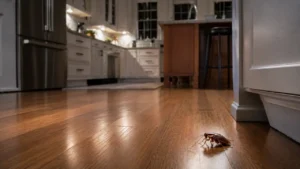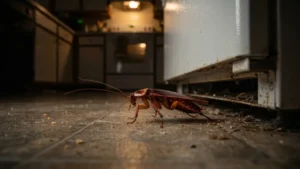
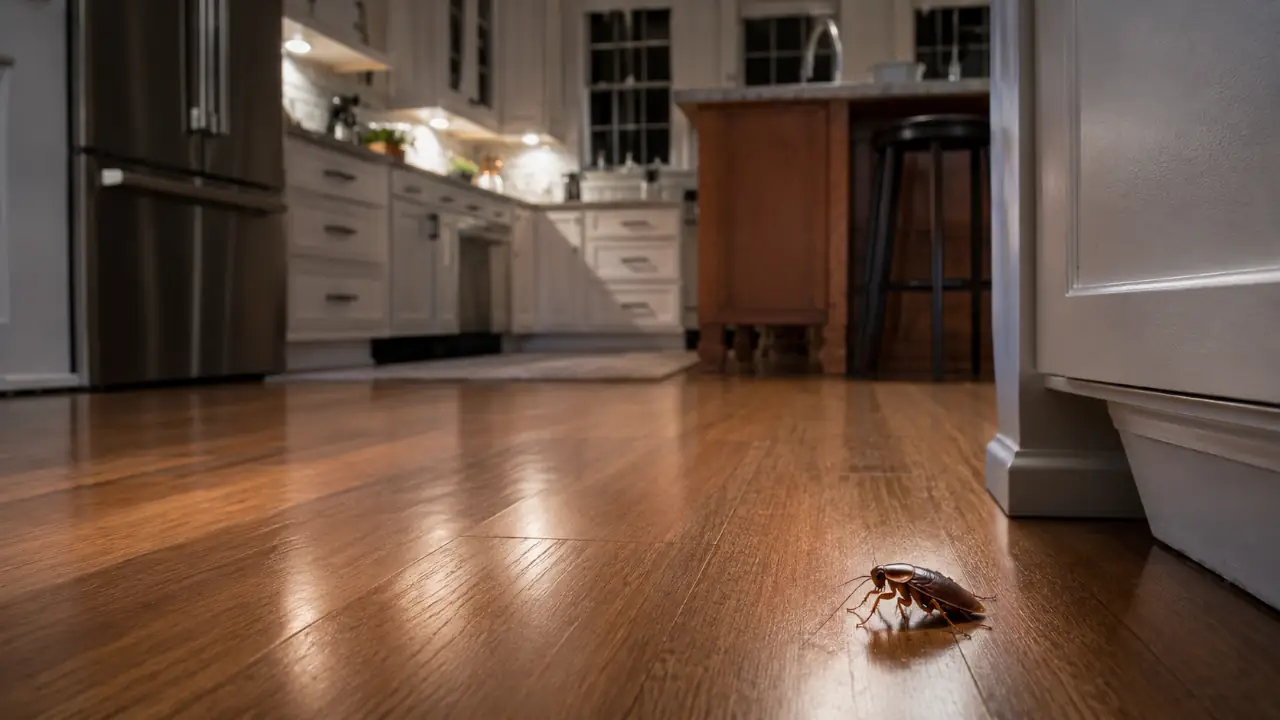
Seeing a cockroach in your home can turn an ordinary evening into a very different kind of evening. You might immediately start wondering where it came from, whether there are more hiding nearby, and whether you are looking at the beginning of an infestation.
The good news is that one cockroach does not automatically mean your home has an established infestation. At the same time, the first sighting is useful information. Instead of panicking or dismissing it, use it as a reason to identify the cockroach, inspect nearby hiding places, and watch for additional evidence.
Also Read: What Do Cockroach Droppings Look Like?
Quick Answer
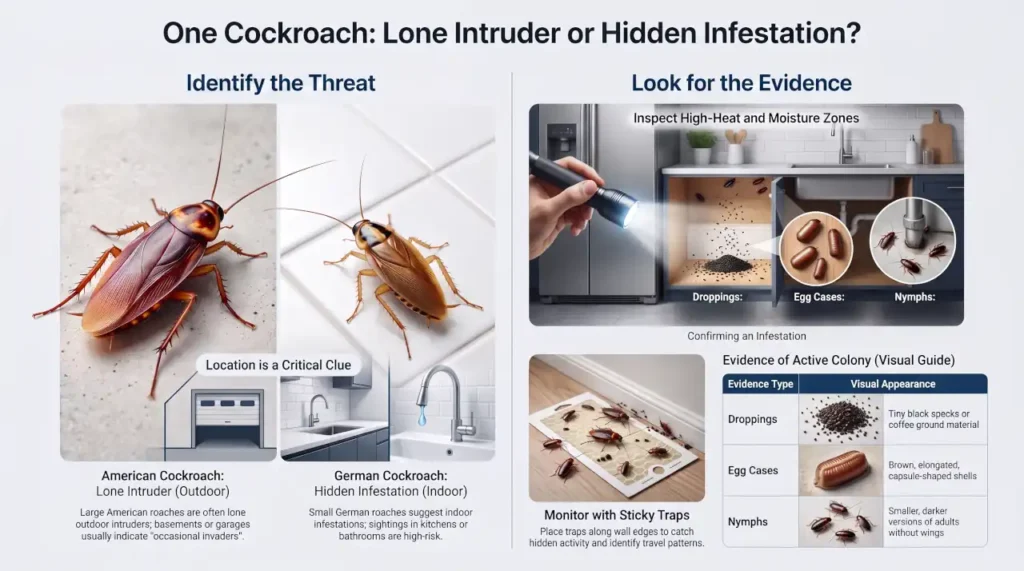
Seeing one cockroach does not automatically mean you have an infestation, but you should not ignore it. A single large cockroach may be an occasional intruder, while one German cockroach—especially in a kitchen or bathroom—deserves closer inspection. Look for droppings, nymphs, egg cases, repeated sightings, and other evidence of ongoing activity.
Should I Be Worried?
So, I saw one cockroach. Should I be worried?
A little, yes, but there is no reason to panic.
One cockroach does not prove that you have a full-blown infestation. A large American cockroach, for example, may wander inside from a basement, drain, garage, crawl space, or outside area. In that situation, the roach you saw could genuinely be a lone intruder.
The situation can be different when the cockroach is a German cockroach, particularly if you spotted it in a kitchen or bathroom. German cockroaches are very comfortable living indoors and tend to stay close to food, moisture, warmth, and hiding places. One sighting deserves more attention because you may simply be seeing the one that happened to come out into the open.
The important thing is not to jump from “I saw one cockroach” straight to “my house is infested.” Instead, treat that first sighting as a reason to investigate.
Cockroaches are especially good at staying out of sight during the day. They prefer dark, protected locations and commonly become more active at night. That means the number you see is not necessarily the number that is present.
At the same time, it is worth remembering that cockroaches can enter otherwise clean homes. Seeing one does not mean your house is dirty. Cockroaches can also contaminate food and may contribute to allergy or asthma triggers in homes with significant activity, which is another reason repeated sightings should not be ignored. They are looking for basic resources such as food, water, warmth, and shelter. Crumbs, a leaking pipe, a gap around a utility line, or an opening under a door can provide exactly what they need.
The real question is this: Was the cockroach a random visitor, or did you just notice the first visible sign of a hidden problem?
In my experience, this is where homeowners often make the wrong call. I have seen plenty of homes where one large cockroach really was an occasional invader. I have also inspected kitchens where the homeowner had seen only one or two roaches, but a closer look behind the refrigerator or underneath the sink revealed droppings and nymphs. The difference was not the number of roaches the homeowner had seen. It was the evidence they had not seen yet.
That is what the next few steps are designed to determine.
Quick Tip: Do not immediately start spraying every room. First try to identify what kind of cockroach you saw and where it was found. The location can tell you a lot about where to look next.
How Common Is It to Just Have One Cockroach?
It is absolutely possible to have only one cockroach in your home.
That possibility is often lost when people talk about roaches because the phrase “if you see one, there are 100 more” gets repeated so often. There is no reliable rule that says a single cockroach always means a large infestation.
Sometimes a cockroach really is just an occasional invader.
This is particularly true with larger species that commonly live outdoors or in damp areas. American cockroaches, for example, can enter buildings through openings, drains, plumbing routes, cracks, and other access points. A single roach found near a bathroom, basement, garage, or utility area may be an indication of an entry problem rather than a colony living inside your kitchen.
The same cannot be assumed about a small German cockroach.
German cockroaches are strongly associated with indoor environments. They like kitchens, bathrooms, food storage areas, appliances, and other warm locations where moisture and food are easy to find. If you spot one of these, especially in the kitchen, you should take the sighting more seriously.
This is why identifying the species matters.
Species identification can change how seriously you should interpret a single sighting. The biggest distinction is whether you’re dealing with a cockroach that commonly wanders indoors or one that is well adapted to living and reproducing inside buildings. If you’re trying to tell a German cockroach from an American cockroach, size, color, and location can provide useful clues.
A large cockroach found near a basement, garage, or drain can have a very different explanation from a small German cockroach found inside a kitchen cabinet. If you’re unsure of the species, take a clear photo before disposing of it rather than relying on a quick glance.
Your home can also affect the likelihood of seeing an occasional roach. Apartments, townhouses, and other connected buildings can have shared walls, plumbing routes, utility spaces, and entry points. A cockroach does not necessarily need to establish itself in your exact living space before it gets inside.
So yes, you can see one cockroach and never see another.
But you cannot know that from the first sighting alone.
That is why the smartest approach is to spend some time looking for evidence rather than guessing.
If your inspection finds no droppings, no egg cases, no shed skins, no additional live insects, and no repeat sightings, the situation may turn out to be minor. If you find several of these signs of a cockroach infestation, especially nymphs or repeated activity, the first cockroach was probably not the whole story.
Ways To Confirm If There Are More
Don’t simply kill the cockroach and assume the problem is over. Spend a few minutes checking the area for additional insects or evidence of activity.
Cockroaches are not difficult to kill when you can see them. The challenge is finding the ones you cannot see.
A Real-World Example: When One Roach Wasn’t Just One
One pattern I have seen repeatedly in the field is the homeowner who calls after seeing a single cockroach in the kitchen. At first, there may be no obvious signs anywhere else. During a closer inspection, however, the area underneath or behind an appliance can tell a different story.
In one kitchen inspection, the homeowner had reported seeing only one cockroach. There were no obvious signs in the open areas, but inspection behind an appliance revealed droppings and several nymphs in a protected area. That changed the situation from a possible stray intruder to evidence of established activity.
The lesson is simple: don’t count cockroaches; look for evidence. One visible insect tells you that a cockroach was there. Droppings, nymphs, egg cases, repeated sightings, and trap captures can tell you whether that insect was part of a larger problem.
Check Common Hiding Spots
Start with the most likely cockroach hiding places, where food, water, warmth, and darkness come together.
The kitchen deserves your first attention. Check underneath and behind the refrigerator, stove, dishwasher, and other appliances. Look inside lower cabinets, particularly around plumbing openings. Inspect the area underneath the sink and the corners of cabinets where pipes disappear into walls.
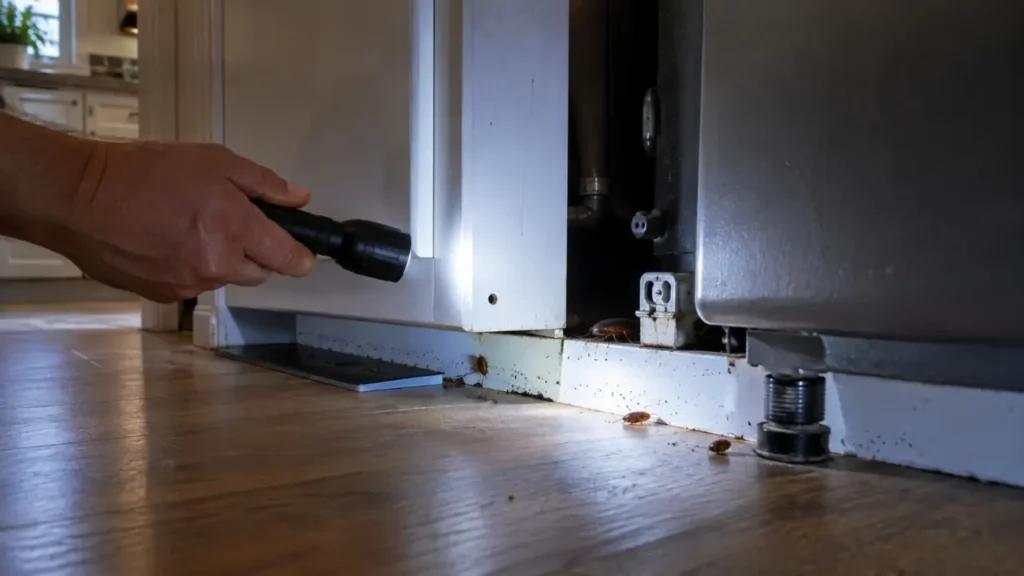
Do not forget the bathroom. Check behind the toilet, underneath the sink, around plumbing penetrations, near cabinets, and in dark areas where moisture tends to collect.
If you have a basement, laundry room, utility room, garage, or crawl space, inspect those areas as well. Larger cockroaches often have strong connections to damp areas and can move between these spaces and the rest of the home.
A flashlight makes this much easier.
Turn off the room lights and use the flashlight to examine cracks, gaps, cabinet corners, appliance edges, and spaces around plumbing. You are looking for more than moving insects. You are searching for evidence that roaches are using the area regularly.
You are not necessarily looking for a visible cockroach nest. Cockroaches usually hide in protected cracks, voids, cabinets, appliances, and other harborages rather than building a nest that is easy to see.
Do not tear apart your entire house. Start near the place where you found the cockroach and gradually work outward.
For example, if you saw a roach next to the kitchen sink, check underneath the sink first. Then inspect the cabinet corners, pipe openings, dishwasher area, and nearby appliances. If the roach appeared in a bathroom, follow the same logic around plumbing, cabinets, and moisture sources.
Quick Tip: Place sticky traps along wall edges and in corners, particularly behind or beside appliances, underneath sinks, and near other areas where you suspect activity. Check them regularly and record where anything is caught. The goal is not simply to catch a cockroach; it is to identify where activity is concentrated and whether you are dealing with repeated activity.
If you have children or pets, place monitoring traps where they cannot reach them.
The location of captured roaches can also help you narrow down the problem. If traps remain empty everywhere except near a particular appliance or plumbing area, you have a stronger clue about where to investigate.
Look For Droppings
If you cannot find another live cockroach, look for evidence they have been around.
One of the most useful clues is what cockroach droppings look like.
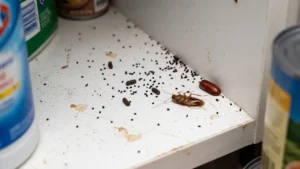
Cockroach droppings can be surprisingly easy to miss because they are small. Depending on the species and size of the cockroach, they may look like tiny black or brown specks, pepper-like material, coffee grounds, smears, or small cylindrical pieces.
Larger cockroaches can leave more substantial cylindrical droppings that may resemble small pieces of rice or rodent-like pellets.
Look inside cabinet corners, along shelf edges, underneath appliances, around drawers, behind the refrigerator, and near cracks where cockroaches could hide.
Do not expect droppings to appear in a neat pile. Roaches move around while feeding and traveling, so evidence can be scattered across the areas they regularly use.
The pattern matters.
A single unexplained speck may not mean much. Repeated dark specks around cabinet hinges, behind an appliance, or inside a drawer are much more interesting from a pest-control standpoint.
Droppings can indicate cockroach activity, especially when they appear alongside other signs such as live roaches, nymphs, or shed skins.
Quick Tip: Use your phone’s flashlight when inspecting dark cabinet corners. The extra light makes small droppings and shed material much easier to spot than ordinary room lighting.
Signs That One Cockroach May Not Be Alone
There are several clues that should make you much more concerned about an established cockroach infestation.
One is finding an ootheca, or cockroach egg case. Homeowners often call these cockroach eggs, although the eggs are contained inside the protective case produced by certain species. These cases are often brown, capsule-shaped, or elongated and can be tucked away in cracks, cabinet corners, behind appliances, and other protected locations.
Finding an egg case does not mean you should immediately assume hundreds of roaches are living in your house. It does mean the insect activity has moved beyond a simple sighting and deserves prompt attention.
Another major clue is finding young cockroaches.
Nymphs are smaller and often look noticeably different from adults. Depending on the species, they may be darker or lack fully developed wings. Seeing several small roaches is important because it suggests reproduction is occurring somewhere nearby.
Repeated sightings are another warning sign.
Seeing one cockroach today and another one several days later is different from seeing one cockroach once and never finding another. If sightings continue, especially in the same room, assume there is a reason.
The same applies if you start finding evidence in multiple places.
A roach in the kitchen followed by another in the bathroom, plus droppings under the refrigerator, gives you a much stronger reason to suspect an established problem.
At this point, the question changes from “Was that one roach a fluke?” to “Where are they hiding, and what is keeping them here?”
Look For Shed Skins and Insect Debris
Shed skins can provide another clue that cockroaches have been using an area repeatedly. You may also find pieces of wings, cockroach legs, or other insect debris in protected areas.
One random insect part does not prove there is a cockroach infestation. But when shed skins or body fragments appear alongside droppings, nymphs, egg cases, or live cockroaches, the evidence becomes much more convincing.
You See Cockroaches in the Daylight
Cockroaches are generally more active at night, so seeing one during daylight hours deserves a closer look.
However, seeing a cockroach during the day does not automatically prove that you have a massive infestation. The insect may have been disturbed by cleaning, moving an appliance, or opening a hiding place.
Repeated daytime sightings are more concerning, particularly when they occur in the same area or are accompanied by other evidence such as droppings, nymphs, or egg cases.
One daytime cockroach is a clue. Several daytime cockroaches over several days are evidence.
What To Do Next
Once you have investigated the area, your next step depends on what you found.
If the cockroach appears to be a one-off visitor and there is no other evidence, focus on prevention and monitoring.
If you find repeated activity, droppings, egg cases, nymphs, or multiple live cockroaches, you need to take the problem more seriously.
Either way, there are some simple things you can do immediately.
Remove Food and Keep Areas Clean
You do not need to turn your house upside down every day. Focus on removing the food debris and grease that cockroaches can actually use.
Wipe countertops, sweep or vacuum areas where crumbs collect, clean around appliances, and take food waste out regularly. Store food in sealed containers and avoid leaving pet food sitting out overnight when possible.
Pay particular attention to areas underneath and behind appliances. Food debris can accumulate there without being obvious from standing height.
Quick Tip: Clean underneath and around kitchen appliances occasionally, not just the surfaces you can see. The area behind a stove or beneath a refrigerator can collect food debris for months without being obvious.
Cleaning is important, but it is not a complete cockroach-control strategy by itself. A clean home can still have cockroaches if insects are entering through plumbing openings, cracks, doors, shared building spaces, or other access points. Think of sanitation as removing resources, not as proof that an infestation cannot exist.
Seal Up Holes
Cockroaches are extremely good at taking advantage of small gaps.
Check around pipes under sinks. Look around utility lines, baseboards, cabinets, doors, windows, vents, and areas where plumbing enters walls.
Some gaps can be sealed with appropriate caulk or another suitable material. Larger openings may require a more durable repair.
Pay particular attention to areas connecting your home to the outside or to other parts of the building.
In apartments, sealing every pathway may not be possible because some access points are part of shared plumbing or wall structures. If cockroaches keep appearing despite your efforts, the source may be outside your individual living space.
You do not need to fill every tiny crack you see immediately. Start with the obvious openings that connect to food, water, plumbing, exterior walls, or neighboring spaces.
Fix Leaks
This is one of the most important steps people overlook.
Cockroaches need water, and a small plumbing leak can provide a reliable source of moisture without being obvious.
Check underneath sinks. Look around toilet supply lines, dishwasher connections, washing machines, refrigerator water lines, and other plumbing fixtures.
Do not forget condensation.
If you find unexplained moisture, don’t assume it is simply a cockroach problem. Persistent dampness can also contribute to mold, wood damage, and other building problems. Fix the underlying moisture source rather than treating the cockroach as the cause.
A refrigerator, air conditioner, pipe, or poorly ventilated area can sometimes create enough moisture to make an otherwise attractive hiding space even better for pests.
Dry the area and repair the source rather than simply wiping up the water occasionally.
Removing moisture does not guarantee that a cockroach problem will disappear, but it removes one of the conditions that helps them survive.
Be Careful with Pesticides
If you decide to use a cockroach pesticide, read and follow the product label exactly. More product does not mean better control, and spraying random surfaces throughout the house can create unnecessary exposure without addressing where the cockroaches are hiding.
Keep pesticides away from children, pets, food, dishes, and food-preparation surfaces as directed by the label. Do not use outdoor pesticides indoors unless the product specifically says they are approved for indoor use.
If you are unsure which product or treatment method is appropriate, monitoring and identifying the source first is usually a better starting point than spraying everything you can see. Be especially cautious with household products that are sometimes promoted as cockroach repellents, such as mothballs.
If you do find evidence of an infestation, the goal is not simply to kill the cockroaches you can see. Getting rid of cockroaches requires identifying where they are hiding, removing food and moisture sources, reducing entry points, and choosing an appropriate control method based on the species and level of activity.
What If I Saw One Cockroach and Never See Another?
This is where people often overthink things.
You saw one cockroach.
You cleaned the area.
You inspected the obvious hiding places.
You found no droppings, egg cases, shed skins, or additional insects.
You then go several weeks without seeing another one.
That is encouraging.
From a practical standpoint, the trend matters more than the original sighting. One isolated sighting followed by weeks without another sighting or other evidence is a very different situation from a pattern of new sightings every few nights.
The species still matters, though.
A large outdoor-associated cockroach entering near a basement or drain is easier to explain as an occasional invader than a small German cockroach appearing under the kitchen sink.
The goal is not to panic after one sighting. The goal is to notice whether the sighting becomes a pattern.
If nothing else happens, continue with basic cockroach prevention steps by keeping food sealed, correcting moisture problems, sealing obvious entry points, and monitoring the area occasionally.
What If I Keep Seeing One Every Few Days?
That is different.
You may also notice other clues besides seeing the insects, including cockroach sounds at night, although noise alone isn’t enough to determine how many are present.
If you live in an apartment, condo, townhouse, or other connected building, don’t assume the source is necessarily inside your unit. Cockroaches can move through shared utility areas, plumbing routes, wall voids, and other connected spaces. In that situation, cleaning your own kitchen may help but may not solve the underlying source. Repeated sightings can be a reason to involve building management or have adjacent areas inspected.
Repeated sightings can indicate a cockroach harborage, an entry point, a moisture or food source, or—particularly with German cockroaches—an established indoor population.
This is the point where sticky traps become especially useful. Place them along wall edges, near appliances, underneath sinks, and in other likely travel areas. The goal is to determine where activity is concentrated.
If you keep finding evidence after cleaning and correcting obvious moisture and entry problems, professional inspection may save you a lot of frustration.
A qualified pest professional can identify the likely species, inspect for harborages and entry points, determine whether activity appears to be coming from inside or outside the living space, and recommend control measures based on the evidence. The useful part of an inspection is not simply finding and killing visible roaches. It is figuring out why they are there and where the activity is concentrated.
Why One Cockroach Should Not Be Ignored
There is a big difference between panic and prevention.
You do not need to assume your home is crawling with hundreds of cockroaches because you saw one. But you also should not dismiss the sighting completely.
A single cockroach tells you that one made it into your home. What matters next is whether you can find evidence of ongoing activity.
Good sanitation, moisture control, exclusion, monitoring, and targeted treatment are all part of a sensible approach. The University of California Statewide Integrated Pest Management Program (UC IPM) similarly recommends identifying the cockroach, reducing food and water sources, eliminating hiding places and entry points, and using monitoring to determine where activity is occurring. UC IPM’s cockroach management guidance provides additional information for homeowners.
Also Read: Cost Of Cockroach Extermination: Cheapest Isn’t Always Best
One Cockroach: What Should You Do?
When Should I Call a Pest Control Professional?
Consider professional help when sightings become repeated, you find cockroach nymphs or egg cases, activity appears in several rooms, or the problem continues despite cleaning, moisture control, sealing, and monitoring. Professional inspection is particularly useful when you cannot determine where the cockroaches are coming from.
Conclusion
One cockroach does not automatically mean you have an infestation. It does mean you have a reason to investigate.
Identify the cockroach if possible, inspect nearby hiding places, look for droppings, nymphs, egg cases, or other evidence, and monitor the area for additional activity.
If nothing else appears, the cockroach may have been an isolated intruder. If sightings continue or you find evidence of reproduction, it’s time to look for the source rather than treating each cockroach as a separate event.
After years of inspecting homes, the most useful distinction is not whether a homeowner has seen one roach or ten. It is whether there is evidence of ongoing activity.
The first cockroach is not always an infestation.
But it is always worth paying attention to.