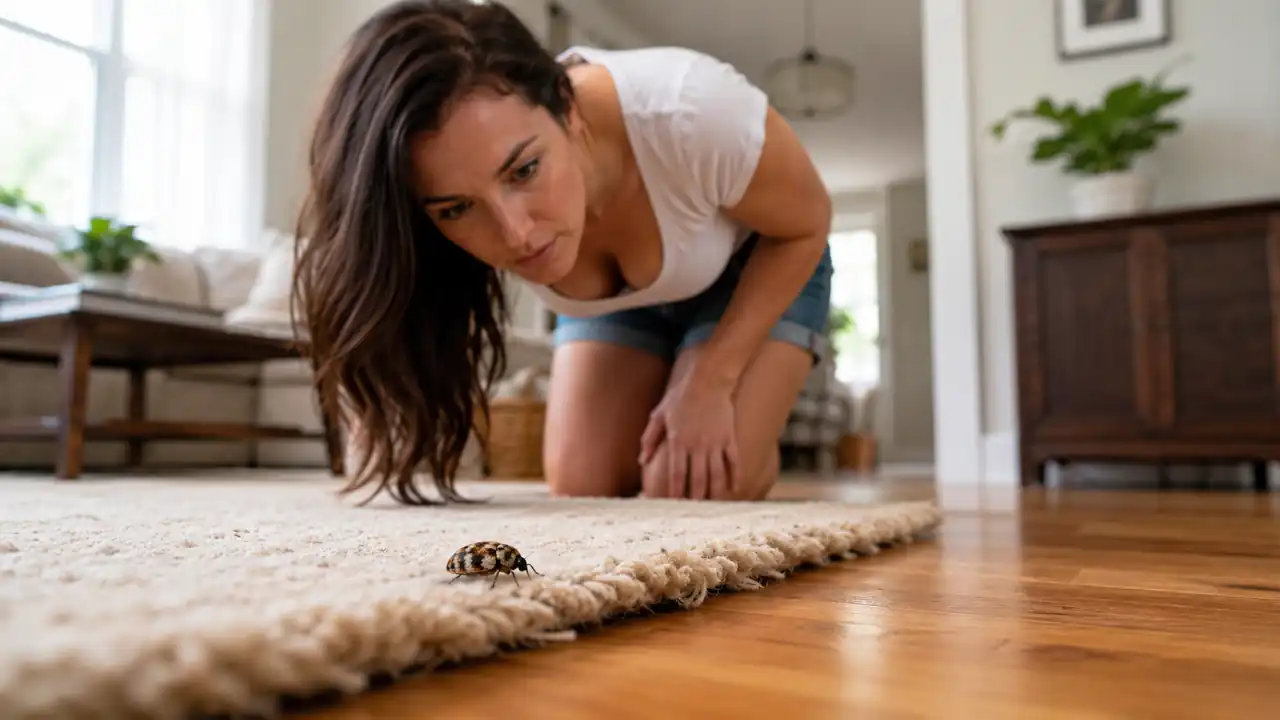
If you’ve found small holes in a wool sweater, thinning spots in a rug, or little hairy larvae tucked beneath furniture, carpet beetles are worth considering. They’re easy to overlook because the adults are tiny and the damaging larval stage tends to stay in dark, undisturbed areas.
One thing I always tell homeowners is not to start spraying the moment they see a hole. First, confirm the pest. Clothes moths, carpet beetles, general fabric wear, and even old damage can look surprisingly similar. Once you find larvae, shed skins, or fresh damage in the right places, the treatment becomes much more straightforward.
The good news is that most household carpet beetle problems can be brought under control with thorough cleaning, removal of infested materials, and consistent follow-up. The key is dealing with the larvae and the conditions supporting them rather than simply killing the adult beetles you happen to see.
Also Read: How To Get Rid of Daddy Long Legs (And Keep Them Out for Good)
How To Get Rid of Carpet Beetles
To get rid of carpet beetles, first inspect for and remove accessible sources of larvae and food, then thoroughly vacuum carpets, rugs, closets, upholstery, and other undisturbed areas. Launder or dry-clean susceptible fabrics according to their care instructions, remove accessible larvae and shed skins, and monitor for continued activity. Insecticides are sometimes useful, but they should be selected and applied strictly according to the product label.
What Are Carpet Beetles?
When people find holes in their clothes or blankets, they usually blame moths. Fair enough, moths do plenty of damage. These little insects are one of the most overlooked pests you’ll find indoors, and by the time most people notice them, the damage is already done.
Here’s the part that surprises a lot of people: the adult beetles aren’t really the problem. Adults can wander into your home and are often found around windows and other light sources. Outdoors, adult carpet beetles commonly feed on pollen and nectar. The fabric damage inside the home is caused primarily by the larval stage. They’re not after your carpet.
The real trouble starts when a female comes inside to lay her eggs. She’ll tuck them into dark, undisturbed corners of your home. Once the eggs hatch, the larvae begin feeding on susceptible materials, including wool, fur, feathers, and other animal-based fibers.
This distinction between adults and larvae is important when you’re inspecting a home. University of Maryland Extension explains that carpet beetle larvae, rather than the adults, are responsible for feeding on materials such as wool, fur, feathers, and other animal-based fibers. That is why finding adult beetles near windows should prompt a broader inspection rather than simply treating the adults you can see.
Quick Tip: Carpet beetle larvae are especially attracted to animal-derived materials such as wool, fur, feathers, silk, and other materials containing keratin or related animal proteins. They can also be associated with lint, pet hair, dead insects, and debris that accumulate in quiet areas of a home. Don’t assume every natural-fiber item is equally attractive or that synthetic fabric alone rules out an infestation.
Carpet beetle larvae share some common characteristics, although their appearance varies by species. Many are small, elongated, and covered with bristly hairs, with coloration ranging from light tan to darker brown. Those hairs are one of the easiest clues to look for during a home inspection, although appearance alone isn’t enough to confirm the species.
It’s worth understanding the full life cycle too, because it explains why these infestations sneak up on people. The larval stage can last for months and, under some conditions, substantially longer. Temperature, species, and food availability all influence how quickly carpet beetles develop.
That long larval window is one reason carpet beetle problems can remain unnoticed for a long time. Damage may continue while the larvae remain hidden in undisturbed areas of the home. The larvae molt several times as they grow, and each molt gives them another chance to spread to a new patch of fabric before finally pupating into an adult.
Adult carpet beetles come in several species, and identification can be difficult from a quick glance. Three commonly encountered types include the varied carpet beetle, furniture carpet beetle, and black carpet beetle. Because size, coloration, and markings can vary, homeowners should use the description as a starting point rather than relying on appearance alone to confirm an infestation.
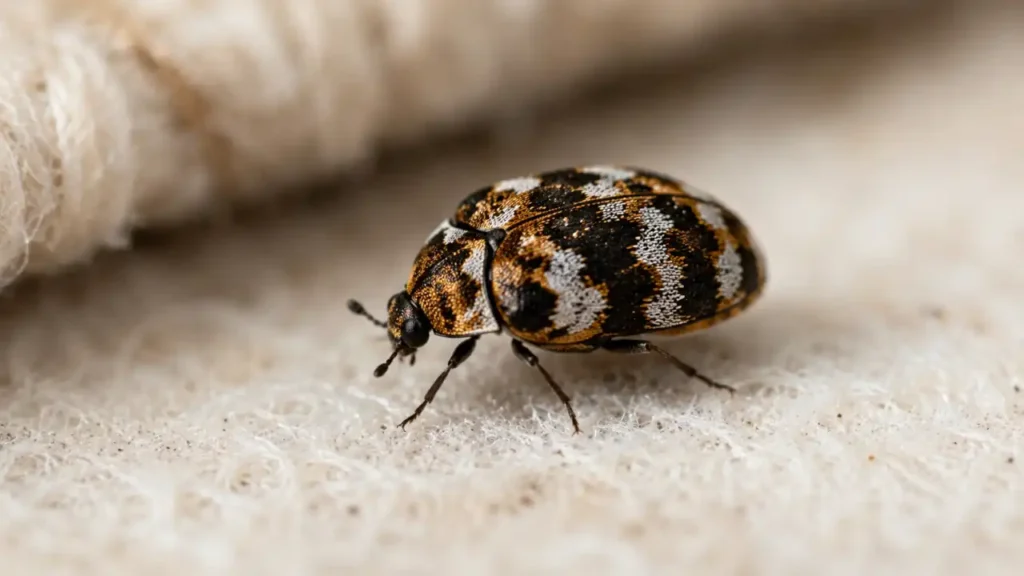
Black Carpet Beetle
Adult black carpet beetles are dark, oval-shaped beetles that are generally larger than varied carpet beetles. Their coloration can range from dark brown to black, making them easy to overlook against dark flooring or furniture. The larvae are more important when you’re investigating fabric damage because they are the stage responsible for feeding on susceptible materials.
Varied Carpet Beetle
The varied carpet beetle is noticeably smaller, usually around 3.5 millimeters long. What sets it apart is its scaly, mottled body covered in patches of brown, yellow, and white. Under a bit of light, it almost looks like a tiny piece of confetti crawling across your floor.
Furniture Carpet Beetle
Furniture carpet beetles are small, patterned beetles whose larvae can damage susceptible natural materials. Despite the common name, don’t assume an infestation is limited to furniture; inspect rugs, clothing, closets, and other areas containing suitable food sources as well.
Signs You Have an Infestation
Carpet beetles aren’t loud or obvious like some household pests. They work quietly in places you don’t check often. Still, they leave behind clues if you know where to look.
Live Bugs or Larvae
Spotting an actual bug or larva is the clearest sign of a problem. The larvae look like tiny, hairy worms slowly working their way across a piece of fabric. You’ll usually find them along the edges of carpets and rugs since that’s the easiest entry point, but they also show up on baseboards, under furniture cushions, and even in the folds of hanging clothes.
Quick Tip: Carpet beetle larvae are commonly found in dark, protected, and relatively undisturbed locations. Check beneath furniture, along carpet edges, inside closets, beneath stored items, and around baseboards rather than limiting your inspection to open floor areas.
Adult beetles are worth watching for too, even though they don’t cause the damage themselves. Important: Seeing an occasional adult near a window doesn’t necessarily mean you have a large indoor infestation. Repeated adult sightings combined with larvae, shed skins, or fresh damage are much stronger evidence that you need to investigate further. They tend to gather near light sources such as windowsills, and you might also spot them near exterior doors or caught in window screens. If you keep fresh-cut flowers in the house, check those too. Adults are drawn to pollen and will happily settle in for a snack.
Eggs
Carpet beetle eggs are tricky to spot because they’re so small, often under a millimeter long. They’re oval and generally pale or cream-colored, but their tiny size makes them difficult for homeowners to find without close inspection.
Females lay their eggs in dark, hidden spots, similar to where you’d find the larvae. Think under furniture, inside closets, along baseboards, behind curtains, or tucked into small cracks near window casings. Females can lay numerous eggs, so finding eggs is a reason to inspect the surrounding area rather than treating the visible cluster as an isolated problem.
Shed Body Parts
Before becoming adults, carpet beetle larvae molt several times, shedding their outer skin as they grow. If you come across small, hollow-looking husks that resemble tiny insect shells, that’s likely what you’re seeing. The shed skins keep their bristly texture even after molting, so they can look almost identical to a live larva at first glance.
Frass and Debris
Carpet beetle activity can leave behind fine debris, fecal material, shed skins, and damaged fibers around an infested area. These signs aren’t usually enough to identify the pest by themselves, so look for them alongside live larvae, shed skins, or characteristic fabric damage.
Damaged Fabrics & Furniture
This is usually the sign that finally gets people’s attention. A sweater with unexplained holes, a rug with a bald patch, or upholstered furniture that looks strangely worn in one spot are all classic red flags.
Quick Tip: Carpet beetle damage can be irregular and may appear as thinning, small holes, or areas of missing fibers. Don’t rely on the shape of the damage alone to distinguish carpet beetles from clothes moths or other causes. Look for larvae and shed skins near the damaged material.
It’s also worth knowing that carpet beetles aren’t picky. Beyond clothing, rugs, and furniture, they’ll go after books, old photographs, and even pantry items like grains or pet food if it’s easier to reach.
Homeowners dealing with unexplained bites or crawling insects around the house sometimes assume they’re looking at tiny brown bugs of a different kind entirely, when carpet beetles turn out to be the actual source. If you find damaged fabric, take a closer look around the area. There’s a good chance you may also find shed skins, larvae, or other debris nearby, which can provide additional evidence that you’re dealing with carpet beetles.
Before You Treat: Make Sure It’s Actually Carpet Beetles
Don’t diagnose carpet beetles from fabric damage alone. Clothes moth larvae, general wear, rodents, moisture damage, and old insect damage can all produce holes or thinning in fabrics. The strongest confirmation is finding carpet beetle larvae, shed larval skins, or adult beetles together with appropriate signs of fabric damage.
If you can’t find an insect or other evidence after a careful inspection, hold off on pesticide treatment and investigate the cause of the damage first.
Old damage doesn’t necessarily mean you still have an active infestation. A hole in a sweater or thinning in a rug can remain long after the insects are gone. When deciding whether carpet beetles are still active, look for live larvae, newly shed skins, fresh damage, or continued evidence in nearby hiding places rather than relying on an old damaged item alone.
Where to Look for Carpet Beetle Larvae
If you suspect carpet beetles, inspect the areas that are both protected and rarely disturbed:
You don’t need to tear the entire house apart. Start where you’ve found damage and gradually work outward until you locate either larvae or a likely food source.
How To Treat a Carpet Beetle Infestation
Once you’ve confirmed you’re dealing with carpet beetles, don’t wait around. They don’t spread disease the way some pests do, but their numbers can increase if the larvae have a reliable food source and remain undisturbed. After nearly two decades of dealing with these things in real homes, I can tell you the fix isn’t complicated. It just takes some consistency. Here’s the process that actually works.
You don’t need a cabinet full of pest-control products to deal with most carpet beetle problems. Finding the larvae and removing their food source is usually more important than accumulating sprays, powders, and traps.
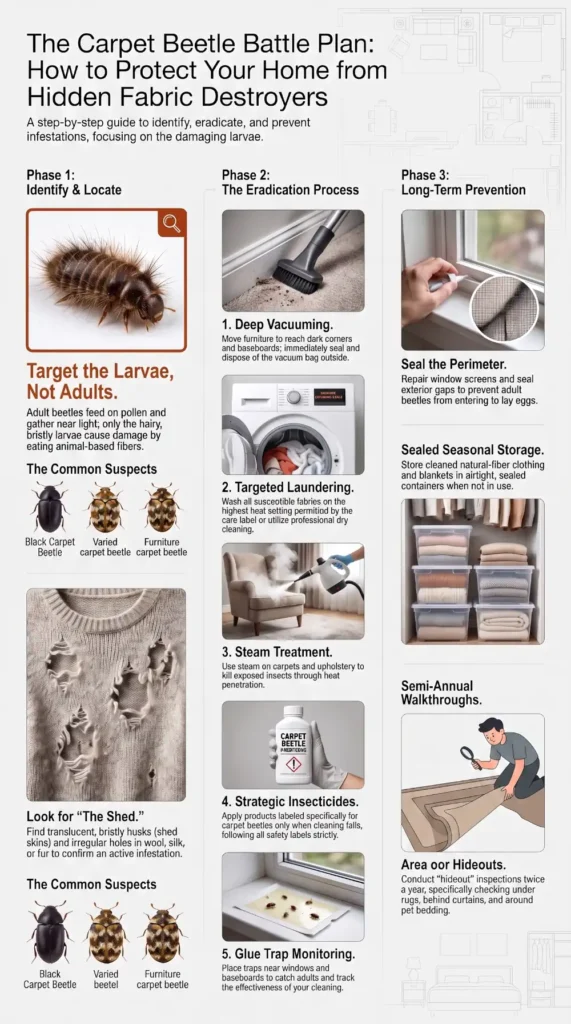
1. Vacuum Thoroughly
Start with a thorough vacuuming session, and don’t just stick to the carpet. Get into every dark corner where these bugs like to hide. Pull the vacuum into closets, get low enough to reach under furniture, and hit the baseboards along every wall.
Vacuuming does more heavy lifting than people expect. Thorough vacuuming physically removes many larvae, shed skins, debris, and some eggs from accessible areas, reducing the amount of material available to support the infestation.
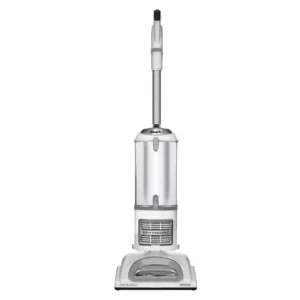
Quick Tip: After each session, empty the vacuum canister or bag straight into an outdoor trash bin and seal it tight. Empty the vacuum canister or remove the bag promptly after cleaning, preferably into a sealed outdoor trash bag or container. This prevents captured insects and debris from remaining inside the vacuum.
For an active infestation, repeat thorough vacuuming regularly for several weeks, concentrating on the areas where larvae or shed skins were found. The goal isn’t simply to vacuum the visible insects; it’s to repeatedly remove larvae, debris, pet hair, and other material that can support them.
2. Launder or Dry-Clean Susceptible Fabrics
Gather washable items that may have been exposed to the infestation and clean them according to their care instructions. For items that tolerate heat, a properly used dryer can provide useful heat exposure, but use the highest setting permitted by the item’s care instructions, while delicate or valuable materials may need professional cleaning instead. For valuable wool rugs, antique textiles, or handmade carpets, consider having the item professionally inspected or cleaned rather than experimenting with household pesticides, steam, or excessive heat.
Don’t assume that simply washing everything in very hot water is the safest or most effective approach. Follow the manufacturer’s care label, particularly for wool, silk, antique textiles, upholstery, and other valuable materials.
Prioritize items showing damage or those stored immediately around the area where larvae were found. For valuable rugs, antique fabrics, or other difficult-to-clean materials, avoid experimenting with heat and consult a qualified textile or pest professional.
Quick Tip: If you find something too far gone to save, like a sweater riddled with holes, it’s usually better to toss it than risk it reinfesting your clean laundry. Seal it in a bag before throwing it out so you’re not scattering eggs or larvae on the way to the trash.
3. Do Some Steam Cleaning
Steam can be useful as part of an overall cleaning strategy, particularly on compatible carpets and upholstery, but it shouldn’t be treated as a guaranteed stand-alone solution. Heat can kill exposed insects when they receive sufficient heat for an adequate period, but a household steam cleaner should not be assumed to penetrate deeply enough to eliminate hidden larvae throughout a thick rug or upholstered item.
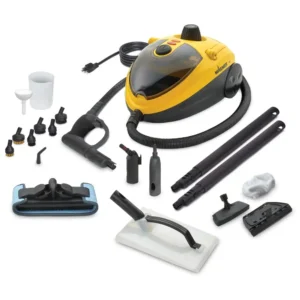
Vacuum first, then use steam only on materials that are designed to tolerate it. Always follow the manufacturer’s instructions for the carpet, rug, or upholstery before applying heat or moisture.
4. Consider an Insecticide Only When Needed
If cleaning and removal haven’t brought the infestation under control, an insecticide may be appropriate for certain areas and materials. However, don’t spray clothing, bedding, rugs, upholstery, or other surfaces unless the product label specifically permits that use.
Choose a product that is specifically labeled for carpet beetles and for the particular indoor site or material you intend to treat. Some pesticides labeled for indoor insect control may not be permitted on clothing, bedding, upholstery, or other surfaces that come into prolonged contact with people. Read the entire label before application, including directions for ventilation, re-entry, children, pets, food, and treated surfaces. More pesticide is not better, and spraying visible adult beetles near windows won’t address larvae hidden elsewhere.
If you prefer to minimize pesticide use, our guide to eco-friendly pest control covers broader low-toxicity approaches that can be useful around the home.
Diatomaceous earth is sometimes used against crawling insects, but it isn’t a substitute for finding and removing the source of a carpet beetle infestation. If you choose to use a pesticide dust, use only a product legally labeled for the intended pest and location, and follow all label precautions. Avoid creating airborne dust and keep treated areas away from children and pets as directed by the label.
5. Be Careful with Pesticide Dusts
Boric acid and other insecticidal dusts can be useful against some household insects, but homeowners shouldn’t assume that every boric-acid product is labeled for carpet beetles or for use on carpets, upholstery, clothing, or other household surfaces.
If you use a pesticide dust, check the product label first and apply it only to the locations and pests listed there. Avoid broadcast applications in living areas, don’t apply dust where children or pets can contact it, and never use more product than the label specifies. For many carpet beetle infestations, thorough vacuuming and removal of the food source are more important than adding a pesticide dust.
6. Set Up Glue Traps
Glue traps can be useful for monitoring adult activity, but they aren’t a reliable way to measure the entire infestation because the damaging larvae may be hidden elsewhere. Place monitoring traps where adults have been observed, such as near windows, and use the results alongside your inspection and cleaning efforts.
These traps work simply. The beetles get stuck and eventually die there. Check them every few days. If traps continue to catch adults over time, or if you continue finding larvae or fresh damage, treat that as a reason to continue inspecting and addressing the source rather than assuming the infestation is finished.
If you continue finding adults but no larvae, shed skins, or fresh damage, don’t automatically assume the treatment has failed. Adult beetles can enter from outdoors, so repeated adult sightings should be interpreted alongside the other evidence in the home.
How To Prevent a Carpet Beetle Infestation in the Future
Getting rid of an active infestation is only half the job. Without a few preventive habits, there’s a real chance carpet beetles find their way back in, especially if your home still has the same conditions that attracted them the first time.
Adult carpet beetles commonly feed on pollen and nectar outdoors, so nearby vegetation can be one factor associated with their presence around a home. That doesn’t mean homeowners need to remove flowering plants. Instead, focus on maintaining intact window screens, sealing obvious entry gaps, and inspecting areas around doors and windows where adult beetles are repeatedly found.
If adults repeatedly appear around one side of the house, inspect the nearby exterior for old bird or insect nests and accumulated organic debris. These sheltered areas can provide another source of carpet beetle activity, so removing accessible nests and debris can be worthwhile when practical and safe.
From there, take a look at your home’s entry points. Gaps around screens, doors, and other exterior openings can provide opportunities for adult beetles to enter. Sealing these up goes a long way. Also inspect the immediate exterior around doors, windows, roofline, and other sheltered areas for old nests or accumulated organic debris that could support carpet beetle activity.
Inside the house, regular vacuuming and inspection are more useful than routine pesticide applications. Pay particular attention to lint, pet hair, dead insects, and other debris accumulating beneath furniture, along carpet edges, inside closets, and around stored natural-fiber materials.
Quick Tip: Store cleaned wool clothing, blankets, and other susceptible materials in clean, sealed containers when they’re out of season. Before storing anything, make sure it isn’t already carrying larvae, eggs, or shed skins. Sealed storage works as a preventive measure only when the items going into the container are clean.
It also helps to do a seasonal walkthrough of your home twice a year, once heading into spring and once heading into fall. Pull furniture away from the wall, check under area rugs, and glance behind curtains for any early warning signs like shed skin or small droppings. Catching a handful of larvae during a routine check is a lot easier to deal with than discovering a full-blown infestation months later. If you have wool rugs, antique textiles, taxidermy, feather-filled items, or other susceptible natural materials, give them extra attention during these inspections.
Common Carpet Beetle Treatment Mistakes
Safety When Treating Carpet Beetles
Vacuuming and laundering are generally the best places to start because they don’t introduce pesticide exposure into the home. Use extra care with steam cleaners around delicate fabrics and electrical equipment.
If you use an insecticide, dust, or other pesticide, read the complete product label before applying it. The label determines where the product can legally be used, how much can be applied, what protective measures are required, and when people and pets can safely return to the treated area.
Also Read: Do Aphids Bite? Signs, Risks & Treatment Explained
Never mix pesticides or household chemicals unless the product label specifically instructs you to do so. Keep pesticides in their original containers and away from children, pets, food, and medications.
For valuable rugs, antiques, taxidermy, or delicate textiles, aggressive heat, moisture, or chemical treatment can cause more damage than the insects themselves. Consider getting professional advice before treating irreplaceable materials.
When Should I Call a Pest Control Professional?
If you’ve worked through vacuuming, washing, steaming, and treatment for several weeks without improvement, or if the infestation covers multiple rooms and valuable items like rugs or upholstered furniture, it’s worth bringing in a professional. A professional can help identify overlooked sources, distinguish carpet beetles from other fabric pests, and determine whether targeted treatment is warranted.
Conclusion
Carpet beetles are sneaky, but they’re manageable once you identify what is supporting the larvae. Start by confirming the pest, then vacuum thoroughly, clean susceptible fabrics according to their care instructions, inspect hidden areas, and continue monitoring for larvae, shed skins, and fresh damage.
Chemical treatment can have a role in some infestations, but it shouldn’t be the first or only response. The goal is to remove the food source and hidden larvae rather than simply killing the adult beetles you happen to see.
After years of inspecting homes with carpet beetle problems, the biggest mistake I see is stopping after the first improvement. A homeowner vacuums thoroughly, finds fewer larvae, and assumes everything is finished. Hidden larvae may still be present in an overlooked closet, beneath furniture, around a rug edge, or in accumulated pet hair and lint.
That’s why I prefer to judge success by the continued absence of larvae and fresh damage, rather than by whether I can find an adult beetle on a windowsill today. Keep inspecting the original problem area and nearby hiding places for several weeks. If fresh larvae or damage continue to appear, go back and look for the food source you may have missed.