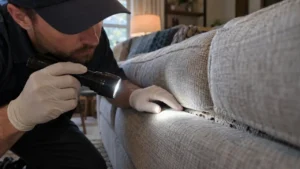
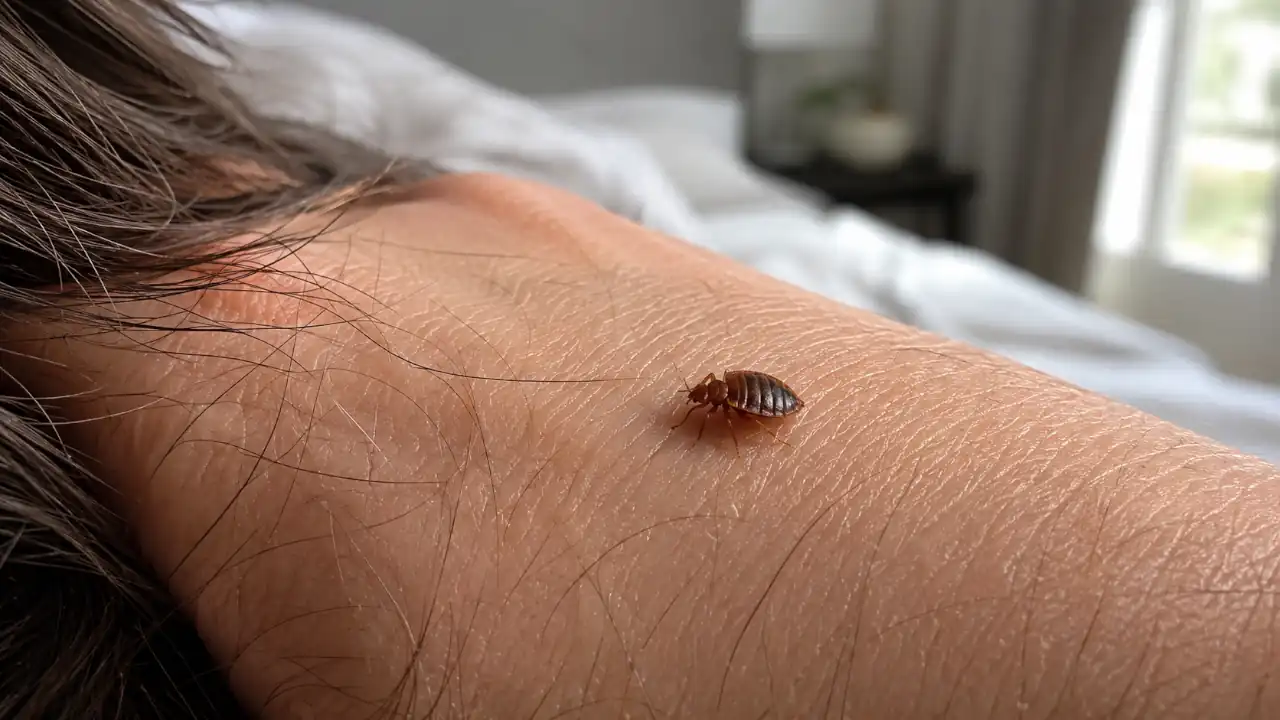
If you’re worried about bed bugs in hair right now, your mind is probably going straight to the worst-case scenario. I get this question a lot, usually from someone who has just found a bite on their neck or scalp and is now wondering if something is crawling around in their hair while they sleep. And honestly, I understand why that thought is unsettling.
The good news is that bed bugs in hair aren’t the same thing as head lice living on your scalp. Bed bugs aren’t built to stay attached to hair, and finding one near your head doesn’t automatically mean you’ve got an infestation living on you. Before you reach for lice shampoo, shave your head, or start putting different products on your scalp, let’s look at what bed bugs actually do when they get near your hair—and, more importantly, where the real infestation is likely hiding.
Also Read: What Scents Keep Bed Bugs Away? 11 Powerful Options That Work
Quick Answer
Bed bugs can crawl through hair or briefly contact your scalp, but they do not live in hair the way head lice do. They prefer to hide in mattresses, bed frames, furniture, and nearby cracks and crevices. If you’re finding bites around your scalp, focus on finding and eliminating the bed bugs in your sleeping area rather than treating your hair.
Can Bed Bugs Get in Your Hair?
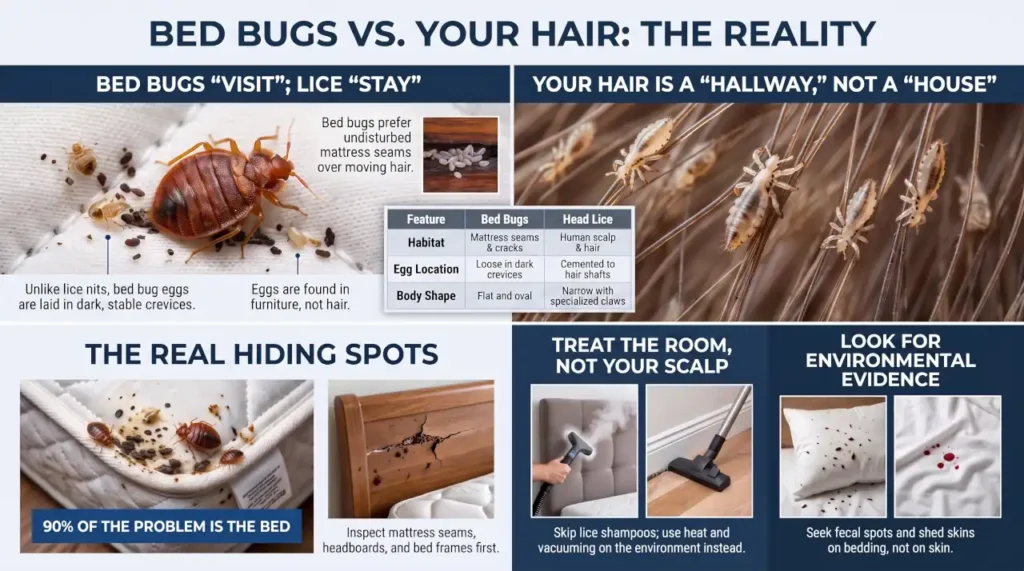
Bed bugs are built to crawl across surfaces, not to grip onto strands the way lice do. A bed bug’s body is flat and oval, which is perfect for squeezing into mattress seams and headboard cracks, but it’s a terrible design for hanging onto a single hair. Head lice are specifically adapted to grasp hair shafts, which is why they can remain on the scalp and lay their eggs directly on individual hairs. Bed bugs aren’t adapted to cling to hair in this way.
Their preferred hiding places are stable cracks, seams, folds, and other protected surfaces around where people sleep. So when a bed bug ends up near your scalp, it’s usually just passing through on its way to skin it can actually bite, not setting up camp.
That said, “passing through” is still contact, and it happens more than people assume. If you sleep on your side or your back, your head is right there on the pillow, which means it’s fair game during a feeding trip. A bed bug can wander up from the pillowcase, cross a bit of hair near your hairline, and bite you right at the edge of your scalp before retreating. So the bug isn’t living in your hair, but it might have briefly been in it on its way somewhere else.
Quick Tip: If you feel something crawling in your hair at night, don’t assume it’s automatically a bed bug. Turn on the light and actually look at your pillowcase and sheets first. Bed bugs can leave evidence on bedding and other surfaces around the bed, but don’t assume that clean-looking sheets rule out an infestation. Check mattress seams, the bed frame, headboard, and nearby furniture as well.
Do They Live in Your Hair or Hide in It?
This is where I want to be really clear, because “live in” and “hide in” get used interchangeably online and they shouldn’t be. Bed bugs do not live in human hair or use it as a normal hiding place. A bug can briefly crawl through your hair, especially while moving between a nearby hiding place and exposed skin, but your hair isn’t where the infestation is established.
Think about what a bed bug is looking for in a hiding spot. It wants somewhere tight, dark, and undisturbed, close enough to a food source that it doesn’t have to travel far, but far enough away that it won’t get squished by a rolling, moving human. Your hair fails on almost every count. It moves every time you turn over. It’s not dark or tight the way a mattress seam is. And it doesn’t offer the kind of stable, enclosed crevice a bed bug’s flat body is designed to wedge into.
Compare that to something like head lice, which genuinely do live on the scalp and in the hair full time. Lice are adapted to remain on the scalp and hair, where they feed regularly and use their specialized claws to grip individual hair shafts. Bed bugs feed for several minutes and then retreat to protected hiding places to digest, mate, and reproduce. Those hiding places are often close to where people sleep, although bed bugs can also spread farther through a home. Your hair just isn’t part of that lifecycle. It’s a hallway, not a house.
If you’re picturing bed bugs nesting behind your ear like some kind of horror movie, you can relax. They’re not colonizing your scalp. What they’re actually doing is hiding in your mattress, box spring, bed frame, wood furniture, baseboards, and sometimes even behind picture frames or around electronic devices near the bed. Those are the kinds of bed bug hiding places worth checking first. That’s where the real infestation lives, and that’s where you need to focus your search.
Signs You Have Bed Bugs in Your Hair
Since bed bugs aren’t setting up shop in your hair, the “signs” you’re really looking for are signs of feeding near your scalp, plus general infestation clues elsewhere in your bedroom. Here’s how those usually show up.
Don’t use scalp bites alone to diagnose bed bugs. There is no reliable bite pattern that proves a bed bug caused a particular skin reaction. The more useful evidence is finding the insect itself or other signs of an infestation around the bed.
Bites around the hairline, scalp, forehead, or neck can occur when bed bugs feed on exposed skin near your head. If you’re trying to figure out what caused the marks, comparing bed bug bites with flea bites can help narrow down the possibilities. They may appear in clusters or lines, but the appearance of a bite isn’t enough to identify bed bugs by itself.
Other insects, skin conditions, and allergic reactions can produce similar-looking marks. Mosquito bites can also look surprisingly similar, so comparing bed bug bites with mosquito bites is useful when you haven’t found an actual bed bug. A better approach is to look for physical evidence of bed bugs around the bed, such as live bugs, shed skins, eggs, or dark fecal spots.
You may also notice tiny blood spots on bedding, particularly if a recently fed bug is crushed while you move in bed. Dark or rusty spots on sheets, pillowcases, mattresses, or nearby surfaces can also be bed bug fecal spotting. These clues are useful, but none should be considered definitive on its own. Look for multiple signs and, when possible, confirm the insect’s identity.
There’s also the itch-without-a-bug factor. A lot of people scratch their scalp, panic, and assume something is living up there because the itching feels constant. In most cases, that’s just skin irritation from an existing bite reacting to friction, heat, or scratching itself, not a bug that’s taken up residence.
Quick Tip: Keep a small flashlight by your bed for a week or two while you’re monitoring the situation. Each morning, check your pillowcase and the seams of your mattress near the head of the bed before you make it up. Bed bugs are primarily active at night, so checking the bed and surrounding areas after a night’s sleep can be useful. Look along mattress seams, the bed frame, headboard, and nearby furniture rather than relying only on the pillowcase.
One important distinction: finding a bite near your scalp does not mean the bug was living in your hair. The location of a skin reaction tells you where you reacted, not necessarily where the insect was hiding. For bed bugs, physical evidence around the bed is much more useful than trying to diagnose the infestation from bites alone.
Found a Bug in Your Hair?
If you’ve actually found an insect in your hair, don’t automatically assume it’s a bed bug. Capture it in a sealed container or take a clear, close photograph before throwing it away. Correct identification matters because bed bugs, lice, fleas, and other small insects require very different approaches. If the insect is extremely small and pale, it may even be a baby bed bug, which can look quite different from the darker adult bugs most people picture.
If the insect is firmly attached to a hair shaft, especially near the scalp, head lice are a more likely possibility. If you noticed the insect shortly after waking, that timing is consistent with bed bugs being active at night, but the timing alone does not identify the insect. If it isn’t attached and you’ve also found bed bug evidence around your bed, the situation deserves a closer inspection of the sleeping area.
How To Get Bed Bugs Out of Your Hair
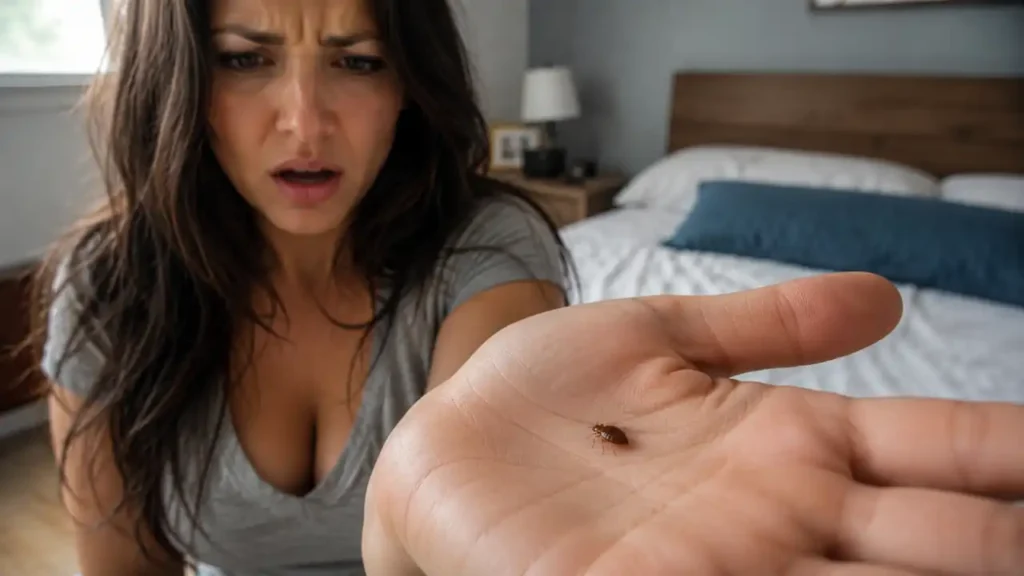
If you think a bed bug got into your hair, the first step is not treating your scalp. Bed bugs don’t live on human hair the way lice do, so the goal is to remove or identify the insect if you find one and then investigate the sleeping area for the source. The following steps can help you deal with the situation without using unnecessary treatments on your hair or skin.
If you find a live bed bug in your hair, remove it physically rather than trying to kill it with a chemical or extreme heat. A tissue, piece of tape, or fine comb can help you remove a visible insect. Save it for identification if you’re unsure what it is.
The important thing to know is that you usually don’t need to treat your hair for bed bugs. Unlike head lice, bed bugs don’t establish themselves on the scalp. If a bed bug briefly gets into your hair, the priority is removing or identifying the insect and then finding where it came from rather than applying pesticides, alcohol, extreme heat, or oil to your scalp.
Check Wigs, Extensions, and Hairpieces
You do not need to shave or cut your hair because of bed bugs. Bed bugs don’t live on hair the way lice do, so changing your hairstyle won’t solve an infestation.
If you use wigs, extensions, or hairpieces and they are routinely kept on or near an infested bed, inspect them separately. A bed bug can potentially crawl onto or hide in an item that is stored close to an infestation, regardless of whether that item is made of hair or synthetic fibers.
Use Heat on Washable Items
Heat can be an effective part of bed bug control, but the temperature and exposure time matter. Don’t try to treat your scalp or hair with extreme heat. Instead, use the dryer for bedding, clothing, and other items that can safely tolerate it.
For washable bedding and clothing, use a dryer cycle appropriate for the items and follow the product or care-label instructions. The goal is to expose the items to sufficient heat for sufficient time, rather than simply warming them briefly. The goal is to treat the items themselves, not simply warm them briefly. For items that cannot safely go in a dryer, follow the manufacturer’s care instructions or use another appropriate treatment method.
The U.S. Environmental Protection Agency provides additional guidance on using heat and other nonchemical approaches as part of bed bug control.
What Not to Use on Your Hair
You don’t need to apply lice shampoo, rubbing alcohol, oil, or other pest-control products to your hair simply because you’ve found bed bugs in your home. These treatments aren’t a substitute for controlling the infestation, and some can irritate your scalp or create unnecessary safety risks. A nit comb can make sense if you’re checking for head lice, but it isn’t a bed bug treatment.
Treat The Infestation at the Source
This is the part that matters most. If bed bugs are responsible for bites around your scalp, treating your hair won’t eliminate the infestation. The bugs are much more likely to be hiding in mattress seams, box springs, bed frames, upholstered furniture, cracks, and other protected areas close to where people sleep.
Start by inspecting the bed and nearby furniture carefully. Launder and dry bedding and clothing that may be affected, vacuum accessible seams and cracks, and reduce clutter around the sleeping area so hiding places are easier to inspect. Avoid moving to another bedroom if you can, because sleeping elsewhere can give bed bugs another place to follow you. Bed bugs can spread to other rooms when people change sleeping locations or move infested belongings around.
If you find a suspected bed bug, have the insect correctly identified when you’re unsure what you’ve found. For an established infestation, consider having the extent of the infestation professionally assessed. Bed bug control often requires more than one control method or treatment, so a single cleaning or spray application should not be treated as proof that the problem is gone.
If you’ve confirmed that you have bed bugs, a labeled bed bug treatment product can be one part of a broader control approach.

Finding a bed bug in your hair does not necessarily mean the infestation is severe or that the bugs have moved into your hair. It does mean you should inspect the area where you sleep, especially if you’ve also found live bugs or other evidence nearby. A bed bug that reaches your hair is more likely to be a stray insect moving between its hiding place and a sleeping person than a bug establishing a colony on the scalp.
Do Bed Bugs Lay Eggs in Hair?
No, bed bugs do not normally lay their eggs in human hair or attach them to individual hair strands. They prefer protected, undisturbed locations such as mattress seams, furniture cracks, box springs, and bed frames.
Those locations are typically cracks, crevices, seams, and other sheltered areas around the bed and furniture—not individual strands of hair. Hair strands move too much to provide the protected, undisturbed environment bed bug eggs normally need. Bed bug eggs typically hatch within roughly one to two weeks, depending on temperature and other environmental conditions.
This is actually a useful way to tell bed bugs apart from lice if you’re ever unsure what you’re looking at. Lice eggs, called nits, are cemented directly onto individual hair shafts close to the scalp and are genuinely hard to remove by hand. If you find small, oval, whitish specks stuck firmly to hair strands, that’s a lice sign, not a bed bug one. Loose flakes that brush away easily are more consistent with dandruff or dry skin than lice nits, which are firmly attached to the hair shaft. Bed bug eggs are not normally attached to human hair.
Bed bug eggs are tiny—about 1 millimeter long—and are usually pearly white or translucent when freshly laid. Because they’re so small, they can be easy to miss in mattress seams, furniture cracks, and other protected areas.
Do Bed Bugs Bite Your Scalp?
Yes, this part is real, and it’s the source of most of the confusion in the first place. Bed bugs can bite exposed skin around the scalp, forehead, temples, hairline, and neck when those areas are accessible while you sleep. The forehead, temples, and the nape of the neck are common bite zones too, since they’re close to the pillow and not covered by blankets the way your torso usually is.
What happens is a bed bug crawls up from the pillow or headboard area, finds a patch of exposed skin near the hairline, feeds for several minutes, and then heads back to its hiding spot before daylight. Bed bug bites are often not noticed while the bug is feeding. Reactions can develop later, and some people have little or no visible reaction at all. When a reaction does occur, it may appear as an itchy, raised area or several bumps. The timing varies considerably from person to person, so the appearance or timing of a skin reaction alone cannot confirm bed bugs.
If you’re finding bites specifically clustered around your head and neck and nowhere else on your body, it’s worth checking your pillow and the top of your mattress a little more closely than the rest of the bed, since that’s the area the bugs are traveling to reach you.
Also Read: Bed Bug Treatment Cost: Full Price Breakdown for 2026
Can Bed Bugs Stay on Your Body During the Day?
Usually, no. Bed bugs generally feed and then retreat to protected hiding places rather than remaining on a person’s body throughout the day. If you find a bug crawling on you, don’t assume it has established itself on your skin or in your hair. Capture it if possible and inspect the area where you sleep to find where it came from.
Conclusion
So, can bed bugs live in your hair? No. Can they bite your scalp and briefly cross through your hair to get there? Absolutely, and that’s exactly why the myth persists. The bites are real, the itching is real, and the worry is completely understandable. But the bugs themselves aren’t setting up a colony on your head the way lice would. They’re hiding in your mattress, bed frame, and furniture, coming out to feed, and going right back into hiding.
If you’re dealing with scalp bites, use the hair-focused steps above for comfort and peace of mind, but don’t stop there. The infestation you need to investigate is the one in your sleeping area and nearby furniture, not your hair. Treating those hiding places is what addresses the underlying problem.
If your skin symptoms continue, remember that bites alone cannot confirm bed bugs, so consider having the insect identified and discussing persistent or worsening skin symptoms with a healthcare professional. If the problem feels bigger than a wash-and-vacuum can handle, or if you’re still finding bites after a few weeks of trying to manage it yourself, it’s time to bring in a professional who can confirm the scope of the infestation and treat it properly.