If you just found bed bugs in your home, you’re probably staring at your phone wondering what this is going to cost you. I get that question almost every week. The honest answer is that bed bug treatment can cost roughly $200 to $600 for a single room and $1,000 to $4,000 for a full home, with severe infestations sometimes exceeding $6,000 for a whole house, and where you land on that scale depends on a handful of things you can actually control. Let’s walk through it together, the same way I’d explain it to a friend who called me in a panic.
Also Read: Can Bed Bugs Live in Your Hair? The Shocking Truth
Quick Answer
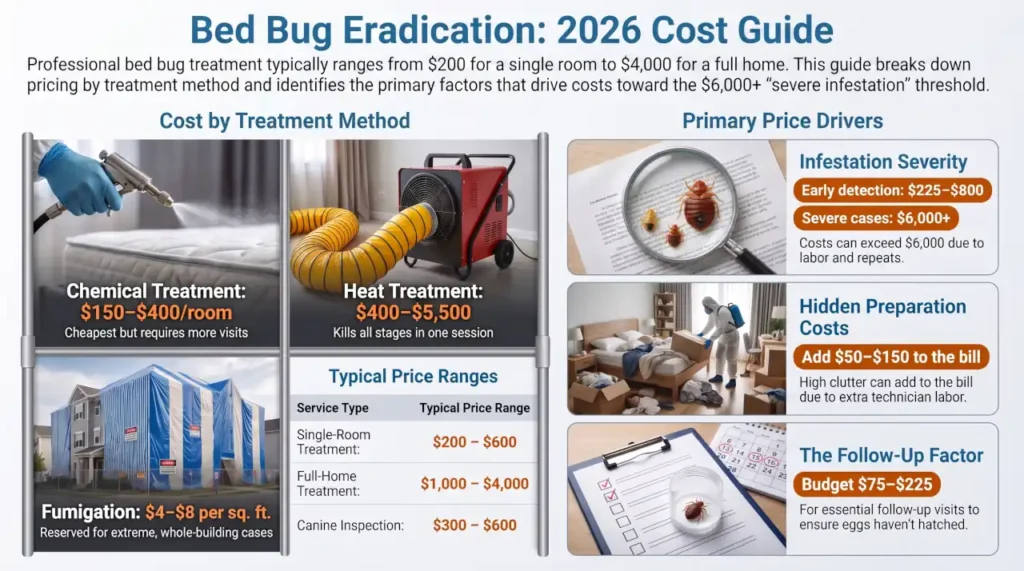
Professional bed bug treatment typically costs about $200–$600 for a single room and $1,000–$4,000 for a full home. Severe infestations can exceed $6,000. The final price depends mainly on the infestation’s severity, home size, treatment method, location, and number of follow-up visits.
What Is the Average Cost of Bed Bug Treatment?
Many homeowners can expect to spend roughly $1,000 to $4,000 for professional treatment of a full home, although actual prices vary considerably by location, infestation severity, home size, and treatment method. That number stretches a lot in both directions, though. If you catch a light infestation in one bedroom early, you might get out the door for $300 to $600.
On the other end, a severe infestation that’s spread through a large home or a multi-unit apartment building can climb past $6,200, and in rare commercial situations, tens of thousands of dollars. Actual prices vary by location, infestation severity, home size, and treatment method, but these ranges give you a realistic starting point when budgeting.
| Treatment / Service | Typical Cost |
| Single-room treatment | $200–$600 |
| Full-home treatment | $1,000–$4,000 |
| Chemical treatment | $150–$400 per room |
| Heat treatment | $400–$5,500 |
| Steam treatment | $2–$7 per sq. ft. |
| Fumigation | $4–$8 per sq. ft. |
| Freezing / CO2 treatment | $3–$6 per sq. ft. |
| Canine inspection | $300–$600 |
| Initial inspection | $50–$200 |
| Follow-up visit | $75–$225 |
| Emergency service | $200–$500 |
| DIY basic supplies | Under $100 |
The number that matters most is the total treatment cost, not just the price of the first visit. A $300 single-room treatment may stay close to $300 if the infestation is small and caught early, while a larger infestation may require several visits and push the total into the $1,000–$4,000 range. Always ask whether the quote covers follow-up treatments, preparation, and any retreatments included under the company’s guarantee.
Pest control companies typically price this work one of two ways. Some charge per room, usually somewhere between $200 and $400 a room for a single visit. Others price by square footage, and that tends to run $4 to $7.50 per square foot. Neither method is inherently better or worse. It really just comes down to how the company structures its business and how your home is laid out.
Here’s the part a lot of people miss when they’re comparing quotes: that per-room or per-square-foot number often covers one visit, not a fully resolved infestation. Bed bug eggs can hatch in roughly a week under favorable conditions, and many treatments don’t reliably kill every egg on the first pass. That is one reason bed bugs can spread through a home faster than people expect. So the price you’re quoted up front is often just the opening chapter, not the whole story. Budget for at least one follow-up visit, and you’ll be a lot closer to reality.
Treatment Methods and Their Costs
Not every exterminator uses the same approach, and the method matters just as much as the square footage when it comes to your final bill.
Chemical and Pesticide Treatments
This is the most common and usually the cheapest option, running about $150 to $400 per room or $2 to $5 per square foot. A technician sprays or dusts pesticide into cracks, baseboards, mattress seams, and furniture joints. It can be effective when the right products and application techniques are used, but pesticide resistance can make some infestations harder to control. Depending on the infestation and treatment plan, you may need two or three visits spaced over several weeks before the population is fully controlled.
Heat Treatments
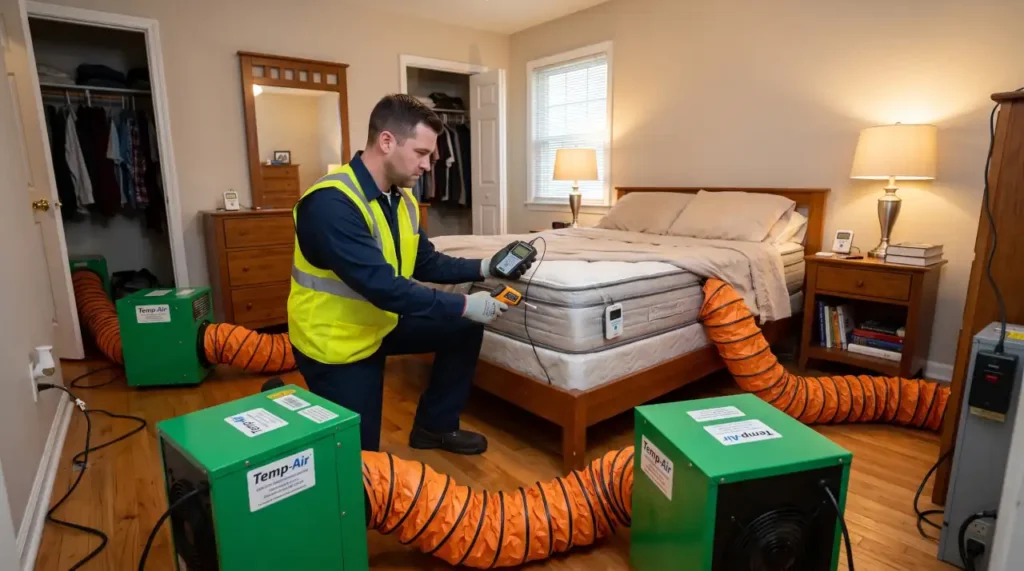
Heat can be one of the most efficient bed bug treatment options because a properly performed treatment can kill bed bugs at all life stages in a single visit. Technicians bring in industrial heaters and raise temperatures throughout the treatment area to levels capable of killing bed bugs, nymphs, and eggs, while monitoring temperatures in different locations to make sure the necessary heat reaches potential hiding spots.
Expect to pay $400 to $5,500 for a full treatment depending on home size, or roughly $1 to $3 per square foot. The setup and monitoring take six to eight hours, and because of the equipment involved, it costs more upfront than chemical treatment. The higher upfront cost can still make sense because a properly conducted heat treatment may be completed in one visit rather than requiring several follow-up pesticide applications.
Steam Treatments
Steam works on the same heat-kills-bugs principle but on a smaller, more targeted scale. A technician runs a steam wand along mattress seams, couch cushions, and baseboards. It costs about $2 to $7 per square foot and can be useful for treating targeted areas such as mattress seams, upholstery, and cracks. However, the wrong temperature, pressure, or application technique can damage some materials, so it needs to be used carefully.
Fumigation
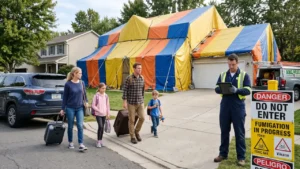
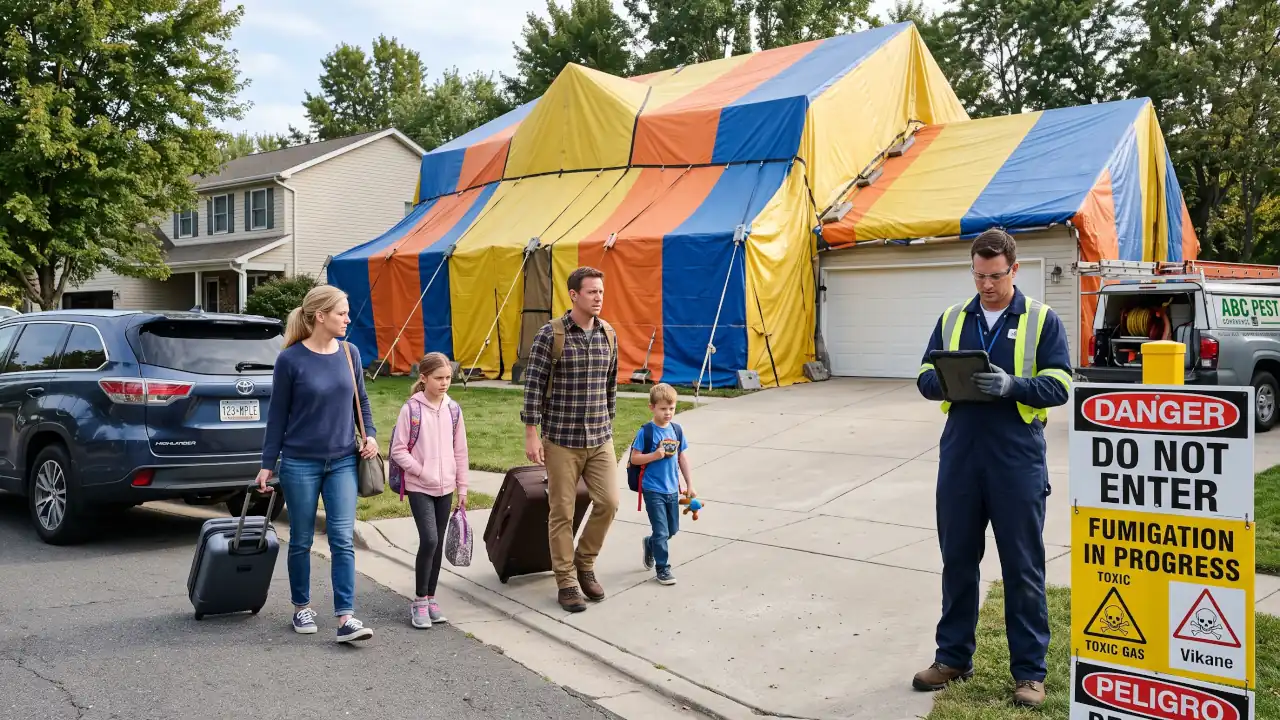
This is the nuclear option, and it’s priced like one at $4 to $8 per square foot. Your entire home gets sealed under a tarp and filled with pesticidal gas, which means you and everyone in the house, pets included, need to stay somewhere else for a few days. It’s extremely effective when properly performed because the gas can penetrate areas that conventional treatments may have difficulty reaching, but the cost and disruption make most companies reserve it for severe, whole-structure infestations rather than a single bad bedroom.
Freezing Treatments
Also called Cryonite or CO2 treatment, this method uses carbon dioxide to produce extremely cold particles that are sprayed directly onto bugs and eggs, exposing them to extremely low temperatures that can kill them on contact when properly applied. It runs $3 to $6 per square foot and is a solid choice for electronics, antiques, or anything that can’t handle high heat.
Canine Inspection Services
Bed bug sniffing dogs don’t kill anything, but a properly trained dog can help identify areas that deserve closer inspection, which can help identify areas that deserve closer inspection and may help prevent unnecessary treatment of unaffected areas. A canine inspection typically costs $300 to $600 and is worth considering if you’re not sure how far the infestation has actually spread.
Most companies will let you mix and match methods too. A common combination is heat treatment for the bedroom where the infestation is worst, paired with a chemical residual applied along baseboards and entry points to catch stragglers over the following weeks. That kind of layered approach costs a bit more than a single method on its own, but it tends to shorten the overall timeline, which can offset the extra cost by cutting down on follow-up visits.
Key Factors That Affect Treatment Costs
The treatment method is only part of the bill. The severity of the infestation, size of your home, location, building type, and even how much furniture and clutter a technician has to work around can all move the final price up or down.
Severity of the Infestation
This is one of the biggest price drivers. A mild infestation caught in its early stages might cost $225 to $800 to clear up. A moderate, whole-home problem runs $1,500 to $4,000. Severe cases, where bugs have worked their way into wall voids, electrical outlets, and multiple rooms, can push past $6,000 because they demand more labor, more product, and more return visits.
Home Size and Number of Rooms
More square footage means more hiding spots, and more hiding spots mean more time on site. Even if you’ve only spotted bugs in one bedroom, most exterminators will recommend treating adjoining rooms too, since bed bugs travel through walls, along baseboards, and inside furniture faster than people expect.
Geographic Location
Where you live changes your bill more than most people realize. Dense cities, especially ones with a lot of apartment buildings, tourism, or public transit, tend to see far more bed bug activity, and treatment prices in those markets can be noticeably higher than in lower-cost areas because of labor, demand, travel, and general cost-of-living differences. Local labor costs and general cost of living play into it too.
Type of Building
Apartments, condos, and shared housing bring extra complexity because bugs move easily between units through shared walls and plumbing chases. Treating one apartment properly often means coordinating with the building management and sometimes the neighboring units, which adds time and cost to the job.
Furniture and Clutter
A cluttered bedroom genuinely costs more to treat, often $50 to $150 more than a tidy one, because the crew has to move and sort through items before they can spray, steam, or heat treat effectively. In severe cases, heavily infested furniture may need to be thrown out entirely, and that’s an extra expense on top of the treatment itself. Before throwing anything away, though, check whether bed bugs in wood furniture can be treated safely, since disposal isn’t always necessary.
Preparation can also affect the final bill. If a technician has to spend significant time moving furniture, bagging belongings, or clearing heavily cluttered areas before treatment can begin, that extra labor may be included in the treatment price or charged separately.
Building Construction
Homes with crawlspaces, wall voids, shared walls, or other accessible building spaces can sometimes be more complicated to treat if bed bugs have moved beyond the immediate living areas. In those cases, a technician may recommend additional inspection or treatment of those spaces. Any added cost depends on what is actually found rather than simply whether the home has a particular foundation type.
It’s also worth mentioning the treatment company itself as a cost factor. Pricing can also differ between national franchises and independent local companies. A larger company may have higher overhead, while a local provider may structure pricing differently. Neither business model automatically means better treatment. A smaller, well-reviewed local company with a solid bed bug guarantee can often match or beat the results of a national chain for a lower price, so don’t assume the priciest quote is the safest bet.
Inspection and Follow Up Visit Costs
The first treatment isn’t always the only charge you’ll see on a bed bug estimate. Here’s what you can expect to pay for the inspection, follow-up visits, and situations where you need faster-than-normal service.
Initial Inspection
A dedicated inspection runs $50 to $200, though plenty of companies offer a free basic walkthrough and only charge if you move forward with treatment. This visit is where the technician confirms you actually have bed bugs (not fleas or carpet beetles, which get mistaken for them constantly) and scopes out how far the problem has spread.
Follow Up Appointments
Plan on at least one follow-up visit, often scheduled within a few weeks after the first treatment, priced around $75 to $225. For broader treatment visits, some companies charge several hundred dollars per service, especially when multiple rooms or treatment methods are involved. Ask whether the quoted price is for the entire visit or calculated by room. Some infestations need two or three rounds total, and stubborn cases can call for monthly or every few weeks until every last egg has hatched and been dealt with.
Emergency Services
If you want someone out the same day or the next morning, expect to pay a premium of $200 to $500 on top of the standard rate. Most companies can get to you within a few days anyway, so it’s worth asking if you can save money by waiting just slightly longer.
DIY Bed Bug Treatment Costs
DIY treatment can look dramatically cheaper on paper, but the real cost depends on how much equipment you need and whether you’re actually able to eliminate the infestation. Here’s what the common supplies and treatment options cost.
Basic DIY Supplies
A basic sprays-and-foggers approach can cost under $100, with pesticide kits typically running $40 to $60. Foggers are generally a poor choice for bed bugs because the pesticide may not reach the cracks and protected harborages where they hide. These give some temporary relief but rarely reach bugs hiding deep in furniture joints or wall gaps.
The U.S. Environmental Protection Agency’s bed bug control guidance also recommends an integrated approach and explains why simply relying on one treatment method may not be enough to eliminate an infestation. Some homeowners also try natural bed bug repellents, but these should be viewed as supplemental measures rather than a replacement for an actual treatment plan.
Steamers
A small handheld steamer costs around $75. If you want something with more capacity for treating a larger area, commercial-grade steamers run $100 to $1,300. The catch with steam is technique. You have to move slowly enough that the heat actually penetrates fabric and kills the bug underneath, not just the surface.
Heat Chambers
Portable heat chambers, which let you bake shoes, electronics, and other non-washable items, cost around $200 to $350. Full DIY heat treatment systems that can handle up to 200 square feet start at roughly $1,299. That’s a big upfront cost, but if you’re a landlord dealing with repeat infestations, owning the equipment can pay for itself over time.
Mattress Encasements
A properly fitted bed bug encasement traps bugs already inside the mattress or box spring and prevents them from getting in or out. It doesn’t eliminate bugs hiding elsewhere in the room, but it’s an inexpensive way to isolate one of their common hiding places. Honestly, this is one of the best dollar-for-dollar investments in this entire list, professional treatment or not.
Bed Bug Interceptors
These small plastic traps sit under bed legs and catch bugs trying to climb up or down. A set typically costs $10 to $40 and doubles as an early warning system if bugs come back later.
Limitations of DIY Methods
Here’s the reality check. Bed bugs reproduce fast, a single female can lay 200 to 500 eggs in her lifetime, and they’re experts at squeezing into places you’d never think to check. That persistence is also why simply isolating an infested item doesn’t guarantee the problem is over; understanding how long bed bugs can live without a host helps explain why some DIY approaches fail. DIY methods can knock back a very small, very early infestation, but they routinely miss hidden pockets that repopulate the whole house within weeks. If you’re several rounds into DIY treatment and still seeing bugs, that’s your signal to call a professional.
There’s also a hidden cost to DIY that rarely makes it into the math: time. Between researching products, applying them correctly, washing and drying washable items according to the highest heat setting the material can safely tolerate, and repeating the process every week or two, a determined DIY effort can easily eat up ten or fifteen hours before you even know if it worked. If it doesn’t, you’re paying for professional treatment anyway, just later and with a bigger infestation to deal with by that point.
Professional vs DIY: Which Is More Cost Effective?
The cheapest option upfront isn’t necessarily the cheapest way to solve a bed bug problem. The better comparison is what each approach costs in supplies, time, repeat treatments, and the risk of the infestation spreading.
When DIY Makes Sense
If you caught the problem on day one, you’re talking about a handful of bugs confined to one spot, and washing linens on high heat plus a good vacuum session might genuinely solve it. The key word is early. The moment bugs have spread beyond a single piece of furniture, DIY success rates drop fast.
Professional Advantages
A licensed exterminator brings access to commercial-strength products, specialized heat equipment, and years of knowing exactly where bugs like to hide that homeowners simply don’t have. Professional treatment plans usually build in two to four visits specifically because they’re designed to hit bugs at every life stage, not just the ones you can see today.
Why DIY Treatments Often Fail
This is where the gap really shows. Professional treatments are built around a full elimination strategy: inspection, targeted treatment, and a scheduled follow-up. DIY approaches are often treated as one-and-done efforts that don’t account for eggs hatching a week or two later, which is exactly when a partial DIY job falls apart.
Long Term Cost Considerations
I’ve seen this exact scenario play out more than once. A couple tries the DIY route in a two-bedroom apartment, spends around $100 on sprays and traps, puts in weeks of washing and vacuuming, and the bugs keep coming back. They eventually call a professional, who clears it in three visits combining heat and chemical treatment for a total of around $4,500. It sounds like a lot until you add up what the DIY attempt actually cost them: wasted products, dozens of hours, stress, lost sleep, and the real risk of bugs spreading to a neighboring unit. Paying for it right the first time is often cheaper in the long run than paying twice.
Signs You Need Bed Bug Treatment
Before spending money on treatment, make sure you’re reasonably sure you’re dealing with bed bugs. Bites alone aren’t enough to confirm an infestation, so here’s what else to look for around the bed and furniture.
Bite Marks
Small, itchy, red welts that show up in a line or a tight cluster, often on skin that was exposed while you slept, are the classic bed bug calling card. That said, some people don’t react to bites at all, and other bugs cause similar-looking marks, so bites alone aren’t proof. If you’re trying to figure out what’s causing the marks, comparing bed bug bites vs. flea bites can help narrow down the possibilities before you pay for treatment.
Visual Evidence
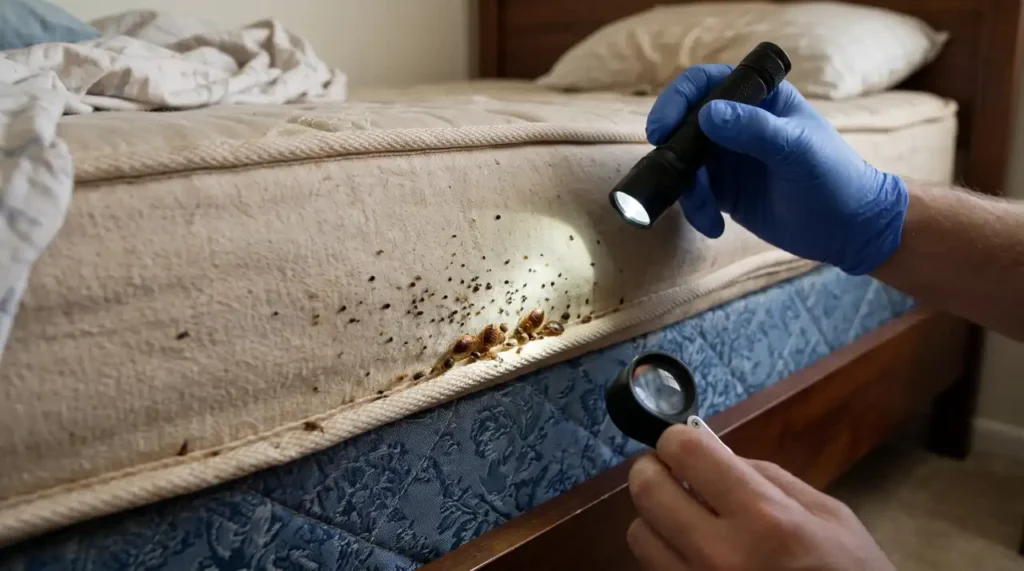
Look for small rust-colored stains on your sheets or mattress, which happen when a bug gets crushed. Dark, pinhead-sized spots that smear like ink are droppings. You might also spot pale, shed exoskeletons, the outer shell bugs leave behind as they grow.
Live Bugs and Eggs
Adult bed bugs are roughly the size and color of an apple seed. Knowing how big bed bugs actually are can make them easier to identify, especially when you’re checking seams and cracks. Younger ones are lighter, almost translucent, until they’ve fed, which can make baby bed bugs surprisingly difficult to spot. Eggs are tiny pearly-white ovals, usually tucked into seams or crevices in small clusters.
Where to Look
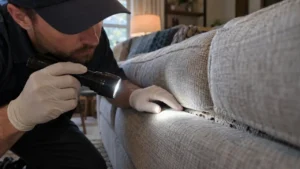
Check the piping and tags along your mattress and box spring first. From there, check couch cushions, curtain folds, drawer joints, behind outlet covers, and even inside the head of a screw. Electronics can also be worth checking when an infestation has become widespread. These are the kinds of bed bug hiding spots that are easy to overlook during a quick inspection. If you’re finding evidence around upholstered seating, it’s also worth checking specifically for bed bugs in your couch, rather than assuming the mattress is the only source. Bed bugs are about as thin as a credit card on edge, so they get into places that seem impossibly small.
Unusual Odors
A heavier infestation sometimes gives off a sweet, musty smell. People describe it differently, but “damp towel” or “rotting berries” comes up a lot.
How to Save Money on Bed Bug Treatment
You don’t necessarily have to choose the cheapest treatment to keep your costs down. The biggest savings usually come from catching the infestation early, preparing properly, and comparing complete treatment plans rather than just the first-visit price.
Act Fast
The single biggest lever you have is speed. A bug problem caught in one room might need one treatment. Wait a month, and you could be looking at three or four visits across the whole house. That difference alone can be thousands of dollars.
Get Multiple Quotes
Call at least three licensed companies and check their reviews on Google and the Better Business Bureau before picking one. Most offer a free inspection, which is a great chance to compare not just price but the actual treatment plan they’re proposing.
Prepare Your Home Properly
Follow the prep instructions your exterminator gives you to the letter. Skipping steps like washing linens or clearing furniture beforehand is one of the most common reasons treatments fail and need to be repeated, which just adds cost.
Reduce Clutter
Clear out what you can before the crew arrives. Less clutter means less time spent sorting and less product needed, which keeps your bill closer to the low end of the range.
Combine Methods
Use DIY tools like encasements and interceptors alongside professional treatment rather than instead of it. Washing exposed bedding and clothing on high heat between professional visits helps keep the population from rebuilding.
Ask About Guarantees
Plenty of companies will retreat for free if bugs show up again within a set window, often 30 to 90 days. Always ask about this before you sign anything.
Consider Treatment Plans
If you already know you’re dealing with a severe infestation, ask about a package price for multiple visits instead of paying full price per visit. Bundled plans are almost always cheaper per treatment than one-off appointments.
Bed Bug Prevention Tips to Avoid Future Costs
Prevention is by far the cheapest form of pest control you’ll ever pay for. When you travel, check the mattress seams and headboard of any hotel room before you unpack, and keep your suitcase up on a rack rather than on the bed or floor. Dry your travel clothes on a high-heat cycle appropriate for the fabric as soon as you get home.
When you return from a trip, inspect the seams, pockets, and folds of your luggage before putting it away. If possible, keep luggage away from bedrooms and upholstered furniture until you’ve checked it.
At home, a good mattress and box spring encasement is cheap insurance. It can trap bed bugs already inside the mattress or box spring and prevent them from getting in or out, although it won’t address bugs hiding elsewhere in the room.
Be careful with secondhand furniture, especially anything picked up off a curb, and inspect any used piece closely along the seams and cushions before it comes inside. Regular vacuuming of your mattress, bed frame, and carpet edges helps too, since it physically removes bugs before they can establish themselves. Sealing cracks around baseboards and outlets with a bit of caulk closes off hiding spots and slows the spread if a unit nearby does get infested.
Finally, get in the habit of checking your bed and furniture every week or so, especially during the months after a treatment, since catching a new problem with three bugs is a completely different price tag than catching it with three hundred.
Also Read: How To Check For Bed Bugs Before They Spread Further
When to Call a Pest Professional
If you’ve tried DIY methods for a couple of weeks and you’re still finding bugs, stop spending money on products that clearly aren’t working and call someone. The same goes if bugs have spread beyond your bedroom, since a widespread infestation is genuinely hard for most people to handle alone, no matter how much time they put into it.
If you’re seeing live bed bugs in more than one room, finding repeated evidence after several DIY attempts, or dealing with an infestation in an apartment or other connected building, the problem is much harder to contain without a coordinated treatment plan.
Renters and apartment dwellers should loop in their landlord right away, since neighboring units often need to be inspected and, depending on your lease and local laws, the landlord may be responsible for coordinating or covering treatment. And if bites are causing real sleep loss, skin infections from scratching, or noticeable stress, that’s reason enough on its own to bring in a professional rather than waiting it out.
Final Thoughts
Bed bug treatment cost isn’t a single number, it’s a range that depends heavily on how early you catch the problem, how big your home is, and which treatment method fits your situation. Acting quickly, getting a few quotes, and prepping your home properly are the three things that will keep your bill on the lower end. If you’re seeing signs of an infestation right now, don’t wait around hoping it resolves itself. Bed bugs generally don’t disappear on their own, and waiting can give an infestation more time to spread, potentially increasing the number of rooms and treatments involved.