If a pest control quote just landed in your inbox and made your stomach drop, you’re not alone. And if you got a second quote that seemed way too cheap to be real, you’re probably wondering the same thing everyone in your shoes wonders: is one of these companies ripping me off? The cost of cockroach extermination can vary quite a bit depending on what you’re dealing with and what’s actually included in the treatment. Whether your quote feels too high or suspiciously low, here’s what actually affects the price and how to tell a fair deal from a bad one in either direction.
I’ve spent close to two decades walking into homes with roach problems, from a single German cockroach spotted under the stove to full-blown infestations that had spread into the walls. Price is almost never the first question I get. It’s usually the second or third, right after “how did this happen” and “can you actually fix it.” So let’s talk numbers, but let’s talk about what those numbers actually pay for, too.
Also Read: I Saw One Cockroach. Should I Be Worried? What to Check
How Much Does Cockroach Extermination Cost?
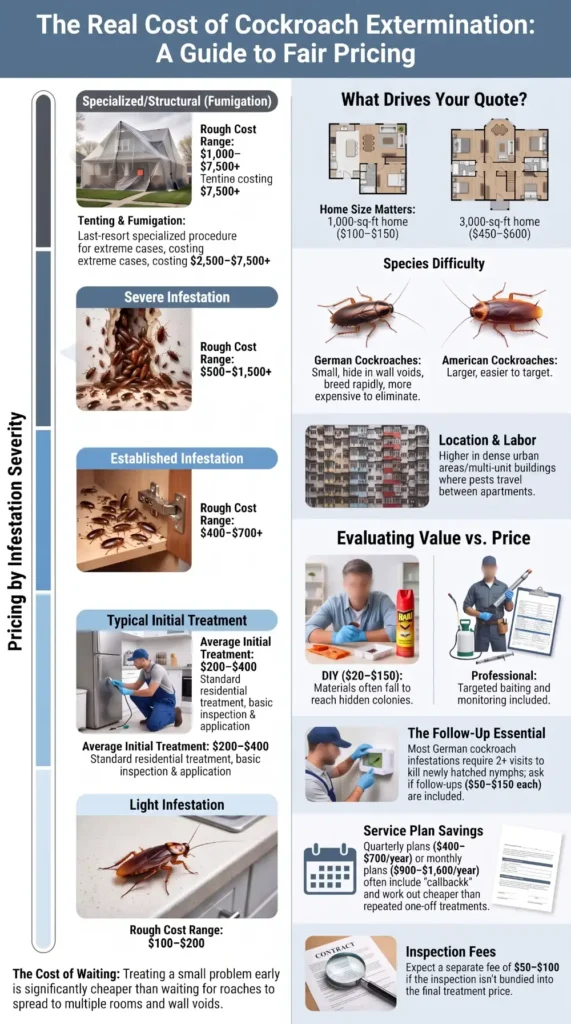
Professional cockroach extermination commonly costs $200–$400 for an initial residential treatment, although light infestations may cost around $100–$200 and established or severe infestations can reach $500–$1,500 or more. The final price depends on the cockroach species, severity, home size, treatment methods, and number of visits required. Specialized structural treatments can cost considerably more.
| Situation | Rough planning range |
| Light infestation | $100–$200 |
| Typical initial treatment | $200–$400 |
| Established infestation | $400–$700+ |
| Severe infestation | $500–$1,500+ |
| Specialized treatment | Several thousand dollars possible |
Average Cost of Professional Cockroach Extermination
Professional cockroach extermination commonly costs $200 to $400 for an initial residential treatment, although light infestations may cost around $100 to $200 and established or severe infestations can cost $500 to $1,500 or more. Follow-up visits and specialized treatments can push the total higher. The total cost can be higher when follow-up visits, extensive infestations, or specialized treatments are required. Small infestations may cost as little as $100 to $200, while established or severe infestations can run $500 to $1,500 or more. Specialized treatments can push the price substantially higher.
The important point is that a quote should be judged by what the technician is actually going to do, not just the number at the bottom of the estimate. A $150 treatment that includes one quick spray is not necessarily cheaper than a $300 treatment that includes a detailed inspection, targeted baiting, monitoring, and a follow-up visit.
When comparing two quotes, look at the total treatment cost, not just the first visit. A $150 quote can become $450 after three follow-ups, while a $300 quote that includes inspection, treatment, and follow-up may be the better value.
When comparing quotes, ask three things: how many visits are included, what treatment methods will be used, and what happens if roaches are still active afterward.
- Small infestations (a few roaches spotted, usually near the kitchen or a single bathroom): $100 to $200 for one treatment. If you’ve only seen one roach, though, it’s worth figuring out whether you’re looking at an isolated invader or the first sign of a larger problem; seeing one cockroach doesn’t always mean you have an infestation. Catching a real infestation at this stage is usually the least expensive situation to deal with, and it’s one reason I tell people not to wait if they’re seeing repeated activity.
- Medium infestations (roaches appearing in multiple rooms, some at night, some during the day): $200 to $400, often requiring two visits spaced a few weeks apart.
- Large infestations (roaches active in several areas of the home, with repeated sightings and evidence of established harborages): $400 to $700, typically with a multi-visit treatment plan.
- Severe infestations (heavy activity throughout the home, extensive harborages, or an infestation requiring substantial preparation and repeated treatment): $500 to $1,500+ is a more reasonable planning range for many residential situations, although unusually difficult properties, large homes, commercial settings, or specialized treatments can cost considerably more.
These categories aren’t rigid price brackets; the ranges overlap because infestation severity, property size, location, treatment method, and number of visits can change the final quote substantially.
That last number can surprise people, but severe cases are a different job from treating a few roaches around a kitchen sink. The more established the infestation, the more likely the technician will need multiple visits, detailed inspection, monitoring, baiting, dust applications, sanitation recommendations, and sometimes coordination with neighboring units or building management.
For a typical residential infestation, $500 to $1,500+ is a more realistic severe-case planning range. However, specialized whole-structure treatments can cost considerably more. That’s where prices can move into the several-thousand-dollar range, particularly when unusual treatment methods, extensive preparation, or difficult structural conditions are involved.
One important distinction: whole-structure fumigation is not a routine cockroach treatment for most homes. It is a specialized procedure used for particular circumstances and pests, and it should not be presented as the normal next step for a difficult German cockroach infestation.
DIY vs Professional Extermination
I get it. A can of roach spray from the hardware store costs ten bucks, and a call to an exterminator costs a couple hundred. The math seems obvious. But here’s what that math misses. Store-bought sprays may kill the roaches you can see, but they often don’t address the larger population hiding in cracks, voids, cabinets, and other harborages.
German cockroaches, one of the most common indoor cockroach pests, hide in cracks, behind appliances, and inside wall and plumbing voids during the day. A can of spray might wipe out the roaches you happen to see while leaving a much larger hidden population untouched behind appliances, inside cabinets, or in wall and plumbing voids.
Worse, some over-the-counter sprays can complicate control later. Certain cockroach populations have developed resistance to some insecticides, which can make particular products less effective. Repellent sprays can also cause roaches to avoid treated areas and move into other hiding places instead of resolving the underlying infestation.
DIY bait stations and boric acid can genuinely help with light, early-stage problems, especially for the occasional American cockroach that has wandered in from outside. For an established indoor colony, especially German cockroaches, professional treatment can make the job substantially easier because a technician can identify harborages, assess the extent of the infestation, select appropriate products, and build a follow-up plan. That doesn’t mean every roach problem requires a professional.
A small, early infestation can sometimes be brought under control with careful sanitation, monitoring, exclusion, and appropriately used bait products. The bigger the infestation becomes, however, the more important a systematic treatment plan becomes.
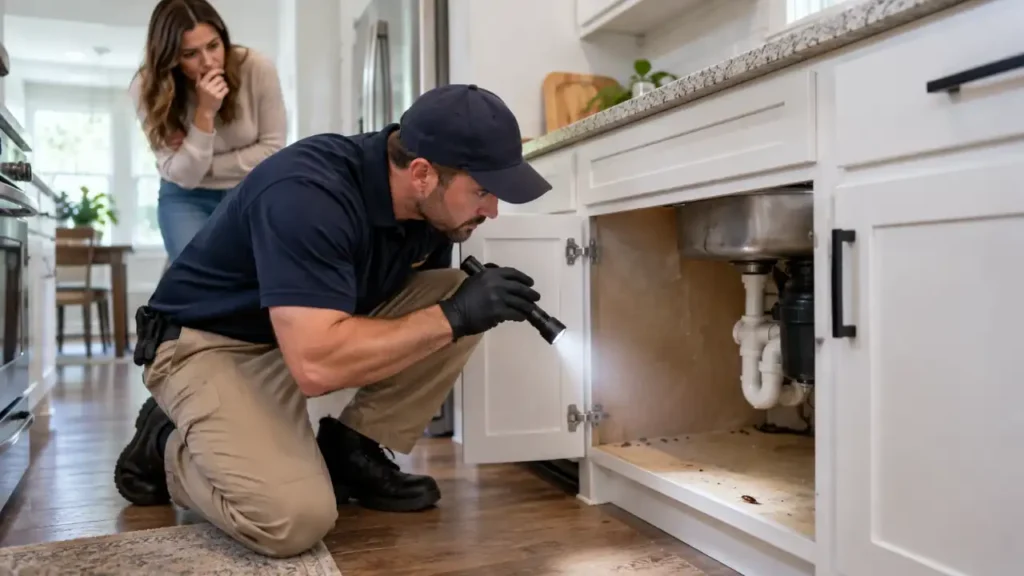
The U.S. Environmental Protection Agency recommends an integrated approach to pest management that combines prevention, monitoring, sanitation, exclusion, and appropriate pest-control methods rather than relying on pesticides alone. That same principle applies well to cockroach control.
Cockroach Types and How They Affect Cost
Not all roaches cost the same to get rid of, because not all roaches behave the same way.
German cockroaches are the most common indoor roaches in many homes, and they’re among the most difficult to control once established. If you’re not sure which type you’re dealing with,German and American cockroaches can look very different and behave differently inside a home. They’re small, reproduce quickly, and spend much of their time hidden in tight, warm areas near food and water. A female can produce multiple egg cases during her lifetime, with each case containing numerous developing nymphs. That’s why a seemingly small infestation can become a much larger problem surprisingly quickly.
American Cockroaches are the large roaches many homeowners call palmetto bugs. They commonly live outdoors, in sewers, drains, basements, crawl spaces, and other damp areas, and they can enter homes through plumbing openings, foundation gaps, doors, or other openings. Because they are often associated with moisture and exterior entry points, controlling the source can be just as important as treating the roaches themselves. A localized problem may be relatively straightforward, but recurring activity usually calls for both treatment and exclusion.
Oriental Cockroaches prefer cool, damp areas and are commonly associated with basements, crawl spaces, drains, utility areas, and other moist locations. If they’re repeatedly appearing indoors, the underlying moisture or entry problem matters as much as the treatment itself. Fixing leaks, improving drainage, reducing excess moisture, and sealing entry points can make treatment much more effective and reduce the chance of repeated activity.
What Affects Extermination Costs
A quote isn’t just a random number a company pulls out of thin air. Several specific factors drive up or down your cockroach treatment cost, including infestation severity, home size, location, treatment method, and the number of visits required.
Inspection fees. Some companies include the inspection in the treatment price, while others charge a separate fee, often around $50 to $100. The bigger issue is whether the technician actually evaluates the infestation before recommending treatment. A detailed treatment plan based only on a phone description is worth questioning, particularly if you’re being asked to sign a recurring service contract.
Infestation severity. This is the single biggest factor. A handful of roaches near one sink is a different job than roaches active in every room.
Cost of waiting. Cockroach problems generally become more expensive as they spread. A small infestation may require one or two visits, while an established infestation can involve more harborages, treatment areas, follow-ups, sanitation, and exclusion. Treating the problem early is usually cheaper than waiting for it to become widespread.
Home size. More square footage can mean more areas to inspect and treat, which can increase labor and material costs. For example, as a rough pricing illustration, a 1,000-square-foot home might run around $100 to $150 for a basic treatment, while a 3,000-square-foot home could run $450 to $600 or more when more extensive treatment is required.
Location and geographic area. Labor costs and even the roach species common to your region affect pricing. Dense urban areas and older buildings, especially multi-unit apartments where roaches can travel between units, tend to run higher than suburban single-family homes.
Treatment frequency. A one-time job costs less upfront than a service plan, but if your infestation requires repeated visits, a recurring plan can work out cheaper over a year than paying for separate one-off treatments each time. Follow-up visits may be included in the original treatment price or charged separately, often around $50 to $150 per visit, so ask before comparing quotes.
Established German cockroach infestations often require multiple visits because eggs can hatch after the initial treatment and surviving roaches may remain hidden. When comparing quotes, ask whether you’re paying for one application or a complete treatment program.
Treatment Methods and Costs
Different problems call for different tools, and the tool matters just as much as the roach species when it comes to price.
Chemical sprays are the most common first-line treatment, usually included in a standard visit price. They knock down visible populations quickly but work best combined with other methods for anything beyond a light infestation. For most residential jobs, these treatments are part of the overall service price rather than a separate line-item charge. A basic visit may fall around $100 to $250, while more involved treatment programs can cost several hundred dollars once follow-ups are included.
Gel bait is one of the most useful tools for German cockroach control because roaches carry it back to their hiding areas. It works best when placed near active harborages and competing food sources are minimized. For established infestations, follow-up visits may be needed to monitor activity, refresh bait, and treat remaining harborages. Gel bait is typically included in the overall treatment price rather than charged separately, so differences between quotes often come down to labor, treatment scope, and follow-up.
Boric acid and other insecticidal dusts can be useful in dry, inaccessible voids and other areas where a properly applied dust will remain undisturbed. More is not better: heavy applications can be less effective and can create unnecessary exposure. Dust should only be used according to the product label and kept away from areas where children or pets could contact it.
Fumigation is a specialized treatment rather than the normal first-line approach for residential cockroach infestations. When it is appropriate, it requires the structure to be vacated and involves extensive preparation, which is why costs can reach $1,000 to $3,000 or more, depending on the property and treatment requirements. Most ordinary German cockroach infestations are handled with targeted treatments rather than whole-structure fumigation.
Tenting involves enclosing a structure so a fumigant can be contained during treatment. It is a specialized and expensive procedure, with costs potentially reaching $2,500 to $7,500 or more depending on the structure, size, preparation, and treatment requirements. It is not the normal starting point for a residential cockroach problem, so if you’re quoted several thousand dollars for a moderate infestation, getting another professional opinion is reasonable.
Heat treatment can kill insects when the entire treatment area reaches and maintains the required lethal temperatures, but it is not a routine first-line solution for most residential cockroach infestations. Specialized equipment, preparation, monitoring, and treatment conditions can make it substantially more expensive than conventional targeted cockroach control.
Exclusion and Prevention
Killing the roaches you have is only part of the job. A good treatment plan should also identify why roaches can continue to survive or enter the home. That may include gaps around plumbing, damaged screens, door gaps, exterior cracks, leaks, standing water, food debris, clutter, or conditions inside wall and cabinet voids. Common repairs include sealing foundation cracks and plumbing or utility gaps, adding door sweeps or weather stripping, and repairing damaged screens.
Some pest companies perform minor exclusion work themselves; others identify the problem and recommend that the homeowner or another contractor make the repair. Ask which one you’re getting before assuming “exclusion” is included in the price.
Service Plans and Contracts
For homes with recurring roach pressure, a one-time treatment often isn’t the most cost-effective route. Ongoing service plans typically break down like this:
- Quarterly plans run roughly $400 to $700 per year, with a technician visiting every three months to treat and monitor. This is the most common plan for general pest prevention.
- Monthly plans cost more overall, typically $900 to $1,600 per year, but make sense for active or recurring infestations that need closer monitoring until the problem is fully under control.
- Annual plans may bundle a set number of visits, sometimes with a discount for paying upfront. These plans can make sense for homeowners who want scheduled preventive service rather than calling only when they see roaches.
Those figures are useful for comparison, but service-plan pricing varies significantly by location, company, property size, and what the plan covers. Before comparing monthly or quarterly prices, check whether cockroach treatments and callbacks are included or charged separately.
Cleanup and Health Considerations
There’s a cost people rarely factor in until they’re dealing with it: cleanup. Cockroach allergens from droppings, body fragments, saliva, and other debris can contribute to allergy and asthma problems, particularly in sensitive people and children. A heavy infestation can also mean a deep clean of cabinets, pantries, and baseboards after treatment, either DIY or through a cleaning service.
Heavy infestations can also leave droppings, shed skins, dead roaches, and other debris inside cabinets, pantries, beneath appliances, and along baseboards. Deep cleaning may be necessary after treatment, and contaminated or poorly sealed food may need to be discarded. Extermination and cleanup are usually separate services, so ask what your quote includes.
If food packaging or pantry items were contaminated, replacing them adds up too. None of this shows up on the exterminator’s invoice, but it’s a real part of the total cost of letting an infestation go on too long, which is exactly why acting early saves money on more than just the treatment itself.
When You Should Call a Professional
Some situations shouldn’t wait for a “let’s see if it gets worse” approach. Consider calling a professional if you’re seeing roaches regularly during the daytime, finding egg cases (oothecae) in drawers or behind appliances, finding droppings that you suspect are from cockroaches, or continuing to see live roaches despite consistent DIY control efforts. Cockroach droppings can be easy to confuse with other pest droppings, so identification matters.
- Daytime sightings: May indicate a larger infestation, especially when sightings are frequent.
- Egg cases or droppings: Oothecae and fresh droppings suggest active breeding and ongoing activity.
- Roaches in multiple areas: Activity beyond one kitchen or bathroom suggests the infestation has spread.
- DIY treatment isn’t working: Continued live sightings after consistent treatment are a sign the problem may need a more targeted approach.
Money-Saving Tips
You don’t have to choose between overpaying and underpaying. A few things genuinely move the needle: get two or three quotes and compare what’s actually included, not just the bottom-line number. Ask whether follow-up visits are bundled into the price, since established German cockroach infestations often require more than one treatment.
Address moisture and clutter issues yourself before the technician arrives, since prep work you do saves labor time they’d otherwise bill for. A quarterly plan may make financial sense if you live somewhere prone to reinfestation or you’ve had recurring problems, particularly when the plan includes callbacks and other services that you’d otherwise pay for separately.
Also Read: What Attracts Roaches? 15 Surprising Culprits
Choosing the Right Exterminator
This is where the “cheapest isn’t always best” part of this article really matters. A rock-bottom quote can sometimes mean the company is offering a narrower treatment, skipping important follow-up work, limiting the number of visits, or using a low introductory price that increases later. Don’t assume the cheapest quote is bad, but don’t assume it’s the best value either.
Look for a licensed and insured company, ask what’s included in the price (inspection, follow-ups, exclusion work), and ask what happens if the roaches come back before the next scheduled visit. Get the treatment plan and price in writing, including what’s covered on the initial visit, whether follow-ups are included, and what happens if roaches remain active.
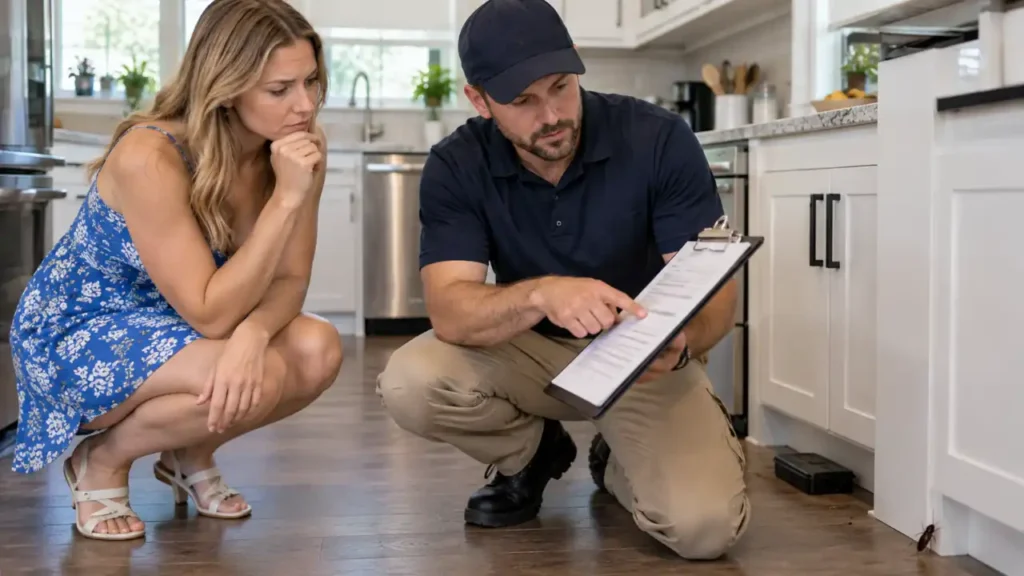
Ask whether the company offers a guarantee or re-treatment window, how long it lasts, and exactly what it covers. A warranty can add value to a quote, but the details matter more than simply seeing the word “guarantee.” If a quote seems dramatically lower than everyone else’s, ask why, directly. A good company will have a clear answer.
Prevention After Treatment
Once the roaches are gone, keeping them gone comes down to a few consistent habits: store food, including pet food, in sealed containers, take out trash regularly and keep bins clean, fix leaks and dry out damp areas under sinks and in bathrooms, and vacuum and wipe down crumbs and spills promptly rather than letting them sit overnight. If you’re still noticing activity after dark, a few simple changes can also help keep cockroaches from coming out at night. None of this is glamorous, but it’s the difference between a treatment that sticks and one you’ll be paying for again next year.
Final Thoughts
The cost of cockroach extermination can range from around $100 to $200 for a light infestation to $500–$1,500+ for a severe or established problem, with $200–$400 being a common range for an initial professional treatment. Specialized treatments can cost considerably more. Severe cases can reach $1,500+ and specialized whole-structure treatments can run into the several-thousand-dollar range. But the price tag alone doesn’t tell you whether you’re getting a fair deal.
What matters is understanding what’s driving your specific number: the species you’re dealing with, how far the infestation has spread, and what’s actually included in the service. Get an inspection, ask direct questions, and don’t assume the cheapest quote is the safest bet, because with roaches, cutting corners now almost always costs more later.