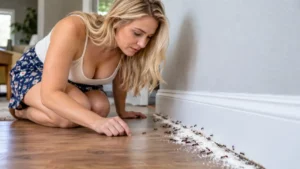
If you have ants popping up in your grass, you are probably wondering how to get rid of ants in your lawn before the problem spreads. What starts as a few small ant hills can quickly turn into multiple mounds, rough patches in the turf, and trails moving across the yard. The good news is that most lawn ant problems can be reduced naturally without immediately relying on harsh chemicals.
In many cases, a combination of targeted treatment, basic lawn maintenance, and consistent follow-up is enough to get control. The key is treating the nest itself instead of only the ants you see moving on the surface.
Also Read: How To Get Ants Out of Electronics Without Damaging Your Device
Quick Answer: How To Get Rid of Ants in Your Lawn
The best natural way to get rid of ants in your lawn is to treat active mounds directly while making the yard less attractive for new colonies. Diatomaceous earth, soapy water, vinegar, cinnamon oil, and bait-style treatments can all help reduce ant populations when combined with proper lawn maintenance and moisture control.
| Treatment | Best For | Limitation |
| Diatomaceous Earth | Active trails and mound edges | Less effective when wet |
| Soapy Water | Surface activity and trail disruption | Usually temporary |
| Vinegar | Scent trail disruption | May stress plants if overused |
| Cinnamon Oil | Repelling active trails | Must be diluted carefully |
| Bait Treatments | Deep colony control | Slower results |
Are All Ants in Your Yard a Bad Thing?
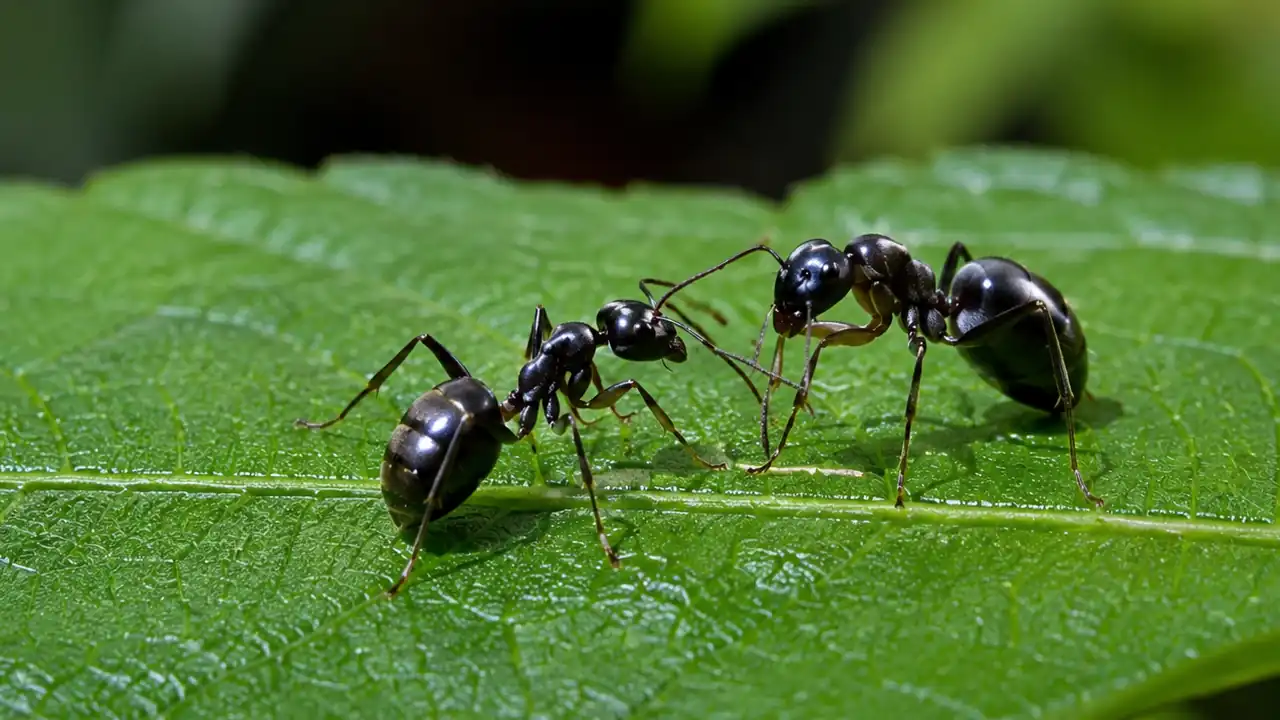
No, not every ant in your yard is a problem. A few ants moving through the grass now and then are part of normal outdoor life. In fact, some ant species can actually help with soil movement and natural cleanup. They break up compact soil, move organic matter around, and can even help reduce some pest pressure in certain situations.
Research from the University of Minnesota Extension also notes that many outdoor ant species play a useful role in breaking down organic material and naturally aerating soil, which is why small amounts of ant activity outdoors are not always considered harmful for a lawn or garden ecosystem.
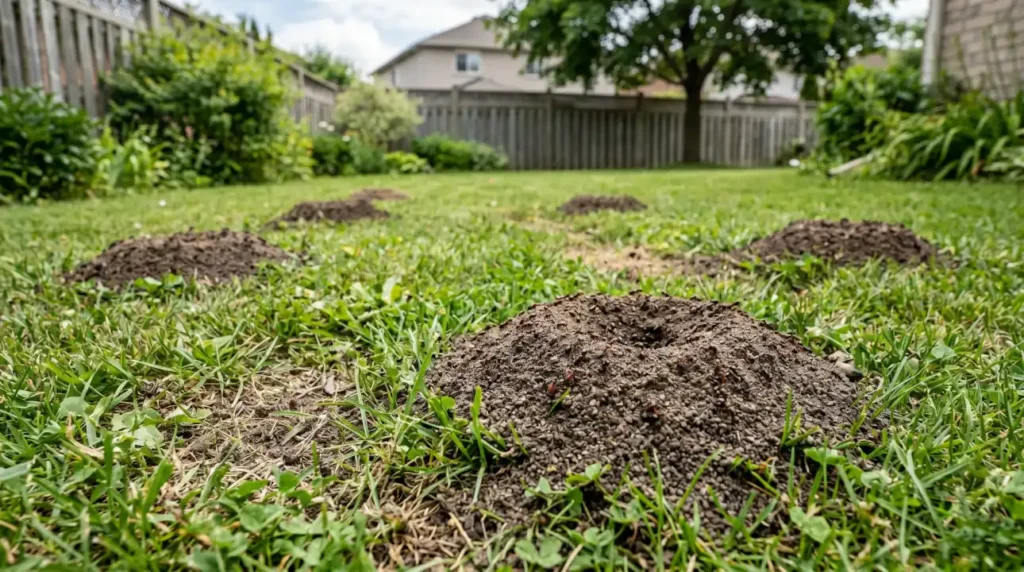
The trouble starts when ant activity becomes obvious enough to affect the lawn itself. That is when you see multiple mounds, open tunnels, raised soil, dead patches, or ant trails around walkways, flower beds, and the edge of the house. Once that happens, ants stop being background insects and become a lawn issue.
Another thing to keep in mind is that some ants are simply nuisance ants, while others can bite, sting, or protect pests like aphids. A few can also move indoors if they find a good entry point. So the real question is not, “Are ants always bad?” The better question is, “Are they becoming a problem for this yard?”
Quick Tip: If you only see a couple of ants and no mounds, watch the area for a few days before you rush in. A small amount of ant traffic does not always mean you have a major infestation. The moment you see repeated mound building, however, it is time to act.
Types Of Ants You’ll Find in the Grass
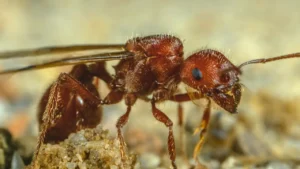
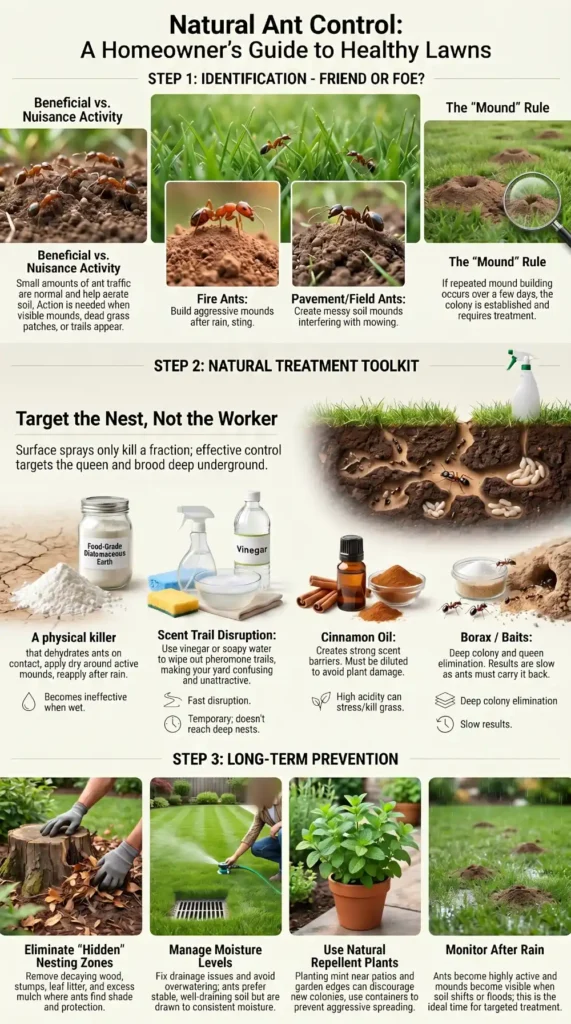
Not all lawn ants behave the same way, and that matters. Some ant species prefer dry, open areas with thin grass. In hotter southern climates, fire ants are often the species homeowners notice first because the mounds appear quickly after rain and can spread aggressively across open turf. In cooler northern regions, pavement ants and field ants are usually more common lawn invaders.
Others like disturbed soil, edges of pavement, or spaces close to buildings. The more you understand the type of ant in your yard, the easier it is to choose a treatment that actually makes sense.
Fire ants are especially important to identify early because disturbing the mound can trigger aggressive swarming and painful stings, particularly during warmer months.
Carpenter ants are usually more of a wood problem than a grass problem, but they can still show up around lawns if there are trees, stumps, mulch beds, or damaged wood nearby. These ants are important to notice because they often point to a bigger nesting site nearby, not just random grass activity.
You may also see pavement ants in and around yard edges, cracks, sidewalks, and driveways. They are often found near hard surfaces and can use those warm, protected spots to build nests close to the house. Once they are established, they can spread from the border of the yard into other areas if food and shelter are available.
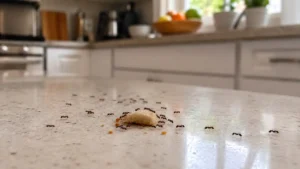
Some homeowners also deal with ants that move from the lawn toward the home itself. That is when the issue starts to become more than a yard nuisance. If you notice ants near siding, entry gaps, on walls, or foundation cracks, those outdoor colonies can easily connect to indoor problems.
In grassy areas, field ants and other mound-building species are the ones most people notice first. These ants are more aggressive than most lawn species and can deliver painful stings when the mound is disturbed.
They raise visible soil mounds, make mowing annoying, and can create patchy or uneven spots in the turf. Some of these ants are not aggressive, but they still become a headache when the colony grows large enough to spread throughout the lawn.
Different ant species respond differently to treatment methods, which is why identification matters before you start applying products or repellents. A few ants near the grass edge are not the same as a full mound-building colony in the middle of the yard. The more closely you observe where they are nesting, the better your chances of getting control without wasting time.
Natural Ways to Eliminate Lawn Ants
Learning how to get rid of ants in your lawn naturally becomes much easier once you understand where the colony is nesting and why the ants chose that area in the first place.
Natural ant control works best when you use it as a system, not as a one-time trick. A lot of people try one treatment, do not see instant perfection, and assume it failed. In reality, outdoor ant control often takes repeat treatment, trail disruption, and a bit of patience. If the colony is still active underground, the job is not done yet.
1. Diatomaceous Earth
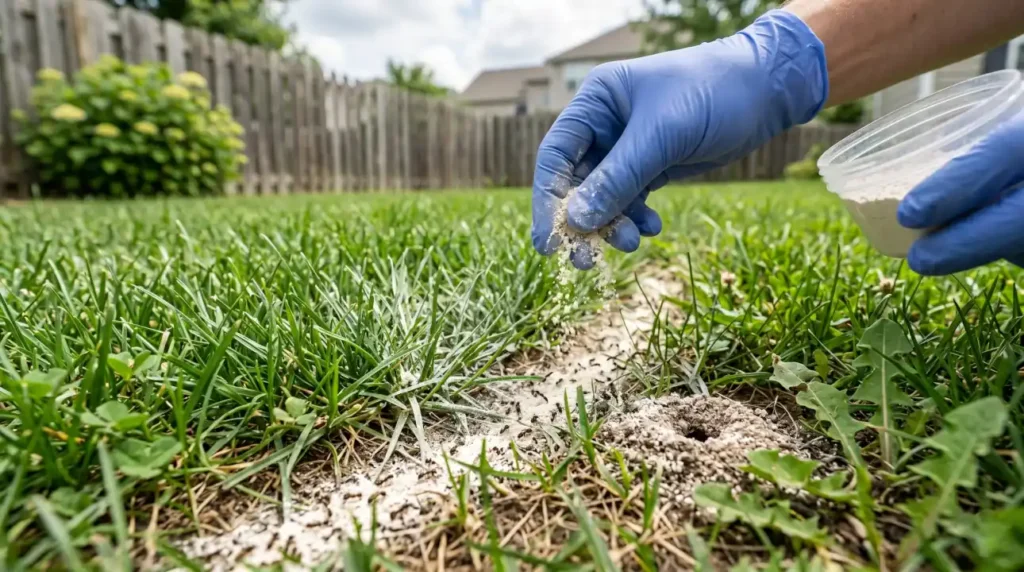
Diatomaceous earth is one of the better natural tools for lawn ants because it works physically, not chemically. It is made from tiny fossilized particles that damage an ant’s outer body and dry it out. Once ants crawl through it, they can lose moisture and die. It is not flashy, but it can be effective when applied the right way.
Only use food-grade diatomaceous earth around residential lawns and gardens. Pool-grade versions are processed differently and should not be used for pest control around people or pets.
This is one of those methods that fits nicely into an eco-friendly form of pest control because it avoids the heavier residue and broad chemical impact some people want to avoid in their yard. That said, it still needs to be used carefully. If the soil is wet, or if rain is coming soon, the powder will not stay as useful for long.
For the best results, apply diatomaceous earth in a dry layer around mound openings, ant trails, and the spots where you see repeated activity. A light but consistent application works better than dumping a giant pile on top of one area. If you are treating a nest, make sure the powder reaches the active entrances, not just the surface grass.
Quick Tip: Reapply after heavy dew, watering, or rain. Diatomaceous earth loses power once it gets wet and clumpy, so timing matters more than most people realize.
2. Water & Soap
Soap and water are a simple fix that can help in two ways. First, they break up the scent trail ants use to follow each other. Second, a direct spray can suffocate or knock down exposed ants. That makes it useful for reducing visible activity fast, especially around trails and mound openings.
The easiest way to use it is to mix a small amount of mild dish soap with water in a spray bottle or garden sprayer. Then spray the trail, the mound entrance, and any ants you can see moving on the surface. This will not always destroy a colony by itself, but it can disrupt the routine enough to make the area less active.
Soap water works best as a support treatment alongside another control method rather than as a complete solution by itself. It is very good for quick cleanup, but not always enough for larger nests.
3. Vinegar
Vinegar is another common natural ant deterrent. Ants dislike the smell, and vinegar can interfere with the scent trail they use to stay organized. That makes it useful for wiping down trails, mound edges, and areas where ants keep returning.
The main thing to know is that vinegar works better as a disruption tool than a deep colony killer. It can push ants away and make a spot less attractive, but by itself it usually does not reach deep into the nest. So think of it as a way to disturb the colony’s pattern rather than wipe out the queen.
Use it where ant traffic is obvious and where you want the ants to stop coming back. A diluted mix is usually the safest starting point, especially around grass, garden edges, or plants that could be sensitive.
4. Cayenne Pepper
Cayenne pepper is useful because ants do not like crossing areas that feel and smell harsh to them. It can help create a temporary barrier around nests or around the edges of flower beds, walkways, and lawn borders. Some people also use it directly near the mound to make the area less comfortable.
This is not a miracle cure, and I would never pretend it is. But for a homeowner who wants to keep activity down naturally, cayenne can help add pressure to the colony. The strong smell and irritating powder can make ants choose a different route, especially if there are multiple trails nearby.
The trick is to use it as a boundary and not as the only treatment. That way, you are not just repelling the ants for a moment. You are making the whole area less inviting while you use other methods to attack the active nest.
5. Cinnamon Oil
Cinnamon oil is one of the more useful natural deterrents when you want a strong scent barrier. Ants tend to dislike powerful smells that interfere with their trail-following behavior, and cinnamon oil is intense enough to matter. It can be sprayed around ant paths, near mound entrances, or along the edges where the lawn meets hard surfaces.
Just be careful with plants and grass. Essential oils can be helpful, but they should still be treated like concentrated materials. Too much in one place can stress delicate plants or leave spots looking rough. A little goes a long way.
If pets regularly use the lawn, avoid heavily concentrated essential oil applications in areas where animals may roll or rest.
If you are using cinnamon oil in a yard treatment plan, apply it where ants keep appearing rather than trying to saturate the whole lawn. Targeted application works much better than saturating the entire lawn. You want to interrupt the ants’ routes, not perfume the entire yard.
6. Salt
Salt is simple, cheap, and often talked about because it can dry out insects. It can work on ants it comes into contact with, especially when used in dry form or in concentrated spots. Like other natural treatments, it is most effective when you put it exactly where the ants are active.
The problem is that salt does not know the difference between an ant and a plant root. Too much salt in the wrong place can damage grass and leave ugly patches behind. That is why I only recommend it in very controlled spots and never as a broad treatment for a whole lawn.
Use salt carefully if you use it at all. Think of it as a spot treatment, not a yard treatment. That distinction matters if you want to protect the health of the grass while still reducing ant activity.
7. Mint Plants
Mint plants are one of the nicer long-term deterrents because they help make certain areas less attractive to ants without requiring constant spraying. Ants dislike strong minty smells, so planting mint near problem edges can help discourage new traffic from settling there.
Mint is not going to erase an active colony underground, but it can support your prevention plan once you have already treated the problem. It is especially useful around patio borders, garden edges, and entry points where ants have a habit of returning.
One caution here: mint spreads aggressively. If you plant it directly in open soil without a barrier, you may end up with a mint patch that takes over more space than you wanted. So place it with a little planning.
8. Baking Soda
Baking soda gets talked about a lot in ant control, and for good reason. It can be part of a homemade bait or dusting mix, and there is a lot of interest around whether baking soda can kill ants. The honest answer is that it may help in some setups, but it is usually not a stand-alone solution for serious lawn infestations.
The best use of baking soda is as part of a bait strategy or in combination with something that attracts the ants. On its own, it usually does not reach a colony deeply enough to solve the problem. That is where many people get stuck. They try one sprinkle, expect a dramatic result, and then decide natural methods do not work at all.
That is not really fair to the product. It is just better used as one piece of a larger plan.
9. Orange Peels
Orange peels can help because citrus scents can disrupt ant activity and make a spot less appealing. Some people use dried peels, others use fresh peel pieces near trails or mound edges. The oils in citrus are part of why this works as a mild repellent.
Orange peels are not a heavy-duty ant killer, but they do fit well into a natural prevention routine. They can help you keep pressure on a problem area while you are also cleaning up food sources, removing cover, and treating nests more directly.
If you already use citrus cleaning products inside the house, this outside method can feel familiar. The key is to keep expectations realistic. Orange peels are a support tool, not the whole strategy.
More Extreme Methods
Sometimes a yard is past the point where gentle repellents are enough. If the ant problem keeps expanding, the colony is spreading fast, or the mounds keep returning after treatment, you may need stronger options. At that point, people often start looking into bait-based products or more direct nest treatments.
Some homeowners switch to granular bait products when surface treatments stop working because the bait can be carried deeper into the nest by worker ants.
One method that comes up often is killing ants with borax. Borax can be used in bait setups that ants carry back to the colony, which is more effective than trying to spray every ant you see. Slow-acting bait methods work because foraging ants carry material back into the nest, allowing the treatment to spread deeper into the colony over time.
That is the big idea behind a lot of successful ant control. Surface sprays may kill visible workers quickly, but the nest survives unless the queen and brood are affected too.
This is also where a lot of homeowners make a common mistake. They start treating the yard with harsh contact sprays that kill visible ants quickly, but the colony survives underground and sends out more workers later. That creates the feeling that the problem is “coming back,” when in reality it never fully left.
If you do move into stronger control, be careful to follow label directions exactly, especially if pets, kids, pollinators, or garden plants are nearby. The University of Florida IFAS Extension also recommends using targeted bait approaches carefully and minimizing unnecessary broad pesticide use whenever possible, especially around pollinators, pets, and beneficial outdoor insects. Stronger methods can be very effective, but they have to be handled responsibly.
How To Discourage Ants from Coming Back to Your Lawn
Getting rid of ants is one thing. Keeping them from coming back is where the real long-term success happens. If you skip prevention, the same conditions that attracted the ants in the first place will still be there waiting for the next colony.
Start by fixing the yard conditions ants like most. Keep the lawn trimmed, remove decaying wood, and clear away clumps of debris, leaf litter, and excess mulch close to the grass edge. Ants love quiet, protected nesting zones, so anything that creates shade, shelter, or moisture can help them settle in again. Many lawn ants also prefer dry, well-draining soil where tunnels stay stable after rain.
Next, pay attention to water. A lawn that stays too wet in some areas and too dry in others creates uneven conditions that can encourage nesting. Fix drainage problems where you can. Water the lawn properly, but do not leave it soggy. Ants are not the only thing that likes poor moisture balance, and a healthier yard is usually less attractive to pests in general. Compost piles placed too close to the lawn can also attract foraging ants looking for moisture and organic food sources.
It also helps to inspect the edges of the property regularly. Look at fence lines, sidewalk cracks, flower bed borders, stump areas, and the places where soil meets foundation. That is where many infestations begin. In a lot of yards, I find the first serious mound activity starts along neglected fence lines or around decorative landscaping that stays damp underneath for long periods. Catching those little signs early makes everything easier.
Food sources matter too. If your yard has pet food, fallen fruit, sugary drink spills, or outdoor trash that stays exposed, ants will notice. Sugary drink residue, overflowing garbage bins, and exposed outdoor trash can also attract foraging ants surprisingly quickly during warmer months. Even outdoor insects and aphids can create the kind of conditions ants love. The more you remove the things ants feed on or protect, the less likely they are to stay.
Another smart habit is to monitor after rain. A lot of colonies become more visible when the soil shifts, floods, or softens. That is often when you first notice a mound or a new trail. Use those moments to your advantage and treat early before the colony gets bigger.
When Natural Methods Are Not Enough
Natural methods are often a great first response, especially when the problem is still small or moderate. But there are times when they simply are not enough. If the yard has multiple active mounds, if ants are showing up every day in the same spots, or if they are moving toward the house, you may need a stronger strategy.
That does not mean the natural methods were useless. It just means the infestation level is beyond what these treatments can handle alone. Outdoor ant colonies can be stubborn, especially when the nest is deep, the weather is favorable, and there are multiple queens or satellite nests involved.
Also Read: How To Get Rid of Grease Ants Quickly and Safely
I have also seen homeowners accidentally make infestations worse by flooding random areas of the lawn while missing the main nest entirely. The visible ants disappear for a day or two, then the colony simply shifts a few feet away and rebuilds somewhere else. That is one reason targeted treatment matters so much with outdoor ants.
This is where many pest control plans shift from “repel and reduce” to “target the colony directly.” The earlier you recognize that shift, the better the outcome usually is. Waiting too long often means more mounds, more trail building, and more lawn damage.
Final Thoughts
If you want to know how to get rid of ants in your lawn, the smartest answer is usually not one single trick. It is a steady, practical plan. Start by figuring out whether the ants are actually a problem or just part of the normal outdoor ecosystem. Then identify the type of ant, check where the colony is active, and choose a natural method that fits the size of the issue.
Diatomaceous earth, soapy water, vinegar, cayenne pepper, cinnamon oil, salt, mint plants, baking soda, and orange peels can all help. Some of them kill on contact. Some of them disrupt trails. Some of them simply make the yard less attractive. Used together, they can do a lot more than people expect.
The homeowners who usually get the best long-term results are the ones who stay consistent with cleanup, monitoring, and follow-up treatment. Cleanup matters. Timing matters. Follow-up matters. If you only treat the visible ants and ignore the nest, you will probably be dealing with the same problem again later.
So start early, stay patient, and do not wait until the ant hills are everywhere. The sooner you act, the easier it is to keep the lawn healthy and the yard comfortable again.