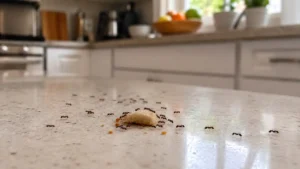
If you’ve ever flipped on a kitchen light and watched a swarm of ants scatter in every direction at once, not in a neat line like normal ants, but in wild, zig-zagging chaos, you’ve met crazy ants. And if you’re reading this, you probably already know they’re not easy to shake. You’ve tried the spray from the hardware store.
Maybe you’ve wiped down counters, sealed a few cracks, even called it a win for a few days. Then they’re back. If you’re wondering how to get rid of crazy ants permanently, the key is treating the entire colony rather than just the workers you see. After 18 years of dealing with these things in real homes, I can tell you why that keeps happening and exactly what actually works. The recommendations below reflect field experience treating residential infestations and are supported where applicable by university extension guidance on crazy ant biology and control.
Also Read: How An Ant Exterminator Eliminates an Ant Infestation
Quick Answer
Crazy ants are difficult to eliminate because colonies often contain multiple queens and numerous interconnected nesting sites. The most effective treatment combines a thorough inspection, non-repellent insecticides, slow-acting bait that reaches the colony, and long-term prevention by sealing entry points and reducing moisture.
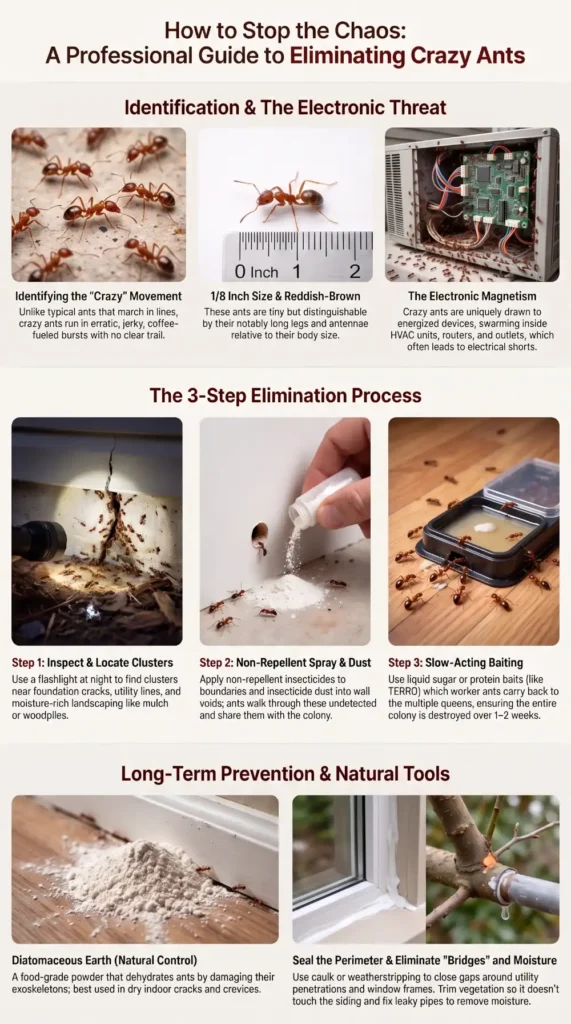
How to identify crazy ants
- About 1/8 inch long
- Reddish-brown to dark brown
- Long legs and antennae
- Run erratically instead of following orderly trails
- Often found around electrical equipment
What Are Crazy Ants?
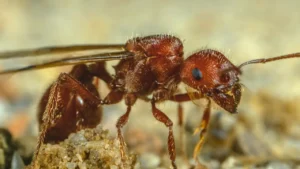
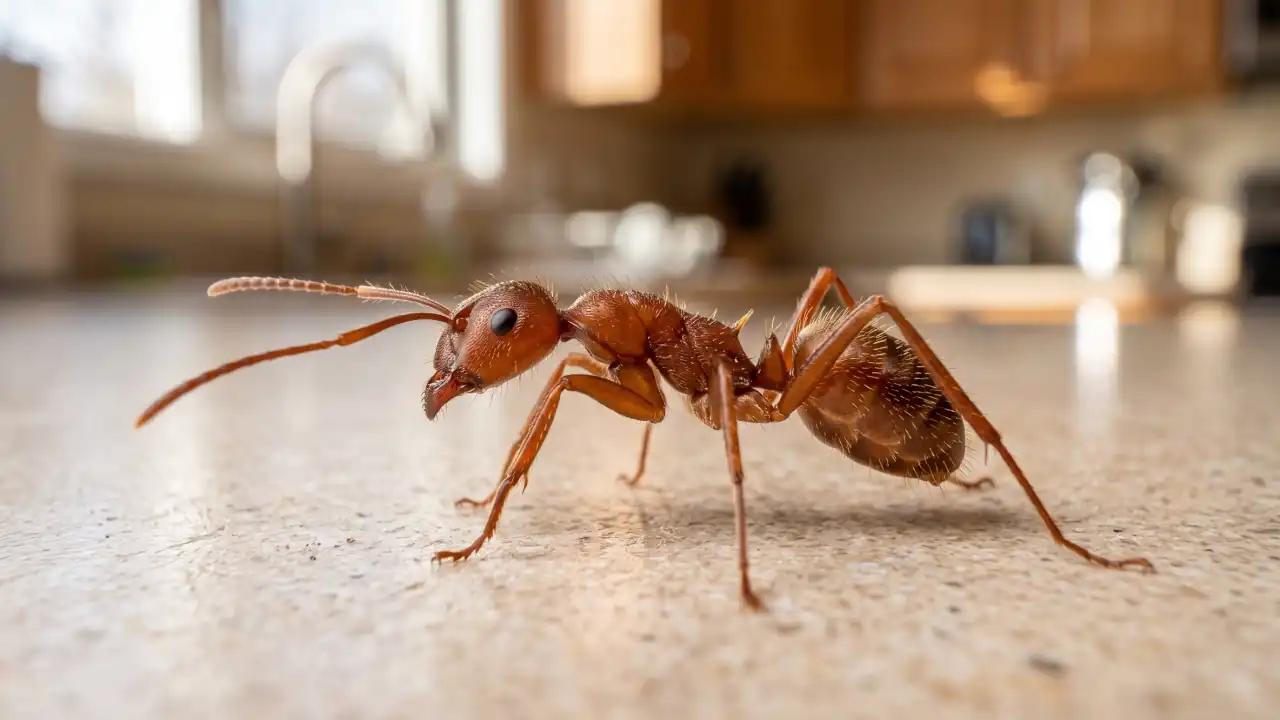
Crazy ants (most commonly the tawny crazy ant, though you’ll also hear “raspberry crazy ant” or “hairy crazy ant” used for the same general nuisance) are small, reddish-brown ants named for the way they move. Instead of marching in an orderly line like carpenter ants or odorous house ants, crazy ants sprint around in erratic, jerky bursts, changing direction constantly like they’ve had too much coffee. That frantic movement is actually the easiest way to identify them without a magnifying glass.
Are all crazy ants the same?
Homeowners often use the term “crazy ant” to describe several species with similar erratic movement. In the United States, the tawny crazy ant (Nylanderia fulva) is the species most commonly associated with large residential infestations and electrical equipment problems. Other species, such as the longhorn crazy ant (Paratrechina longicornis), can also invade homes but may differ in appearance, distribution, and behavior. Fortunately, the control methods in this guide are effective for both.
What makes crazy ants different from your average kitchen ant problem is scale. A single colony can have multiple queens, sometimes dozens, which means the population can explode fast and spread across a property in a way that’s hard to keep up with. They don’t build one tidy mound you can pour boiling water on and call it done.
According to the University of Florida IFAS Extension, tawny crazy ants (Nylanderia fulva) form large interconnected colonies with multiple queens, allowing populations to expand rapidly and making them much harder to eliminate than many other household ant species.
Crazy ants are most common in warm, humid parts of the southern United States, particularly along the Gulf Coast. However, some species are now found in other regions as well, especially where they can spread through landscaping materials, nursery plants, or commercial shipments.
They nest in mulch beds, under stacked wood, inside wall voids, behind baseboards, and yes, inside your electronics. That last part isn’t an exaggeration. These ants are genuinely drawn to electrical equipment, and I’ve personally pulled dead ants out of HVAC units, router boxes, and computer towers more times than I can count. If you’re dealing with ants near your desktop or entertainment center, it’s worth reading up on getting ants out of electronics before the problem causes real damage.
Quick Tip: If you see ants running in random directions instead of following a single trail back to a food source, don’t waste time trying to follow them to a nest the way you would with regular house ants. Crazy ant trails split, double back, and overlap constantly, so tracking one ant visually is a losing game. Focus on where they’re clustering (that’s usually closer to the nest than any single trail will tell you).
Why Do Crazy Ants End Up in Your Home?
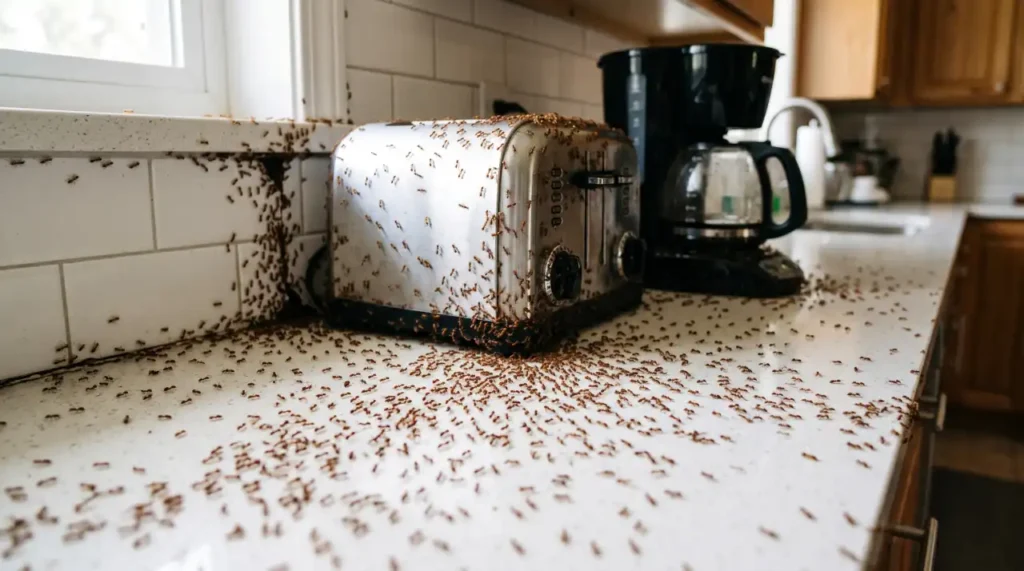
Crazy ants come inside for the same three reasons almost every pest does: food, water, and shelter. They’re opportunistic feeders and will eat sugary foods, grease, proteins, pet food, dead insects, and even the honeydew produced by aphids outdoors. That’s one reason they can thrive around both kitchens and landscaped areas.
But with crazy ants, the “shelter” part gets weird fast. They’re not just looking for a dry corner. They actively seek out warm, enclosed spaces, and that includes the inside of outlet boxes, appliance motors, and wiring bundles. During dry spells, moisture becomes the bigger draw, which is why you’ll often find them clustered near sinks, water heaters, or leaky pipes even in homes that are otherwise clean.
Outdoors, these ants live under mulch, leaf piles, potted plants, stones, and woodpiles—basically anywhere that stays slightly damp and undisturbed. When their outdoor colony grows too large for the space, or when the weather turns hot and dry, workers push indoors looking for a better environment. Once they’re in, they don’t need much of an opening. A gap around a utility line, a crack in the foundation, or a loose weep hole is plenty.
One thing homeowners are often surprised to learn is how often crazy ants end up living inside electrical outlets. They’re commonly found inside electrical equipment, although researchers still haven’t determined exactly why these ants are so strongly attracted to energized devices. It becomes a cycle that’s hard to break without addressing the nest itself, not just the outlet.
The Importance of Getting Rid of Crazy Ants Quickly
I get it, a few ants on the counter doesn’t feel like an emergency. But crazy ants are one of the few household pests where waiting genuinely makes the problem worse in a matter of days, not months. Their colonies reproduce fast, and because they can have multiple queens working at once, a manageable trail today can turn into a full infestation across your yard and home within a couple of weeks.
Large infestations can spread across an entire property surprisingly quickly because neighboring nests often function as one interconnected supercolony instead of competing with one another. That’s one reason isolated spot treatments rarely solve the problem for long.
There’s also the property damage angle, which people underestimate until it costs them money. These ants are well known for invading electrical equipment and can accumulate inside switches, outlets, HVAC systems, and other devices. In large numbers, their presence has been associated with electrical malfunctions and short circuits, even though they’re not actually feeding on the wiring itself. Researchers have documented numerous cases of tawny crazy ants interfering with electrical equipment because of their tendency to swarm inside energized devices.
I’ve seen it happen in air conditioning units, in irrigation control boxes, and in one memorable case, inside a home theater system that had to be completely replaced. That’s not a scare tactic, it’s just what happens when thousands of ants decide your equipment is a good place to nest.
On top of that, crazy ants are aggressive toward other insects and even small animals, and outdoors they can wipe out beneficial bugs, disrupt local insect populations and protect plant-feeding pests like aphids by feeding on their honeydew. In areas where crazy ants have moved in, they’ve been known to push out fire ant populations, which sounds like a relief until you realize you’ve traded one hard-to-control species for another that shows up indoors far more often.
There’s also a stress factor that doesn’t get talked about enough. Homeowners dealing with a bad infestation often tell me they can’t relax in their own kitchen anymore, constantly wiping counters, checking cabinets, second-guessing every crumb on the floor. That’s a miserable way to live in your own house, and it’s a big part of why I never tell people to just wait it out. So the longer an infestation sits, the more it spreads and the more damage it does, both inside your walls and outside in your yard. Acting early is genuinely the difference between a weekend project and a multi-week headache.
How To Get Rid of Crazy Ants
Here’s the part you actually came for. Getting rid of crazy ants for good takes a layered approach. Spraying what you see on the counter will knock down the ants in front of you, but it won’t touch the colony, and with crazy ants, the colony is the whole problem. This is the same method I’d walk a homeowner through in person, and it works whether the infestation is in your kitchen, your garage, or even your car, which happens more than people expect if a vehicle sits parked near an active nest.
1. Inspect & Locate
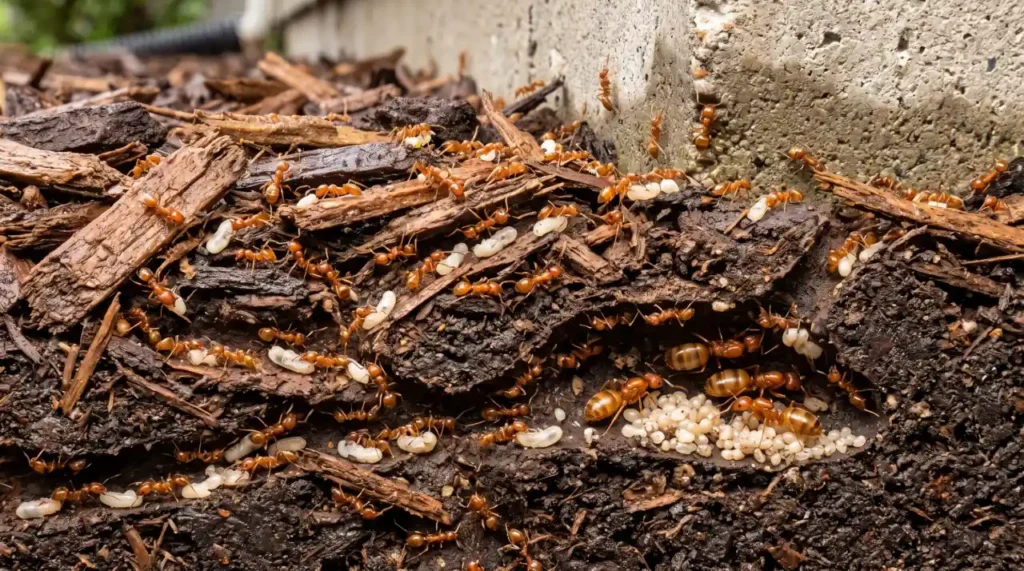
Before you buy or spray anything, spend real time figuring out where these ants are coming from. Walk your foundation and look for cracks, gaps around pipes, and areas where mulch or vegetation touches the siding directly. Pay special attention to landscaping that touches your home’s exterior. Shrubs, mulch piled against siding, and stacked firewood often provide hidden nesting sites that let ants move indoors without being noticed.
Inside, check under sinks, behind appliances, around window and door frames, and near any outlets or electronics where you’ve noticed activity. Crazy ants don’t leave a single obvious trail the way other ants do, so look for clusters instead, places where ants seem to be gathering or moving in and out repeatedly rather than just passing through.
Take your time here. If you don’t find an obvious nest on your first inspection, don’t assume there isn’t one. Crazy ants frequently occupy multiple nesting sites, so you may need to inspect both indoors and outdoors before the full extent of the infestation becomes clear. Rushing this step is the number one reason treatments fail. If you treat the kitchen counter but the nest is actually under a woodpile fifteen feet from your back door, you’re just managing symptoms.
Quick Tip: Check your inspection at night with a flashlight. Crazy ants are often most active during cooler, quieter hours, and a nighttime walk-through will show you activity you’d never catch in the middle of a busy afternoon.
2. Spray & Dust
Once you’ve mapped out where the activity is concentrated, it’s time to treat. For entry points, cracks, and outdoor nesting areas, a non-repellent insecticide spray works better than a repellent one. Repellent sprays actually make the problem worse with crazy ants because the ants smell the barrier, avoid it, and simply find another way in, sometimes splitting the colony and creating new entry points in the process.
Non-repellent products let ants walk through the treated area without detecting it, carry it back to the nest, and spread it to the rest of the colony. Always read and follow the product label before applying any insecticide, especially around kitchens, pets, children, or food-preparation areas.
For wall voids, outlet boxes, and other enclosed spaces, a dust insecticide is usually the better tool. Dust formulations get into the small gaps and cracks that liquid sprays can’t reach, and they stay effective for much longer since they’re not evaporating or breaking down from sunlight. Apply dust only into enclosed voids where ants are nesting, such as wall voids or other inaccessible spaces. Avoid broadcasting insecticide dust across exposed indoor surfaces, since more product isn’t more effective and unnecessary applications increase the chance of accidental exposure.
3. Set Out Crazy Ant Bait
This is the step most people skip, and it’s the one that actually solves the problem long term. Bait works differently than spray. Instead of killing ants on contact, it lets worker ants carry a slow-acting toxicant back to the nest, where it gets shared with the queens and the rest of the colony through normal feeding behavior. Since crazy ants can have multiple queens, this step matters even more than it does with single-queen species, because a spray that kills the ants you see does nothing to the queens tucked away in a wall void or under a woodpile.
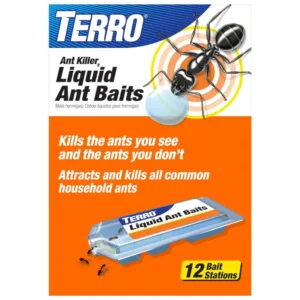
If you’d rather skip mixing your own bait, TERRO Liquid Ant Killer bait stations are a convenient ready-to-use option because worker ants carry the liquid bait back to the colony instead of dying immediately.
Place gel or granular bait along the trails and clusters you identified during your inspection, not directly on top of the entry points you’re also treating with spray or dust, since a repellent-treated area can stop ants from ever reaching the bait. If you’re using homemade bait instead of a commercial product, here’s how to kill ants with borax safely and effectively. Most crazy ants readily accept liquid sugar baits like TERRO, but if activity doesn’t improve after several days, try switching to a protein-based bait since colonies can change their food preferences throughout the year. Give it time.
Resist the urge to spray directly over active bait placements. Contact insecticides can reduce the number of worker ants reaching the bait, slowing colony elimination instead of speeding it up. Baiting isn’t instant, it can take one to two weeks to see a real drop in activity, but it’s the difference between a quick fix and actually getting rid of the colony.
Areas In Your House Where You Can Typically Find Crazy Ants
Crazy ants show up in more places than most homeowners expect, mostly because they’re not picky about shelter as long as it’s warm, dark, and undisturbed. Kitchens are a common spot, especially around sinks, dishwashers, and any place with crumbs or grease residue. Bathrooms are another common hotspot thanks to consistent moisture around pipes and drains.
Beyond the obvious rooms, keep an eye on utility closets, garages, and anywhere electrical panels or appliance motors are housed, since these ants gravitate toward warm equipment. Attics and wall voids near exterior walls are also common nesting spots, particularly in homes with older insulation or gaps around utility penetrations. Basements and crawl spaces deserve a look too, especially if there’s any standing moisture or poor ventilation, since those conditions are exactly what a crazy ant colony wants in a supplemental indoor nesting site.
Outdoors, check mulch beds, flower pots, stacked firewood, and the base of trees or shrubs close to the house. Compost bins and trash areas are worth a look as well, since they combine moisture, shelter, and a steady food source—basically everything a colony needs to thrive within easy walking distance of your back door. If you’ve got an infestation indoors, there’s almost always an outdoor colony feeding it nearby, and finding that outdoor source is often the fastest way to shut down the indoor activity for good.
How To Naturally Get Rid of Crazy Ants
If you’d rather avoid synthetic pesticides, especially with kids or pets in the house, there are natural options that can help, though I’ll be honest with you: for a serious infestation, they usually work best alongside the steps above rather than replacing them entirely.
If you’re considering common DIY remedies, you may also be wondering whether baking soda actually kills ants or if it’s one of those home remedies that’s more myth than solution.
Diatomaceous earth (food grade) is one of the more effective natural tools. It’s a fine powder made from fossilized algae that damages the exoskeleton of ants when they walk through it, which dries them out. Dust it lightly along baseboards, entry points, and outdoor nesting areas. It’s non-toxic to people and pets when used as directed, but it does need to stay dry to keep working, so it’s better for indoor cracks and covered outdoor areas than open, rain-exposed spots.
A mix of white vinegar and water, sprayed directly on trails and entry points, disrupts the scent trails ants use to communicate, which can reduce activity temporarily while you work on the bigger fix. Bleach is another product homeowners often try, but while it may kill ants on contact, it won’t eliminate the hidden colony that’s producing new workers. Boiling water poured directly into an outdoor nest can kill a good number of ants on contact, though with multi-queen colonies it rarely wipes out the whole thing in one go.
Citrus-based products may temporarily discourage ants from traveling through treated areas, but there is little evidence that they eliminate established colonies. Coffee grounds are another popular home remedy people try, although they usually work better as a temporary deterrent than a long-term solution. Treat them as short-term repellents rather than long-term solutions.
The honest truth is that natural methods work best as prevention and light control, not as a standalone fix for an established colony. If you’ve got ants that “just won’t go away,” pairing a natural approach with actual bait is going to get you further than vinegar alone.
Preventing Crazy Ants from Coming Back
Getting rid of the current infestation is only half the job. Keeping them out for good comes down to a handful of habits. Seal up cracks and gaps around your foundation, utility lines, and window and door frames with caulk or weatherstripping. Trim back vegetation, mulch, and any plant material that’s touching your siding directly, since that contact point is basically a bridge for ants to walk right in.
Keep an eye on moisture. If you live in the Gulf Coast or other warm, humid regions where crazy ants are established, inspect your home’s exterior several times each year. Early detection outdoors is much easier than eliminating a mature colony after it has spread indoors.
Crazy ants are generally most active during warm weather, especially from spring through early fall, although indoor infestations can remain active year-round once they’ve established themselves inside a heated home.
Fix leaky pipes and faucets, make sure gutters are draining away from the foundation, and don’t let water pool near your home’s exterior. Store firewood and yard debris away from the house rather than stacked against it. Inside, keep food in sealed containers, wipe up spills and grease promptly, and don’t let dirty dishes sit overnight, since even a small food source can pull a new scouting party in.
It’s also worth doing a seasonal check of your yard, especially in spring and late summer when crazy ant activity tends to spike. Catching a small outdoor colony before it grows is a lot easier than dealing with an indoor infestation after the fact. A five-minute inspection around your home’s foundation every month during warm weather is often enough to catch new activity before it becomes an indoor problem.
Do Crazy Ants Bite?
Yes, crazy ants can bite, though it’s not something most people need to lose sleep over. They don’t have a stinger, so there’s no venom injection like you’d get from a fire ant. The bite itself is usually mild, but if you’re not sure whether the marks on your skin are actually from ants, learning what ant bites look like can help you tell the difference before treating them. That said, if you’re highly sensitive or allergic to insect bites in general, it’s worth keeping an eye on any reaction and checking with a doctor if it seems unusually severe or doesn’t settle down.
Also Read: How to Get Rid of Ant Hills Before They Take Over
The bigger concern with crazy ants really isn’t personal injury, it’s the property damage from their attraction to electronics and their tendency to overwhelm a space in huge numbers once a colony gets established.
Conclusion
Crazy ants earn their name honestly. They move fast, they multiply faster, and they’ve got a habit of showing up in the last places you’d want them, your outlets, your car, your electronics. But they’re not unbeatable. The key is treating this as a full process rather than a single spray-and-done fix: inspect thoroughly, treat entry points and nests directly, and give bait the time it needs to work through the whole colony, queens included.
The homeowners who have the most success are usually the ones who stay patient. Successful crazy ant control isn’t about killing every ant you see on day one—it’s about eliminating the colony over time. Pair that with a bit of ongoing prevention and you’ll keep them from coming back once you’ve finally cleared them out. If you’ve tried the DIY route and they’re still hanging around after a few weeks, that’s usually a sign the nest is somewhere you haven’t found yet, and at that point, bringing in a professional to locate and treat it properly will save you a lot of frustration.